Doors are among the most frequently used parts of any home, yet their problems are often ignored until they become frustrating.
A door that suddenly refuses to close, makes a squeaking noise, sticks against the frame, or drags across the floor can disrupt everyday life.
Sometimes the problem starts with a tiny loose screw. In other cases, humidity, worn hardware, damaged wood, or poor installation may be responsible.
The good news is that many everyday door problems can be diagnosed and repaired without replacing the entire door.
However, choosing the wrong repair can make the situation worse. Sanding a swollen wooden door too early, for example, may create unnecessary gaps when the wood eventually dries.
Whether you are dealing with an interior bedroom door, a bathroom door, a wooden entrance door, or another residential hinged door, understanding the cause is the first step toward finding the right solution.
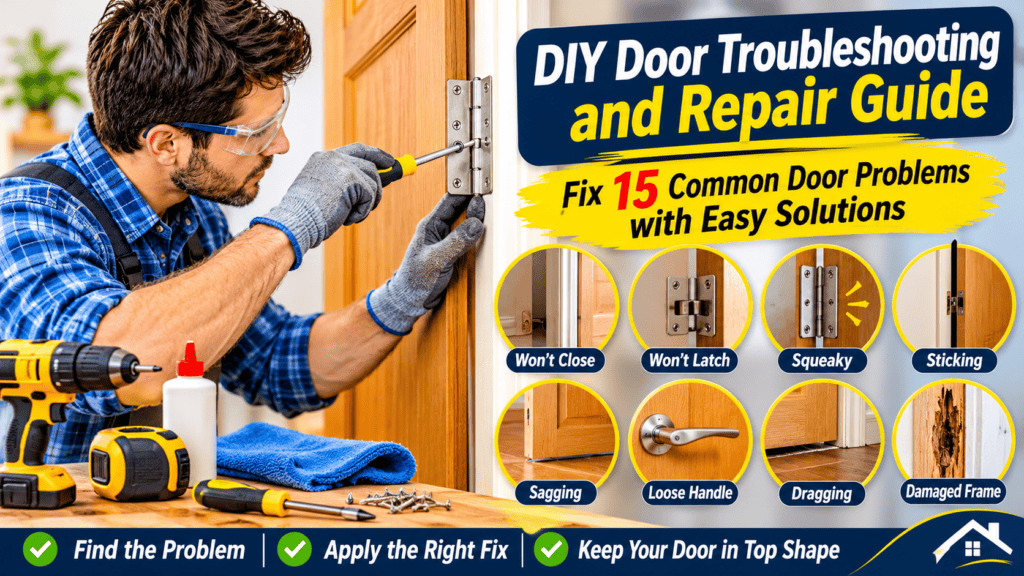
In this guide, we explore 15 common door problems and practical ways to address them.
You will learn how to identify faulty hinges, correct minor alignment issues, troubleshoot stubborn latches, repair loose handles, and deal with moisture-related problems.
We will also explain which tools are useful, which mistakes to avoid, and when a repair should be handled by a professional.
From simple maintenance tasks to more challenging household repairs, this guide will help you make informed decisions, protect your doors, and avoid unnecessary replacement costs.
Let’s start by identifying the most common door problems and understanding what causes them.
Affiliate Disclosure
SmartAirHQ may earn a commission when you purchase products through qualifying affiliate links, at no additional cost to you. As an Amazon Associate, SmartAirHQ earns from qualifying purchases. Product recommendations are included to help readers find relevant tools and materials, while editorial information remains independent.
How to Fix Common Door Problems: Complete DIY Troubleshooting and Repair Guide
A door that refuses to close, scrapes against the floor, makes irritating squeaking noises, or suddenly stops latching properly can turn an ordinary household task into a frustrating problem. Sometimes the cause is a loose hinge or misaligned latch. In other cases, humidity, damaged wood, worn hardware, or a shifting door frame may be responsible.
The good news is that many common residential door problems can be diagnosed and repaired without replacing the entire door. However, choosing the wrong repair can make the situation worse. Sanding a swollen door too early, for example, may create unnecessary gaps when the wood eventually dries.
This complete guide explains how to identify, troubleshoot, and fix common door problems. Whether you have a sticking wooden door, a loose handle, a sagging door, a faulty latch, or a damaged frame, you will learn what causes the problem, which tools are needed, how to perform suitable repairs, and when professional assistance is the safer option.
How to Identify Common Door Problems
Before purchasing replacement hardware or removing material from a door, identify exactly what is happening.
Start by opening and closing the door slowly. Observe where it catches, listen for unusual noises, inspect the hinges, and check whether the latch meets the strike plate correctly.
Quick door problem diagnosis
| Door symptom | Possible cause | Recommended starting point |
|---|---|---|
| Door won’t close | Misalignment or obstruction | Inspect the frame and hinges |
| Door won’t latch | Strike plate misalignment | Check latch alignment |
| Door sticks at the top | Sagging or loose hinges | Inspect upper hinges |
| Door rubs against the floor | Sagging or insufficient clearance | Check hinges and flooring |
| Door squeaks | Dry or worn hinges | Clean and lubricate hinges |
| Door moves when closed | Loose latch or strike plate | Tighten hardware |
| Door handle feels loose | Loose mounting screws | Inspect handle assembly |
| Door swells during humid weather | Moisture absorption | Investigate humidity |
| Door has visible cracks | Damaged wood | Assess structural damage |
| Cold air enters around the door | Damaged weatherstripping | Inspect perimeter seals |
A simple inspection method
- Open the door halfway and observe whether it stays in position.
- Gently lift the handle to check for excessive hinge movement.
- Examine the gaps between the door and frame.
- Look for scratches, worn paint, or marks where the door rubs.
- Slowly close the door and observe where the latch meets the strike plate.
- Check the handle, hinges, screws, and frame for visible damage.
These checks help distinguish between alignment problems, damaged hardware, moisture-related movement, and structural issues.
Why Do Doors Develop Problems?
Doors experience repeated movement, pressure, temperature changes, and exposure to moisture. Even properly installed doors can develop problems over time.
| Main cause | How it affects the door | Common symptoms |
|---|---|---|
| Loose hinge screws | Changes door alignment | Sagging or rubbing |
| High humidity | Causes wood to expand | Seasonal sticking |
| Dry conditions | Can cause wood to shrink | Gaps and rattling |
| Worn hinges | Reduces stable door support | Squeaking or movement |
| Damaged screw holes | Prevents screws from holding | Loose hinges |
| Incorrect installation | Creates uneven clearances | Difficult closing |
| Building movement | Changes frame alignment | Binding or latch problems |
| Worn weatherstripping | Reduces the perimeter seal | Drafts and noise |
| Damaged hardware | Prevents proper operation | Faulty handles or latches |
Understanding the cause is more important than immediately replacing the door.
How to Fix a Door That Won’t Close
A door that refuses to close properly may have loose hinges, an obstruction, a swollen edge, or a misaligned frame.
Possible causes
- Loose or damaged hinges.
- Door rubbing against the frame.
- Paint buildup around the edges.
- Swollen wooden surfaces.
- Misaligned door stops.
- A shifted or damaged frame.
Step-by-step solution
- Open the door and inspect the entire frame.
- Check whether carpet, flooring, or another obstruction is preventing movement.
- Examine the hinge screws and tighten any that are loose.
- Identify the exact point where the door touches the frame.
- Check whether moisture has caused the door to expand.
- If the door is correctly aligned but has a minor obstruction, determine whether a small adjustment is appropriate.
Avoid removing wood before confirming that the problem is not caused by loose hinges or seasonal expansion.
How to Fix a Door That Won’t Latch
A door may close almost completely but fail to remain shut. This often happens because the latch bolt does not align with the strike plate.
Common reasons
- The door has sagged.
- The strike plate has moved.
- The latch mechanism is dirty.
- The latch bolt is damaged.
- The door frame has shifted.
How to repair it
Step 1: Check the latch position
Close the door slowly and observe whether the latch meets the strike plate opening.
Step 2: Inspect the hinges
Tighten loose hinge screws first. If the door is sagging, correct its alignment before adjusting the strike plate.
Step 3: Test the latch independently
Open the door and operate the handle several times. If the latch sticks even when the door is open, the mechanism may require cleaning or replacement.
Step 4: Adjust the strike plate
If the latch and door are otherwise aligned, loosen the strike plate screws and reposition the plate slightly where appropriate. Retighten and test.
Step 5: Replace damaged components
If the latch bolt or internal mechanism is worn or broken, replace it with compatible hardware.
Never rely on an incorrectly adjusted latch for the security of an exterior entrance.
How to Fix a Sticking Door
A sticking door becomes difficult to open or close because part of the door rubs against the frame.
This problem is particularly common with wooden doors during seasonal humidity changes.
Common causes
- Loose hinges.
- Swollen wood.
- Paint buildup.
- Misaligned frames.
- Warped door panels.
- Incorrect door clearance.
Practical repair method
- Open and close the door slowly.
- Identify the exact rubbing area.
- Inspect the hinges for looseness.
- Check whether the problem changes with the weather.
- Remove loose dirt or debris from the affected area.
- Correct hinge alignment if necessary.
- Only consider light sanding or planing after ruling out other causes.
If wood must be removed, seal and refinish the exposed surface with a suitable coating to reduce future moisture absorption.
How to Fix a Squeaky Door
Squeaking usually develops when hinge components become dry, dirty, corroded, or worn.
Step-by-step solution
- Open the door to expose the hinge components.
- Inspect the hinges for rust, dirt, and visible damage.
- Clean accessible surfaces.
- Apply a suitable hinge lubricant according to the manufacturer’s instructions.
- Open and close the door several times.
- Wipe away excess lubricant.
If the noise continues, inspect the hinge pins and mounting screws.
Bent, severely corroded, or damaged hinges should be replaced rather than repeatedly lubricated.
A suitable lubricant can help reduce recurring friction. For example, homeowners can compare suitable door hinge lubricants before choosing a product compatible with their hardware.
How to Fix a Sagging Door
A sagging door often appears lower on the handle side. It may scrape against the floor, rub against the upper frame, or fail to latch correctly.
Warning signs
- Uneven gaps around the door.
- Loose upper hinges.
- Door movement when lifted.
- Scraping near the latch-side corner.
- Screws that spin without tightening.
Repair procedure
- Open the door and inspect all hinges.
- Tighten loose screws using a suitable screwdriver.
- Check whether the screw holes are damaged.
- Repair stripped holes using an appropriate wood-repair method.
- Replace damaged hinges if necessary.
- If the hinge attachment to the frame is weak, a suitable longer screw may help anchor it into structural framing, provided its length and location are appropriate.
A helper should support a heavy door during hinge repairs. Do not remove all hinge screws simultaneously while the door is unsupported.
How to Repair Loose Door Hinges and Stripped Screw Holes
Loose hinges can cause several other problems, including sticking, sagging, rattling, and latch misalignment.
Why hinge screws become loose
- Repeated door movement.
- Damaged wooden screw holes.
- Incorrect screw size.
- Heavy doors.
- Deteriorated frame material.
Repairing stripped hinge screw holes
For a minor stripped hole in sound, solid wood:
- Remove the affected screw.
- Inspect the hole for splitting or deterioration.
- Fill the hole with an appropriate wooden repair insert or glued wood plug.
- Allow the adhesive to cure according to its instructions.
- Trim the repair material flush if needed.
- Drill a suitable pilot hole.
- Reinstall the screw without overtightening.
For larger damage, use a suitable hardwood dowel repair or professional carpentry repair.
When working with damaged wooden surfaces, the correct repair material matters. Our guide to epoxy wood repair kits explains different options for repairing damaged wood.
How to Fix a Door Rubbing Against the Frame
A rubbing door can damage paint, create friction, and make closing difficult.
The first step is to determine whether the rubbing is caused by alignment, swelling, or an incorrectly positioned frame.
Troubleshooting guide
| Rubbing location | Possible reason | Recommended solution |
|---|---|---|
| Upper latch-side corner | Sagging hinges | Inspect and tighten hinges |
| Lower latch-side corner | Frame or door alignment | Check clearances |
| Hinge-side edge | Incorrect hinge positioning | Inspect hinge installation |
| Top edge | Insufficient clearance or frame movement | Check frame alignment |
| Bottom edge | Floor contact or sagging | Inspect hinges and flooring |
Repair steps
- Identify the exact contact point.
- Check all hinge screws.
- Look for uneven gaps.
- Inspect the floor covering.
- Determine whether moisture has caused expansion.
- Make small adjustments only after identifying the cause.
If the frame is significantly out of square, professional adjustment may be necessary.
How to Fix a Swollen Wooden Door
Wood naturally responds to changes in moisture and humidity. When it absorbs moisture, it can expand and become difficult to operate.
Signs of a swollen door
- The door sticks during humid weather.
- Paint appears rubbed along the edges.
- The door closes normally during dry periods.
- The door rubs against the upper or side frame.
What should you do?
- Inspect the room for moisture sources.
- Check for water leaks around the doorway.
- Improve ventilation where appropriate.
- Control indoor humidity.
- Allow the wood to stabilize before considering material removal.
- If the door remains oversized after moisture conditions are corrected, consider careful adjustment and refinishing.
Important: Do not immediately sand or plane a door that sticks only during humid weather. It may shrink again when conditions become drier.
How to Repair a Warped Wooden Door
A warped door may bend, twist, or develop an uneven surface.
Common causes
- Long-term moisture exposure.
- Water damage.
- Uneven finishing.
- Poor storage conditions.
- Structural deterioration.
Repair approach
First, determine whether the distortion is minor or severe.
For minor problems, inspect the hinges, frame, and moisture conditions. Correcting the underlying cause may improve operation.
For significant warping, professional assessment is recommended. Replacing a severely distorted door may be more practical than attempting to force it back into shape.
Do not attempt to straighten a damaged or badly warped door by applying excessive pressure or improvised heavy weights.
How to Fix a Loose Door Handle
A loose handle can make opening and closing uncomfortable. It may also indicate worn mounting hardware.
Repair steps
- Locate the handle’s mounting screws.
- Remove decorative covers if necessary.
- Check whether the screws are loose.
- Tighten them carefully.
- Inspect the spindle and internal mechanism.
- Replace worn or damaged parts with compatible hardware.
If the handle continues moving after tightening, the mounting assembly may be damaged.
Homeowners replacing worn handles can explore compatible interior door handle hardware before purchasing replacement components.
How to Repair a Faulty Door Latch
A faulty latch may stick, fail to retract, or refuse to engage.
Common causes
- Dirt inside the mechanism.
- Worn springs.
- Damaged latch components.
- Incorrect installation.
- Misaligned strike plate.
Repair procedure
- Test the handle with the door open.
- Check whether the latch retracts smoothly.
- Inspect the visible mechanism for damage.
- Clean accessible components using a suitable method.
- Apply manufacturer-approved lubricant where appropriate.
- Replace the latch assembly if internal components are damaged.
If the latch is part of a security lock, use compatible replacement hardware and verify that the door locks securely after repair.
How to Fix a Door That Won’t Stay Open
A door that swings closed or moves unexpectedly may have alignment or hinge problems.
Possible causes
- Door hinges are not correctly aligned.
- The frame is out of plumb.
- Hinge components are damaged.
- The building has shifted.
What to inspect
- Check the door frame using a suitable level.
- Inspect hinge mounting and movement.
- Look for signs of frame distortion.
- Determine whether the problem appeared after recent installation or renovation.
Correcting the hinge or frame alignment may resolve the issue. Avoid bending hinges without understanding the door’s construction and hardware requirements.
How to Fix a Door Dragging Against the Floor
A door that scrapes the floor may damage its finish and create resistance.
Common causes
- Sagging hinges.
- Loose screws.
- Changes in flooring height.
- Incorrect door clearance.
- Structural movement.
Repair method
- Check the door’s lower edge for visible scratches.
- Inspect the hinge screws.
- Determine whether the floor covering has recently changed.
- Check whether the door is sagging.
- Correct the underlying hinge or installation issue first.
If the door needs trimming, remove it safely and use appropriate equipment. Do not cut a fire-rated door or compromise a door’s required construction.
How to Repair a Damaged Door Frame
Door frames can become damaged through repeated impact, loose hardware, moisture, or deteriorating wood.
Common frame problems
- Small cracks around hinge screws.
- Damaged strike plate mounting holes.
- Minor surface dents.
- Loose trim.
- Splitting near the latch area.
- Rot caused by moisture.
Repair approach
For minor cosmetic damage, a suitable wood filler can help restore the surface before refinishing.
For loose mounting points, the underlying wood must be structurally sound before reinstalling hardware.
If the frame is rotten, badly split, pulling away from the wall, or no longer supporting the door properly, seek professional repair.
For minor surface repairs, homeowners can compare suitable wood fillers and repair materials.
How to Fix Drafts and Gaps Around a Door
Cold air, outdoor noise, dust, and insects can enter through gaps around an exterior door.
Common causes
- Damaged weatherstripping.
- Worn door sweeps.
- Incorrect threshold positioning.
- Gaps between the frame and surrounding wall.
- Poor door alignment.
Practical solutions
- Close the door and inspect the perimeter.
- Look for visible daylight.
- Check the condition of the weatherstripping.
- Replace flattened or damaged seals with compatible products.
- Inspect the bottom sweep and threshold.
- Seal appropriate stationary gaps around the frame using a suitable material.
Do not block required ventilation openings or interfere with the operation of a fire or smoke door.
For exterior doors, correct weatherstripping can reduce unwanted air leakage while allowing the door to operate normally. The U.S. Department of Energy’s weatherstripping installation guidance explains the importance of maintaining an effective seal without obstructing door movement.
Essential Tools and Materials for Door Repairs
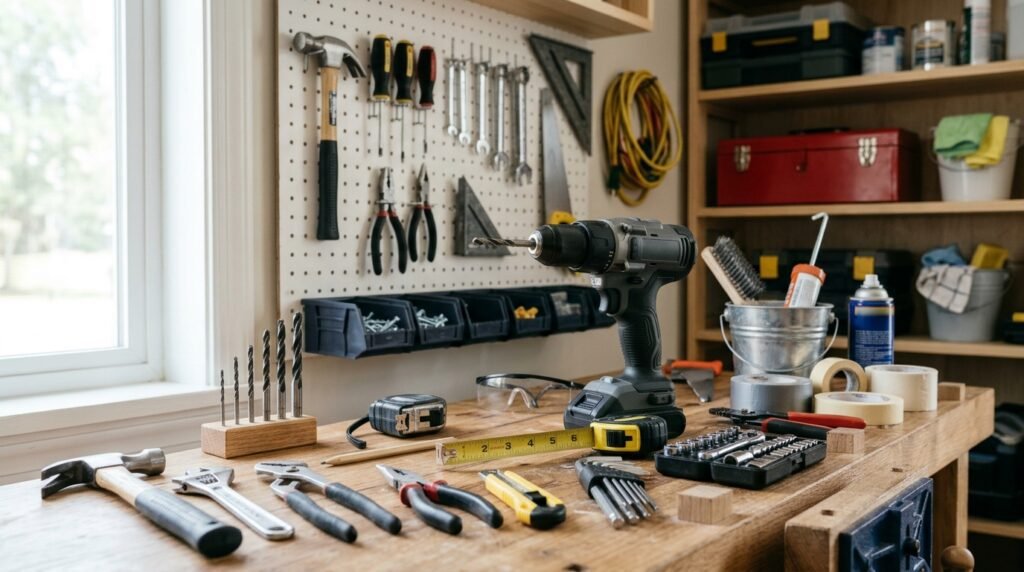
Most basic residential door repairs require a relatively small selection of hand tools and materials.
| Tool or material | Main purpose | When it is useful |
|---|---|---|
| Screwdriver set | Tightening and removing screws | Loose hinges and handles |
| Cordless drill | Drilling pilot holes | Suitable hardware installation |
| Wood glue | Repairing suitable wooden joints | Minor wood repairs |
| Wooden dowels | Rebuilding stripped holes | Damaged screw holes |
| Sanding block | Smoothing repaired wood | Surface refinishing |
| Metal file | Minor hardware adjustment | Suitable strike plate adjustments |
| Spirit level | Checking alignment | Door and frame inspection |
| Tape measure | Checking dimensions | Replacement hardware |
| Suitable lubricant | Reducing hinge friction | Squeaky hinges |
| Safety glasses | Eye protection | Drilling and repair work |
Choose tools that match the repair rather than purchasing unnecessary equipment.
For readers who need to build a basic home-repair toolkit, our Smart Home Hand Tools and Precision Kits guide explains which tools are useful for common household jobs.
A drill can also help with suitable pilot holes and hardware installation. However, the drill bit, screw size, and drilling depth must match the material and repair.
Door Repair: Common Mistakes to Avoid
Incorrect repairs can create additional problems or compromise door security.
| Common mistake | Why it causes problems | Better approach |
|---|---|---|
| Sanding before diagnosing | Removes unnecessary wood | Check hinges and humidity first |
| Overtightening screws | Can damage screw holes | Tighten carefully |
| Ignoring damaged hinges | Allows alignment problems to continue | Inspect and replace worn hardware |
| Using incompatible screws | May weaken the attachment | Match screw type and dimensions |
| Applying excessive lubricant | Attracts dirt and creates mess | Apply a suitable amount |
| Ignoring water damage | Allows deterioration to continue | Investigate and correct moisture |
| Adjusting the strike plate first | Can hide a sagging-door problem | Correct hinge alignment first |
| Ignoring safety | Can cause injury or property damage | Support heavy doors and use PPE |
When Should You Repair a Door or Replace It?
Not every door problem requires replacement. However, repeated repairs may not be economical when the door or frame has serious structural damage.
| Condition | Repair or replacement? | Reason |
|---|---|---|
| Loose hinge screws | Repair | Usually a straightforward hardware issue |
| Minor sticking | Repair | Often caused by alignment or humidity |
| Squeaky hinges | Repair | Cleaning or lubrication may help |
| Faulty handle | Repair | Compatible replacement hardware is available |
| Minor frame damage | Repair | Suitable wood repair may restore the surface |
| Severe wood rot | Professional assessment | Structural strength may be compromised |
| Major warping | Assess replacement | Distortion may be difficult to correct |
| Cracked or broken door | Assess replacement | Depends on damage and construction |
| Repeated security hardware failure | Professional assessment | Security and compatibility matter |
Consider the door’s age, material, condition, security requirements, and replacement cost before deciding.
Important Safety Precautions During Door Repairs
Door repairs can involve heavy panels, sharp tools, moving hardware, and potentially hazardous old paint.
Follow these precautions:
- Wear suitable eye protection when drilling, cutting, or filing.
- Support heavy doors before removing hinges.
- Keep children and pets away from the work area.
- Use the correct tools for the hardware.
- Avoid forcing damaged hinges or frames.
- Follow manufacturer instructions for adhesives, lubricants, and repair products.
- Investigate water damage before covering it with filler or paint.
- Do not modify fire-rated doors or their hardware without qualified, approved guidance.
Older painted doors: In the United States, homes built before 1978 may contain lead-based paint. Sanding, scraping, or drilling painted surfaces can create hazardous dust. The U.S. EPA’s lead-safe renovation guidance recommends appropriate precautions and explains why homeowners should consider qualified lead-safe contractors for renovation work involving older paint. Other countries have their own lead-paint regulations and safety requirements.
Fire-rated doors: Never treat a fire door like an ordinary interior door. Do not casually cut, drill, trim, remove seals, or replace its hardware. In England, government fire-door guidance explains the importance of keeping these doors in good working order and using competent contractors when specialist repair or replacement is needed. See the official fire-door safety guidance.
How to Prevent Common Door Problems
Regular inspection and maintenance can help reduce future repair costs.
| Maintenance task | Suggested frequency | Benefit |
|---|---|---|
| Inspect hinge screws | Every 3–6 months | Detects looseness early |
| Check door alignment | Every 6 months | Identifies rubbing and sagging |
| Inspect handles and latches | Every 3–6 months | Detects worn hardware |
| Clean door surfaces | As needed | Prevents dirt buildup |
| Inspect weatherstripping | Twice yearly | Helps maintain a good seal |
| Check for moisture damage | Regularly | Prevents wood deterioration |
| Lubricate hinges | When needed | Reduces friction and noise |
| Inspect exterior frames | Seasonally | Detects weather-related damage |
Maintenance intervals should be adjusted for usage, environmental conditions, and manufacturer recommendations.
Frequently Asked Questions About Door Problems
Why won’t my door close properly?
Common reasons include loose hinges, a sagging door, frame misalignment, swollen wood, or an obstruction. Inspect the door and identify where it catches before attempting repairs.
How do I fix a door that won’t latch?
Check whether the latch meets the strike plate correctly. Tighten loose hinges first, then inspect the strike plate and latch mechanism.
Why does my door stick when the weather is humid?
Wood can absorb moisture and expand. This may reduce the clearance between the door and frame. Investigate moisture and allow the wood to stabilize before considering sanding.
How do I stop a door from squeaking?
Inspect and clean the hinges, then apply an appropriate lubricant. If the noise continues, check for worn or damaged hinge components.
Can I fix a sagging door without replacing it?
Often, yes. Loose hinge screws or damaged screw holes may be responsible. Tightening or properly repairing the hinge attachment can improve alignment.
Why does my door scrape the floor?
Possible reasons include sagging hinges, insufficient clearance, flooring changes, or structural movement. Inspect the hinges and floor before trimming the door.
What should I do if a door handle keeps coming loose?
Inspect the mounting screws and internal components. Tighten loose hardware and replace damaged parts with compatible components.
Can a warped wooden door be repaired?
Minor alignment issues may be corrected, but severe warping can require professional assessment or replacement.
Why does my door close but not stay shut?
The latch may be misaligned, the strike plate may have moved, or the latch mechanism may be worn or damaged.
How much does it cost to repair a door?
The cost depends on the problem, door material, hardware, labour rates, and location. Minor screw tightening may cost very little, while frame replacement or major carpentry can be considerably more expensive. Obtain local quotes before approving major work.
Should I repair or replace a damaged door frame?
Minor surface damage may be repairable. Extensive rot, splitting, or structural deterioration usually requires professional assessment and potentially frame replacement.
When should I call a professional for door repairs?
Seek professional help when the frame is structurally damaged, the door is severely warped, security hardware is compromised, the door is unusually heavy, or the repair involves a fire-rated door.
Conclusion
Common door problems do not always require expensive replacement or complicated repairs. A door that sticks, squeaks, sags, rubs against its frame, or refuses to latch may only need the correct adjustment or a suitable hardware repair.
The most important step is identifying the underlying cause before choosing a solution. Inspect the hinges, frame, latch, door material, and surrounding conditions rather than immediately sanding, cutting, or replacing components.
With appropriate tools, careful diagnosis, and regular maintenance, many everyday door problems can be resolved safely and economically. When structural damage, security concerns, or specialist door systems are involved, professional assistance is the better choice.