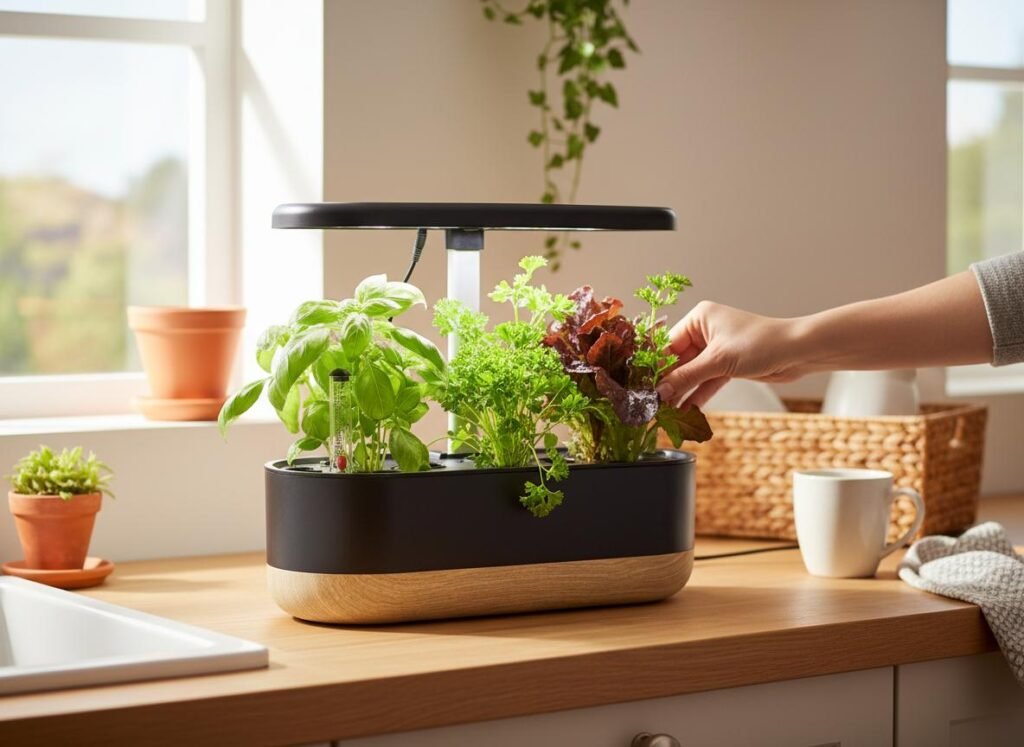
What if you could grow fresh herbs, vegetables, and beautiful plants inside your home without needing a backyard or spending hours on daily plant care? Smart indoor garden systems are turning this idea into reality with automated watering, LED grow lights, and innovative growing technology.
What If You Could Grow Fresh Herbs and Vegetables Without a Traditional Garden?
Imagine picking fresh basil for dinner without stepping outside, growing lettuce during winter, or keeping indoor plants healthy even when your daily schedule gets busy.
You don’t necessarily need a backyard, a greenhouse or years of gardening experience to make this happen.
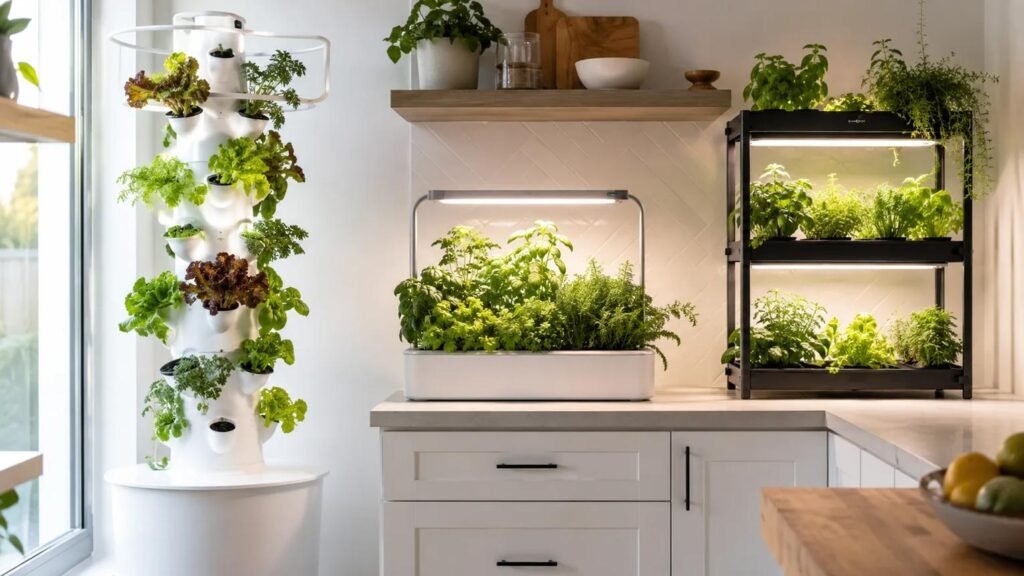
Modern smart indoor garden systems combine technologies such as LED grow lights, automated watering, hydroponics, timers, sensors and smartphone connectivity to make indoor gardening more manageable. Some systems are compact enough for a kitchen countertop, while larger vertical gardens can accommodate multiple herbs, leafy greens and selected vegetables.
However, not every indoor growing system is equally useful. Some are designed for beginners who want a few fresh herbs. Others are built for people who want larger harvests, more plant variety or greater control over growing conditions.
There is also an important difference between a genuinely automated garden and a basic planter with a built-in light. Understanding that difference can help you avoid spending money on features you may never use.
This guide explains the main types of smart gardens, compares popular systems, explores their running costs and limitations, and shows you how to choose an indoor growing setup that suits your home.
What Are Smart Garden and Indoor Plant Growing Systems?
A smart garden is an indoor growing setup that uses equipment or technology to make plant care easier, more consistent or more automated.
Depending on the model, it may include:
- LED grow lights with automatic schedules.
- Water reservoirs and automatic irrigation.
- Hydroponic nutrient delivery.
- Water-level reminders.
- Smartphone app controls.
- Environmental monitoring.
- Adjustable light height.
- Automated pumps and timers.
Some systems manage several growing tasks automatically. Others only automate lighting while requiring you to refill water, add nutrients and maintain the plants manually.
The key is to understand what a product actually automates before buying it.
For example, an indoor hydroponic garden can circulate nutrient-rich water around plant roots, while a soil-based self-watering planter may simply provide water from a reservoir. Both can help with indoor growing, but they serve different purposes.
How Do Indoor Growing Systems Work?
Indoor growing systems create a controlled environment in which plants receive the light, water and nutrients needed for growth.
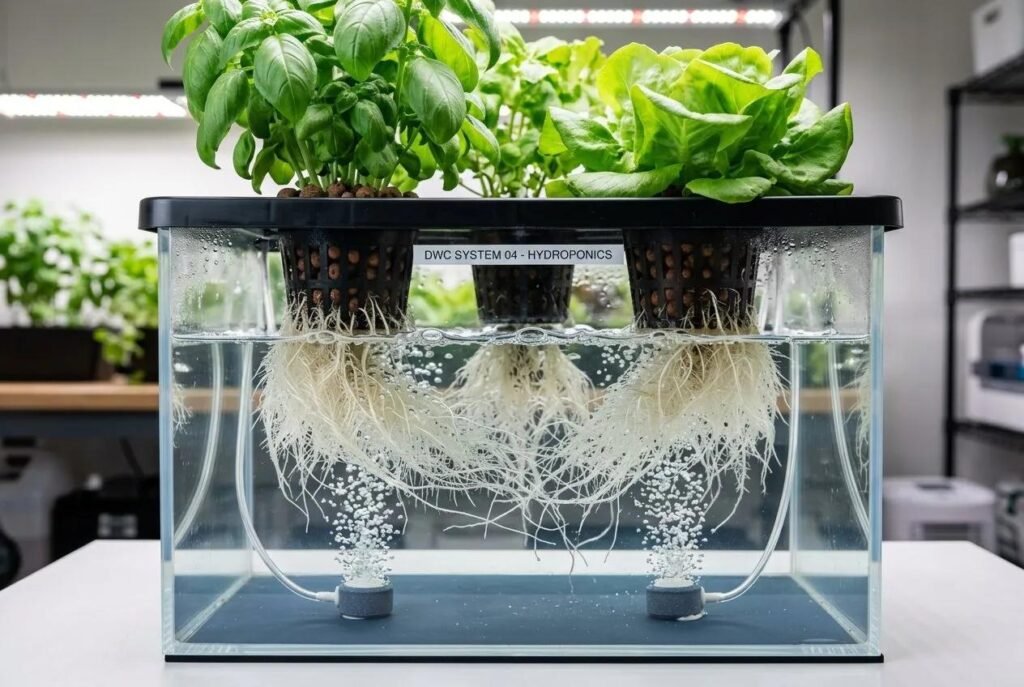
A typical hydroponic garden works through a combination of these components:
- Growing area: Holds the plants, seed pods or growing medium.
- Water reservoir: Stores the water required by the plants.
- Nutrient supply: Provides minerals that plants normally obtain from soil.
- Lighting system: Supplies artificial light when natural sunlight is insufficient.
- Pump or watering mechanism: Circulates water or delivers moisture where needed.
- Control system: Manages timers, lighting schedules, reminders or app functions.
Hydroponics does not mean plants grow without nutrients. Instead, their roots receive essential nutrients through a water-based solution rather than ordinary soil.
The University of New Hampshire Extension explains the principles and potential benefits of home hydroponics in its Hydroponics at Home guide.
Main Types of Smart Garden Systems
Before choosing a product, decide which growing method suits your space, plants and maintenance preferences.
Different Types of Indoor Growing Systems
| System type | How it works | Best suited for | Main consideration |
|---|---|---|---|
| Countertop hydroponic garden | Plants grow in pods with nutrient-rich water | Herbs and leafy greens | Limited growing space |
| Vertical hydroponic garden | Plants grow in stacked or tower-style sections | Larger indoor harvests | Needs more space and maintenance |
| Soil-based smart planter | Uses soil with automated or reservoir-based watering | Houseplants and selected herbs | Drainage and soil quality matter |
| Self-watering planter | Stores water and supplies moisture gradually | Busy plant owners | Not suitable for every plant |
| Indoor seed-starting system | Supports seedlings using trays and grow lights | Starting plants before transplanting | Seedlings may need repotting |
| App-connected garden | Provides app-based controls or reminders | People who prefer digital monitoring | App and connectivity support can vary |
| DIY hydroponic setup | Uses separate reservoirs, lights and growing components | Experienced hobby growers | Requires more manual setup |
A compact countertop system is usually the easiest starting point. A vertical system makes more sense when you want to grow a wider selection of plants and have enough room for it.
What Can You Grow in a Smart Indoor Garden?
Not every plant is suitable for every indoor garden. Plant height, root development, light requirements and available growing space all matter.
Best Plants for Different Indoor Growing Systems
| Plant | Suitable growing setup | Difficulty | Important growing consideration |
|---|---|---|---|
| Basil | Countertop hydroponics | Easy | Prune regularly to encourage branching |
| Mint | Hydroponics or soil planter | Easy | Can spread aggressively |
| Parsley | Countertop hydroponics | Moderate | Germination may take longer |
| Lettuce | Hydroponic or vertical system | Easy to moderate | Harvest outer leaves as they mature |
| Spinach | Hydroponic system | Moderate | Needs suitable temperatures and light |
| Kale | Larger hydroponic system | Moderate | Requires more room as it grows |
| Cherry tomatoes | Larger hydroponic system | Moderate to challenging | Needs support and sufficient light |
| Strawberries | Larger controlled indoor setup | Challenging | Flower pollination and space may require attention |
| Microgreens | Shallow trays and grow lights | Easy | Harvested young rather than grown to maturity |
For beginners, basil, lettuce, mint and selected leafy greens are sensible starting choices. Fruiting plants such as tomatoes and strawberries generally require more space, light and attention.
Do not assume a garden’s maximum pod count means every plant can grow to full size simultaneously. Mature plants may compete for light and growing room.
Seven Smart Garden Products Worth Comparing
The following products represent different indoor gardening approaches and buyer needs. They are not presented as a hands-on laboratory ranking. Before purchasing, check the current model, included accessories, warranty, compatible pods, consumables and delivery availability in your country.
1. AeroGarden Harvest Elite — Compact Countertop Hydroponic Garden
The AeroGarden Harvest Elite is a compact option for people who want to grow kitchen herbs and small greens indoors.
Its manufacturer lists a six-pod capacity, a 20W LED grow light, automatic lighting controls, water and plant-food reminders, and adjustable growing height. It is designed to make routine herb growing easier without requiring a sunny garden.
It is particularly worth considering if you want a dedicated countertop garden rather than a large vertical installation.
Things to check: Its growing height and six-pod capacity limit the size and number of plants you can grow. Also confirm current seed-pod availability and warranty arrangements before purchasing.
🛍️ Explore the AeroGarden Harvest Elite on Amazon
2. iDOO 12-Pod Hydroponics Growing System — More Growing Positions
An iDOO 12-pod hydroponic system is worth comparing if you want more planting positions than a small countertop garden provides.
Depending on the specific model, features may include an adjustable LED grow-light assembly, water circulation and a built-in reservoir.
This type of system can be useful for growing several herbs or leafy greens together, especially if you want to experiment with different seeds.
Things to check: Verify the exact model’s pod capacity, light adjustment, pump design and whether seeds or nutrients are included.
🌱 Find the iDOO 12-Pod Growing System on Amazon
3. Click & Grow Smart Garden 9 — Convenient Pod-Based Growing
The Click & Grow Smart Garden 9 is designed for people who prefer a straightforward indoor gardening experience.
Its pod-based approach reduces some of the preparation involved in starting plants from seeds. It is worth considering for households interested in growing herbs and smaller edible plants without building a more complicated hydroponic setup.
Things to check: Investigate the availability and cost of compatible plant pods. Proprietary consumables can increase the long-term cost of ownership.
✨ Explore the Click & Grow Smart Garden 9 on Amazon
4. LetPot LPH-Series Smart Hydroponic Garden — App-Oriented Growing
LetPot’s LPH-series systems are an option for shoppers interested in combining indoor hydroponics with digital controls.
Depending on the model, features can include app connectivity, automatic lighting schedules and water-circulation functions.
This type of setup may appeal to people who want to manage selected growing tasks through a smartphone rather than relying entirely on manual controls.
Things to check: Confirm the exact model’s app compatibility, supported phone operating systems, Wi-Fi requirements and whether its app features work in your region.
📱 Check LetPot Smart Hydroponic Gardens on Amazon
5. Gardyn Home — Larger Vertical Indoor Growing
A vertical indoor garden such as the Gardyn Home series is designed for people who want more growing positions without spreading multiple small planters across a countertop.
Some Gardyn models combine vertical growing columns, lighting, water delivery and camera-based monitoring. Depending on the package and service plan, additional digital features may be available.
This is a more substantial investment than a small herb garden, so it deserves careful consideration.
Things to check: Compare the actual plant capacity, footprint, subscription requirements, replacement parts, electricity use and ongoing plant-care costs.
🏡 Explore Gardyn Home Indoor Gardens on Amazon
6. Rise Gardens Personal Garden — Expandable Indoor Growing
Rise Gardens offers indoor hydroponic systems for people who want to grow more than a handful of herbs.
Its Personal Garden format is worth comparing if you want a larger setup with digital monitoring and room for a wider selection of plants.
Before choosing it, think about where the system will stand and whether its growing capacity matches your actual household needs.
Things to check: Verify current app features, dimensions, starter supplies, maintenance requirements and the cost of expanding the system.
🔎 Find the Rise Gardens Personal Garden on Amazon
7. Ahopegarden 10-Pod Hydroponic Growing System — Alternative Countertop Setup
An Ahopegarden 10-pod hydroponic system is another style of compact indoor garden to compare when shopping for a countertop setup.
It may suit shoppers looking for a multi-position system with an integrated light rather than a premium connected garden.
As with other budget-oriented systems, examine the details instead of relying on the product title. Two models from the same brand can have different lighting, reservoir and timer features.
Things to check: Confirm the number of usable planting positions, LED specifications, pump operation, height adjustment and replacement-pod compatibility.
🛒 Compare Ahopegarden 10-Pod Systems on Amazon
Affiliate disclosure: SmartAirHQ may earn a commission when you purchase through qualifying Amazon links in this article, at no additional cost to you. As an Amazon Associate, we earn from qualifying purchases. Product availability, specifications and prices can change, so check the current listing before ordering.
How to Choose the Right Smart Indoor Garden
A good indoor garden should match your growing goals, available space and willingness to maintain it. A larger system is not automatically better, and an app-connected model is not necessarily more useful than a simpler one.
Comparing the Seven Systems by Buyer Needs
| Product | General format | Best reason to compare it | Main buying concern |
|---|---|---|---|
| AeroGarden Harvest Elite | Countertop hydroponic | Compact herb growing | Six-pod capacity |
| iDOO 12-Pod | Countertop hydroponic | Multiple planting positions | Model-specific features |
| Click & Grow Smart Garden 9 | Pod-based garden | Simple growing routine | Pod replacement costs |
| LetPot LPH-Series | Connected hydroponic | Smartphone-oriented controls | App and Wi-Fi compatibility |
| Gardyn Home | Vertical garden | Larger indoor growing capacity | Cost and subscriptions |
| Rise Gardens Personal | Larger hydroponic garden | Expandable growing approach | Space and maintenance |
| Ahopegarden 10-Pod | Countertop hydroponic | Alternative multi-pod setup | Confirm exact specifications |
Consider these seven buying factors
1. Available space
Measure the area where you intend to place the system. Include the height of the grow light, clearance for mature plants and enough room to refill or clean the reservoir.
2. Lighting quality
Plants need appropriate light for photosynthesis. A built-in grow light can make indoor growing more consistent, especially in rooms without sufficient natural sunlight.
3. Plant capacity
Look beyond the advertised number of pods. Consider how large the plants become and whether their leaves will block one another’s light.
4. Watering and nutrient delivery
Some systems circulate nutrient-rich water, while others rely on a passive reservoir. Understand how much manual work is still required.
5. App and smart features
App control is useful only if it provides features you will actually use. Check whether it offers useful reminders, scheduling, monitoring or alerts.
6. Consumables and replacement parts
Seed pods, nutrients, filters, pumps and other components can become recurring expenses. Check whether compatible alternatives are available.
7. Warranty and regional support
A product available in the USA may not have the same warranty, plug, app functionality or replacement-parts support in the UK, Canada, Australia or Europe.
Why LED Grow Lights Matter for Indoor Gardening
Light is one of the most important factors in indoor plant growth.
A room can look bright to people while still providing insufficient light for a plant that needs strong, consistent illumination. This is why many indoor gardens include built-in LED grow lights.
LEDs are commonly used because they can provide useful plant lighting with relatively low energy consumption compared with older lighting technologies.
Indoor Grow-Light Options
| Light type | Potential advantage | Limitation | Typical use |
|---|---|---|---|
| Integrated LED grow light | Convenient and designed for the garden | May not suit larger plants | Countertop gardens |
| Adjustable LED grow light | Can be positioned as plants grow | Needs adjustment | Herbs and leafy greens |
| Full-spectrum LED panel | Broad light output for indoor growing | Quality and coverage vary | Larger growing areas |
| Fluorescent grow light | Can provide supplemental lighting | Less efficient than many modern LEDs | Small growing setups |
| Natural window light | No additional lighting electricity | Depends on window direction and season | Light-demanding houseplants |
The University of Minnesota Extension explains that supplemental lighting is often necessary for indoor hydroponics and discusses the advantages and limitations of different lighting technologies in its small-scale hydroponics guide.
How many hours should grow lights operate?
There is no single schedule that suits every plant. Lighting needs depend on plant species, growth stage, light intensity and distance from the leaves.
Follow the system manufacturer’s instructions and the plant’s growing requirements. Avoid assuming that leaving a light on for longer will always produce healthier growth. Plants also need an appropriate dark period.
Smart Watering, Sensors and App Controls: What Is Actually Useful?
Smart features can make indoor gardening more convenient, but buyers should distinguish useful automation from marketing claims.
A water-level alert can help you notice when a reservoir needs attention. A timer can maintain a consistent lighting schedule. An app may provide reminders for nutrients or maintenance.
However, a connected garden does not automatically understand every plant’s needs.
Smart Features and Their Practical Value
| Feature | What it does | Practical benefit | What it cannot guarantee |
|---|---|---|---|
| Automatic light timer | Turns grow lights on and off | More consistent lighting routine | Correct light intensity for every plant |
| Water-level alert | Warns when water is low | Helps prevent neglected reservoirs | Perfect watering for every plant |
| Nutrient reminder | Reminds you to add plant food | Makes feeding schedules easier | Correct nutrient concentration |
| App control | Provides digital controls or status | Convenient remote access | Healthy plants without maintenance |
| Water circulation pump | Moves water through the system | Supports active hydroponic setups | Protection from every root problem |
| Camera monitoring | Provides images of plants | Helps observe visible changes | Accurate diagnosis of every plant issue |
| Environmental sensor | Measures selected conditions | Adds useful monitoring information | Ideal growing conditions automatically |
If you are already building a connected home, you may also find our Smart Kitchen Gadgets Buying Guide useful for understanding how automated devices can fit into everyday kitchen routines.
How Much Electricity Do Indoor Garden Systems Use?
Indoor gardens can consume electricity through LED lights, pumps, control systems and other powered components.
The biggest factor is often the grow-light schedule, especially if the system operates for many hours each day.
You can estimate energy consumption using this formula:
Daily electricity use (kWh) = Total power (watts) × operating hours ÷ 1,000
For example, suppose a grow light uses 30 watts and operates for 16 hours each day:
30 × 16 ÷ 1,000 = 0.48 kWh per day
This is an illustrative calculation for the light alone, not a measurement of a complete garden system.
Example electricity-use estimates
| Component | Example power | Example daily operation | Estimated daily use |
|---|---|---|---|
| LED grow light | 20W | 16 hours | 0.32 kWh |
| LED grow light | 30W | 16 hours | 0.48 kWh |
| LED grow light | 40W | 16 hours | 0.64 kWh |
| Small water pump | 5W | 24 hours | 0.12 kWh |
| Control electronics | 2W | 24 hours | 0.048 kWh |
These are examples, not specifications for the seven products above. Actual electricity use depends on the equipment and operating schedule. A pump may also operate intermittently rather than continuously.
To estimate monthly cost, multiply the total monthly kWh by your electricity tariff.
For more practical energy-saving ideas, read our guide on Smart Energy-Saving Devices for Home. If you want to measure the consumption of powered equipment, our Smart Energy Monitor Buying Guide can help you understand what to look for.
How to Set Up an Indoor Smart Garden: Step-by-Step
A careful setup gives plants a better start and reduces the chance of common problems.
Step 1: Choose the location
Place the garden on a stable, level surface near a suitable power outlet. Avoid locations where water could splash onto electrical sockets or other equipment.
Step 2: Clean the growing components
Wash the reservoir and reusable growing parts according to the manufacturer’s instructions before the first use.
Step 3: Prepare the water
Use water that is suitable for your system. Follow its instructions for water quality, nutrient mixing and reservoir filling.
Step 4: Add seeds or compatible pods
Choose plants that fit the system’s height, spacing and lighting capacity. Do not overcrowd the growing area.
Step 5: Set the lighting schedule
Use the recommended schedule for the selected plants and system. Make sure the light is positioned correctly as plants develop.
Step 6: Check water and nutrients
Follow the manufacturer’s feeding instructions. Do not add extra plant food simply because plants appear to be growing slowly.
Step 7: Monitor early growth
Check germination, root development, water level and plant condition regularly. Remove damaged leaves and address problems early.
Indoor Garden Maintenance: What Should You Do and When?
Even an automated garden needs attention. Pumps can become dirty, roots can grow into unwanted areas and nutrient solutions may need replacement.
Practical Indoor Garden Maintenance Schedule
| Frequency | Maintenance task | Why it matters |
|---|---|---|
| Daily or every few days | Observe leaves and plant condition | Helps identify early problems |
| Weekly | Check reservoir level | Prevents water shortages |
| Weekly | Inspect roots and growing spaces | Helps identify overcrowding or root issues |
| According to product instructions | Check nutrient solution | Maintains suitable plant nutrition |
| Every growing cycle | Clean reusable components | Reduces residue and buildup |
| As plants grow | Prune and harvest appropriately | Improves spacing and airflow |
| When required | Inspect pumps, cables and lights | Helps identify equipment problems |
Do not mix cleaning chemicals or use household cleaners inside a hydroponic reservoir unless the manufacturer specifically approves them. Rinse components thoroughly as directed before restarting the system.
Common Indoor Gardening Problems and How to Fix Them
Indoor gardens make growing easier, but they cannot eliminate every plant-care problem.
Common Problems, Possible Causes and Solutions
| Problem | Possible cause | What to check or do |
|---|---|---|
| Seeds are not germinating | Old seeds, unsuitable temperature or incorrect moisture | Check seed quality and growing instructions |
| Leaves turn yellow | Nutrient imbalance, root stress or unsuitable conditions | Inspect roots and follow nutrient guidance |
| Plants grow tall and weak | Insufficient light or excessive distance from the light | Check light position and recommended intensity |
| Algae develops in the reservoir | Light reaching nutrient-rich water | Keep the reservoir covered as designed |
| Roots look brown or unhealthy | Poor oxygenation, contamination or root stress | Inspect circulation and clean the system correctly |
| Plants become overcrowded | Too many plants or insufficient spacing | Remove or harvest plants as appropriate |
| Water level drops quickly | Mature plants using more water or a small reservoir | Check the level more frequently |
| Pump becomes noisy | Debris, low water or a mechanical issue | Follow the manufacturer’s inspection and cleaning instructions |
| Leaves develop dry edges | Environmental stress or nutrient issues | Review temperature, airflow and feeding |
| Plants stop growing | Light, nutrient, temperature or root problems | Review all growing conditions rather than changing one setting blindly |
If a problem continues after basic checks, consult the product manufacturer or a qualified gardening specialist. Do not attempt electrical repairs while the equipment is connected to power.
Are Smart Indoor Gardens Worth Buying?
For many households, they can be worthwhile—but the answer depends on what you expect from them.
A compact system may make sense if you regularly use fresh herbs and want to grow them throughout the year. A larger vertical system may suit someone who enjoys indoor gardening and has the space and time to maintain it.
However, a smart garden is not automatically a money-saving replacement for supermarket produce.
You need to consider the initial purchase, seeds or pods, nutrients, replacement parts, electricity and the time needed for maintenance.
Advantages
- Makes indoor gardening possible in small homes and apartments.
- Can provide fresh herbs and selected vegetables throughout the year.
- Built-in lighting helps when natural sunlight is insufficient.
- Automated timers reduce some routine work.
- Hydroponic systems do not require traditional garden soil.
- Larger systems can support more growing positions.
- Some connected models offer useful alerts and reminders.
Limitations
- Initial equipment costs can be higher than traditional planters.
- Seed pods and nutrients may create recurring expenses.
- Grow lights and pumps add electricity consumption.
- Not every plant is suitable for a compact garden.
- App-dependent features may require internet access or subscriptions.
- Regular cleaning and plant maintenance are still necessary.
- Larger gardens need more space and careful planning.
Indoor Garden Safety: Important Things to Remember
Indoor growing systems combine water, electricity, lighting and sometimes concentrated nutrient products. Safe installation and maintenance are essential.
Keep these points in mind:
- Place the system on a stable surface that can handle its weight.
- Keep plugs, adapters and electrical connections away from water.
- Use the supplied power adapter or an approved replacement.
- Disconnect power before cleaning or servicing electrical components, following the manual.
- Keep nutrient concentrates and pH-adjustment products away from children and pets.
- Do not consume plants that have been exposed to unsuitable chemicals.
- Clean reservoirs and growing components as directed.
- Check cables, pumps and lighting components for damage.
- Follow the manufacturer’s instructions for indoor use and ventilation.
The University of New Hampshire’s home hydroponics resource provides useful background on growing plants without soil. Always follow the safety instructions supplied with your specific equipment.
How to Choose the Best Smart Indoor Garden in Your Country
A product that is easy to purchase in one market may be difficult to maintain in another. International buyers should check more than the purchase price.
USA: Compare the availability of seed pods, nutrients, replacement pumps and customer support.
United Kingdom: Check the correct plug and voltage specifications, product warranty and availability of compatible consumables.
Canada: Confirm shipping, replacement-parts availability and whether the model is supported by the Canadian seller or manufacturer.
Australia: Verify electrical compatibility, local warranty support and the availability of replacement components.
Europe: Check voltage and plug compatibility, regional app availability, shipping costs and local consumer support.
For every region, consider whether the system relies on a proprietary seed-pod ecosystem or subscription. A product can look affordable at checkout but become expensive if its consumables are difficult to obtain locally.
Frequently Asked Questions About Smart Indoor Garden Systems
1. What is the best smart indoor garden system for beginners?
A compact countertop garden with integrated lighting and a straightforward watering routine is often a sensible starting point. Compare the AeroGarden, Click & Grow and iDOO formats according to capacity, maintenance and consumable costs.
2. Can you grow vegetables indoors all year?
Yes, selected vegetables and leafy greens can be grown indoors throughout the year when their light, temperature, water and nutrient requirements are met. The plants you can grow depend on the system’s size and capabilities.
3. Are hydroponic gardens better than soil-based planters?
Neither is universally better. Hydroponics delivers nutrients through water and can be useful for compact indoor growing. Soil-based planters offer a more traditional growing method and may suit a wider range of houseplants.
4. Do smart gardens need sunlight?
Not necessarily. Systems with suitable built-in grow lights can support indoor plants without direct sunlight. However, the lighting must provide an appropriate intensity and schedule for the selected plants.
5. How much electricity does an indoor hydroponic garden use?
It depends on the power of the lights and pumps and how long they operate. Check the product’s wattage and calculate consumption using watts multiplied by operating hours, divided by 1,000.
6. Can I use my own seeds in a smart garden?
Some systems support standard seeds or compatible growing sponges, while others are designed around proprietary pods. Check the manufacturer’s compatibility guidance before buying.
7. Are smart indoor gardens expensive to maintain?
They can involve ongoing costs for nutrients, seeds, pods, replacement parts and electricity. A system with proprietary consumables or a subscription may cost more over time than a basic DIY setup.
8. Can smart indoor gardens grow tomatoes and strawberries?
Some larger systems can support selected fruiting plants, but they need sufficient light, root space and support. Pollination may also need attention. Small countertop systems are generally better suited to herbs and leafy greens.
9. Do app-controlled gardens work without Wi-Fi?
Basic lighting or pump functions may continue to work without an internet connection, depending on the model. Remote monitoring, app alerts and connected features may require Wi-Fi. Check the manual before purchasing.
10. How often should I clean a hydroponic garden?
Follow the manufacturer’s cleaning schedule, especially between growing cycles. Inspect the reservoir and growing components regularly for algae, residue and root buildup.
11. Can I leave a smart garden running while on vacation?
Some systems include reminders or vacation-related features, but no system should be assumed to be completely maintenance-free. Check water capacity, plant needs, power reliability and the manufacturer’s instructions before leaving it unattended.
12. Are smart gardens suitable for apartments?
Yes. Compact countertop systems can fit into many apartments, provided there is enough room, suitable lighting and a safe location near a power outlet.
Final Verdict: Which Smart Indoor Garden Should You Choose?
The best indoor garden is the one that matches your actual growing needs—not necessarily the one with the most pods, the largest screen or the most advanced app.
- For compact herb growing: Compare the AeroGarden Harvest Elite.
- For multiple countertop planting positions: Consider the iDOO or Ahopegarden formats.
- For a pod-based growing routine: Compare Click & Grow.
- For smartphone-oriented controls: Investigate the compatible LetPot models.
- For larger vertical growing: Compare Gardyn and Rise Gardens.
Before making your final decision, calculate the long-term cost of seeds, nutrients, electricity and replacement parts. Confirm local availability and warranty support as well.
A small, well-maintained garden that produces the plants you actually use can be more useful than an expensive system that takes up space and rarely gets maintained.
Start with the plants you enjoy eating or growing, choose a system that fits your home, and build your indoor garden gradually.