Your home’s electrical panel is responsible for distributing electricity safely to lights, outlets, appliances, and other electrical equipment. But as households add air conditioners, electric vehicle chargers, heat pumps, electric cooking appliances, and other high-demand devices, an older electrical system may struggle to meet their needs.
That is when an electrical panel upgrade may become worth considering.
However, upgrading to a larger panel is not always the answer. Some homes need additional breaker spaces, some need a complete panel replacement, and others may need a higher-capacity electrical service. In certain situations, an electrician may even be able to manage the additional load without increasing the home’s service capacity.
Monitor household electricity use and understand which circuits consume the most energy. Installation inside the electrical panel should be handled by a qualified electrician.
⚡ See How Much Energy Your Home Really Uses on Amazon.
In this guide, you’ll learn the warning signs, understand the difference between 100-amp and 200-amp electrical service, explore upgrade costs and benefits, and discover what to expect during the process.
Affiliate Disclosure: SmartAirHQ participates in the Amazon Services LLC Associates Program. As an Amazon Associate, we earn from qualifying purchases. This means we may receive a small commission when you purchase through links in this article, at no additional cost to you. Our recommendations are selected for their relevance and usefulness.
What Is an Electrical Panel Upgrade?
An electrical panel upgrade is an improvement to the main electrical distribution equipment in a home. Depending on the existing system and the homeowner’s requirements, the work may involve replacing an outdated breaker panel, increasing the electrical service capacity, adding suitable circuit spaces, or upgrading associated equipment.
The electrical panel receives power from the utility service and distributes it through individual circuits. Circuit breakers protect those circuits by interrupting electricity when certain overload or fault conditions occur.
An upgrade can address several different problems:
- The existing panel has insufficient capacity for planned electrical equipment.
- There are not enough suitable breaker spaces for new circuits.
- The existing panel is damaged, deteriorated, or unsuitable for continued use.
- The electrical service needs improvement to support a major renovation or electrification project.
- A qualified electrician identifies safety or compliance concerns.
- An easy way to track the electricity consumption of compatible appliances. Check the plug’s regional socket, voltage, and current rating before buying.
- 🏠 Discover an Easy Way to Track Appliance Energy on Amazon.
Remember: Replacing a panel and increasing a home’s electrical service capacity are not necessarily the same job. The electrician must assess the panel, main breaker, service conductors, meter equipment, and calculated electrical load before recommending a solution.
7 Signs Your Home May Need an Electrical Panel Upgrade
Not every older electrical panel needs replacement. However, certain warning signs deserve professional attention.
| Warning sign | What it may indicate | Recommended action |
|---|---|---|
| Frequent breaker trips | Overloaded circuit or electrical fault | Arrange an electrical inspection |
| No suitable breaker spaces | Limited room for additional circuits | Ask about panel capacity and approved alternatives |
| Old fuse box | Older electrical equipment and possible limitations | Request a professional assessment |
| Planned EV charger installation | Additional electrical demand | Arrange a load calculation |
| Major home renovation | Increased electrical requirements | Assess the service before construction |
| Damaged or deteriorated panel | Potential equipment safety issue | Contact an electrician promptly |
| Repeated electrical problems | Possible wiring, circuit, or equipment faults | Arrange a full electrical evaluation |
1. Circuit Breakers Keep Tripping
A circuit breaker that trips occasionally may be responding to an overloaded circuit or an electrical fault. However, repeated tripping should never be ignored.
If several high-demand appliances operate simultaneously, an existing circuit may not have enough capacity for their combined load. In other cases, the problem could be a damaged appliance, faulty wiring, or a defective breaker.
An electrical panel upgrade may be considered if a professional load assessment confirms that the existing service cannot safely support the home’s requirements.
Read our guide on why a circuit breaker keeps tripping to understand common causes and warning signs.
2. Your Electrical Panel Has No Suitable Space for New Breakers
Modern homes often need additional circuits for appliances, home offices, heating and cooling equipment, EV chargers, and other electrical installations.
If the panel has no suitable spaces remaining, installing another circuit may become difficult.
A qualified electrician can determine whether the existing panel supports an approved solution, whether a suitable subpanel is possible, or whether a main panel replacement is more appropriate.
Do not install extra breakers, replace breakers with different ratings, or modify the panel yourself.
3. Your Home Still Uses an Old Fuse Box
Some older properties still use fuse boxes instead of modern circuit-breaker panels.
An older system is not automatically unsafe simply because of its age. Nevertheless, its condition, protection arrangements, available capacity, and compatibility with modern electrical requirements should be assessed.
A professional inspection can establish whether replacement is advisable and whether other wiring improvements are necessary.
4. You Are Planning to Install an EV Charger
Electric vehicle charging can add a significant electrical load to a home.
A Level 2 home charger may require a dedicated circuit, and its electrical demand must be considered alongside existing appliances, heating, cooling, and other equipment.
A 100-amp service may be sufficient in some homes, while other properties may require a different solution.
Before purchasing or installing an EV charger, ask a qualified electrician to calculate the home’s available capacity. In some circumstances, an energy management system can help distribute available capacity without a full service upgrade.
For additional guidance on when a home may need electrical panel or circuit improvements for new electric equipment, see the U.S. Department of Energy’s home electrification and upgrade guidance.
5. You Are Adding a Heat Pump or High-Power Appliances
Replacing gas appliances with electric alternatives can change a home’s overall electrical demand.
For example, adding an electric range, heat pump, electric water heater, clothes dryer, or central air-conditioning system may increase the load significantly.
The important question is not simply how many appliances you own. It is how much electricity the home may need when relevant equipment operates at the same time.
A professional load calculation helps determine whether the existing electrical service can support the planned installation.
6. Your Home Is Undergoing a Major Renovation
A home extension, additional living space, kitchen renovation, or conversion to an all-electric home may require new circuits and additional electrical capacity.
An electrical panel upgrade may be appropriate if the existing equipment cannot accommodate the planned installation safely.
Discuss electrical requirements early in the renovation process. This can help avoid unexpected changes after construction has started.
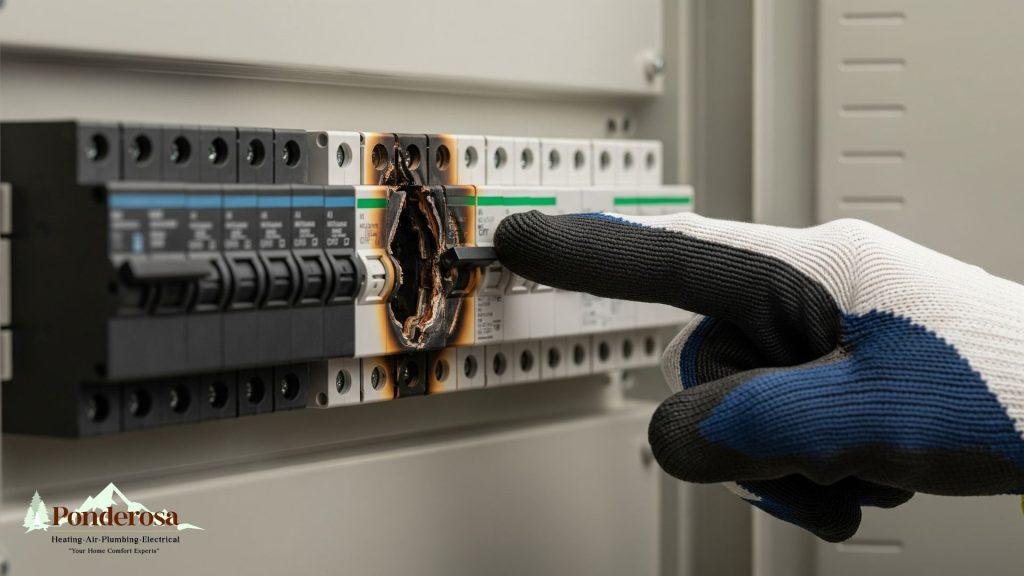
7. Your Panel Shows Signs of Damage or Overheating
Physical damage is different from ordinary capacity limitations.
Warning signs include:
- Burning smells around electrical equipment.
- Scorch marks or discoloration.
- Crackling, arcing, or unusual buzzing.
- Visible corrosion or water damage.
- Melted or damaged components.
- Smoke or signs of fire.
These symptoms do not simply mean that you need a larger panel. They may indicate an immediate electrical hazard.
Working smoke alarms provide an important layer of home fire protection. Choose a model that meets the requirements in your location.
🔥 Check Smoke Alarm Options for Your Home on amazon
Do not open the panel, touch exposed components, or attempt repairs. If there is smoke or fire, move away and contact emergency services. Otherwise, arrange an urgent inspection by a licensed electrician.
The Electrical Safety Foundation International’s home wiring safety guidance also identifies frequent breaker trips, unusual buzzing, overheating, and discoloration as warning signs that should be inspected by a licensed electrician
100-Amp vs. 200-Amp Electrical Panel: What’s the Difference?
One of the most important decisions during an electrical panel upgrade is choosing the appropriate service capacity.
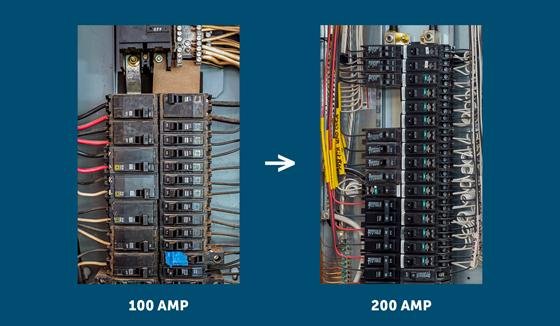
A 100-amp service and a 200-amp service offer different levels of electrical capacity. The right option depends on the home’s calculated load, equipment, size, future plans, and local electrical requirements.
| Feature | 100-Amp Service | 200-Amp Service |
|---|---|---|
| Electrical capacity | Lower | Higher |
| Typical application | Homes with modest electrical demand | Homes with greater electrical demand |
| Major electric appliances | Depends on calculated load | Generally provides more capacity |
| EV charging | May require careful load assessment | Often offers more flexibility |
| Heat pumps | Depends on existing and proposed loads | May better accommodate larger loads |
| Future expansion | Can be more limited | Usually offers greater flexibility |
| Upgrade cost | Usually lower | Usually higher |
Is a 100-Amp Electrical Service Enough?
A 100-amp service may be suitable for a home with relatively modest electrical requirements.
For example, a property with limited high-power appliances, no major planned expansion, and a manageable calculated load may not need a 200-amp upgrade.
However, home size alone cannot determine whether 100 amps is sufficient.
A smaller home with several electric heating systems and an EV charger could have different electrical requirements from a larger property with gas heating and fewer high-demand appliances.
When Is a 200-Amp Electrical Panel Upgrade Worth It?
A 200-amp service may be worth considering when a home’s calculated electrical demand exceeds the available capacity of its existing service or when a substantial increase in electrical demand is planned.
Common examples include:
- Installing a Level 2 EV charger.
- Adding electric heating or a large heat pump.
- Replacing several gas appliances with electric models.
- Expanding the home.
- Adding multiple high-demand appliances.
- Planning a major electrical renovation.
A 200-amp service provides more capacity than a 100-amp service, but it is not automatically the best choice for every home. The electrician must verify the required service size using an appropriate load calculation.
How Much Does an Electrical Panel Upgrade Cost?
The cost of an electrical panel upgrade varies considerably by location and project requirements.
A straightforward panel replacement may cost less than a complete service upgrade involving new service conductors, meter equipment, utility coordination, grounding improvements, or additional wiring.
| Cost factor | Why it affects the price |
|---|---|
| Panel size | Larger-capacity equipment may cost more |
| Existing wiring | Damaged or unsuitable wiring may need attention |
| Service conductors | Higher service capacity may require larger conductors |
| Meter equipment | Existing meter equipment may need modification |
| Labor | Installation complexity affects working time |
| Permits and inspections | Local authorities may require approvals and inspections |
| Utility coordination | Service disconnection or reconnection may be necessary |
| Additional repairs | Grounding, bonding, or other corrections can increase the project scope |
What Is the Difference Between Panel Replacement and a Service Upgrade?
These terms are often used interchangeably, but they do not always describe the same work.
| Project type | What changes | Main purpose |
|---|---|---|
| Panel replacement | Existing panel is replaced | Address damaged, outdated, or unsuitable equipment |
| Panel capacity improvement | Equipment or circuit arrangements are improved | Accommodate approved circuit requirements |
| Service upgrade | Electrical service capacity and associated equipment are upgraded | Support a higher calculated electrical demand |
| Subpanel installation | A secondary distribution panel is installed | Provide additional circuit distribution where permitted |
For example, a home might receive a new panel without increasing its service from 100 amps to 200 amps. Conversely, an electrician may determine that some existing equipment can remain when the utility service capacity is improved.
Why You Should Get More Than One Quote
Before approving a major electrical project, consider obtaining detailed quotations from qualified contractors.
Ask each contractor to explain:
- The condition of your existing panel.
- The calculated electrical load.
- Whether a full service upgrade is necessary.
- Which equipment and wiring will be replaced.
- Whether permits and inspections are included.
- Whether utility charges or additional repairs are expected.
- Carbon monoxide alarms help detect this dangerous, odorless gas. They are an additional home-safety measure, not a replacement for electrical inspection.
- 🔔 Find a Carbon Monoxide Alarm for Added Home Safety on Amazon.
Do not choose a contractor based only on the lowest price. The proposed work should be technically appropriate, properly documented, and compliant with local requirements.
What Happens During an Electrical Panel Upgrade?
The process depends on the property and the type of upgrade required. A typical project may involve the following stages.
| Stage | What happens |
|---|---|
| 1. Initial inspection | Electrician assesses the existing electrical system |
| 2. Load calculation | Current and planned electrical demand is evaluated |
| 3. Upgrade planning | Appropriate equipment and service requirements are identified |
| 4. Permits and approvals | Required local approvals and utility arrangements are completed |
| 5. Power disconnection | Electricity is disconnected according to the approved procedure |
| 6. Installation | Qualified professionals install the required equipment |
| 7. Testing and inspection | The completed work is tested and inspected as required |
| 8. Reconnection | The electrical service is restored when authorized |
Will Your Electricity Be Turned Off?
Usually, electrical panel replacement or service upgrade work requires a temporary power interruption.
The duration depends on the complexity of the installation, utility coordination, inspection arrangements, and any unexpected issues discovered during the work.
Ask your electrician how long the interruption is expected to last. If you work from home, rely on medical equipment, or have temperature-sensitive food or equipment, plan accordingly.
A whole-home surge protective device may help protect connected equipment from certain electrical surges. Select a compatible, properly rated model and have it installed by a qualified electrician.
⭐ Explore Whole-Home Surge Protection Options on Amazon
Do You Need a Permit?
Electrical permits and inspection requirements depend on your location and the type of work.
For example, the City of Calgary explains that electrical service modifications and upgrades require appropriate permitting, while its homeowner guidance restricts homeowners from modifying the main electrical service and main panel.
In New South Wales, electrical wiring work must be carried out by a licensed electrician, with applicable compliance documentation.
Before work begins, confirm the requirements with your local electrical authority, building department, or utility provider.
Can You Upgrade an Electrical Panel Yourself?
No. A main electrical panel upgrade is not a suitable DIY project.
The panel can contain dangerous electrical energy even when individual breakers are switched off. Incorrect installation can cause electric shock, fire, equipment damage, or serious injury.
A proper upgrade may involve service conductors, grounding, bonding, circuit protection, utility equipment, and compliance with local electrical codes.
Always use a properly licensed or qualified electrical contractor as required by your jurisdiction.
If you live in a region with specific licensing requirements, verify the contractor’s credentials before authorizing the work.
Can You Avoid an Electrical Panel Upgrade?
Sometimes, yes.
A professional assessment may identify ways to accommodate additional electrical equipment without increasing the home’s service capacity.
Possible options include:
- Electrical load management: An approved system can coordinate certain loads to prevent the home’s demand from exceeding its available capacity.
- Smart electrical monitoring: Monitoring equipment can help track energy consumption and identify high-demand periods.
- Load scheduling: Certain appliances or charging equipment may be scheduled to operate at different times.
- Subpanel installation: A subpanel may provide additional circuit distribution when the existing service and equipment can safely support it.
- Efficient appliances: Replacing older, high-consumption equipment may reduce overall electrical demand.
This plug-in meter can help measure the energy consumption of compatible individual appliances. It does not measure total home service capacity. - 🛒 Check Appliance Electricity Usage with This Meter on Amazon.
These options are not universal replacements for an upgrade. A qualified electrician must confirm that the proposed solution is safe and permitted.
You can also explore our smart energy monitor buying guide to learn how home energy monitoring can help you understand electricity usage.
100-Amp vs. 200-Amp Upgrade: Which Should You Choose?
There is no universal answer. The right service capacity depends on the home’s actual and expected electrical demand.
| Home situation | Possible direction | What must be checked |
|---|---|---|
| Small home with modest electrical loads | Existing 100-amp service may be sufficient | Professional load calculation |
| Home adding a Level 2 EV charger | Load assessment before installation | Charger demand and available capacity |
| Home adding electric heating | Higher service capacity may be necessary | Heating and other simultaneous loads |
| Major home extension | Additional capacity may be required | New circuits and total calculated load |
| Damaged or unsafe panel | Repair or replacement may be necessary | Equipment condition and safety |
| No available breaker spaces | Panel or distribution changes may be appropriate | Approved equipment and service capacity |
The best approach is to choose a system that safely meets your current requirements while considering realistic future plans.
How to Choose the Right Electrical Contractor
An electrical panel upgrade is a major home improvement project. Choosing the right professional is just as important as selecting the equipment.
Before hiring a contractor, consider these points:
- Verify the contractor’s electrical licence or registration.
- Ask about experience with residential service upgrades.
- Request a documented load calculation.
- Confirm which equipment and conductors are included.
- Ask who will obtain the required permits.
- Confirm whether inspections and utility coordination are included.
- Request a written quotation and project scope.
- Ask whether the work includes testing and compliance documentation.
- A whole-home monitoring option for homeowners who want better visibility into their electricity consumption.
- 🔎 Explore Smarter Whole-Home Energy Monitoring on Amazon.
A trustworthy contractor should be able to explain why an upgrade is necessary rather than simply recommending a larger panel without evaluating the existing electrical system.
Frequently Asked Questions
1. What is an electrical panel upgrade?
An electrical panel upgrade improves a home’s electrical distribution equipment. It may involve replacing the existing panel, adding suitable circuit capacity, or increasing the electrical service capacity when the calculated load requires it.
2. How do I know if my electrical panel needs an upgrade?
Frequent breaker trips, insufficient breaker spaces, planned high-demand appliances, outdated equipment, and certain electrical safety problems may indicate that an assessment is needed. A qualified electrician should determine the actual cause.
3. Is a 100-amp electrical panel enough for a modern home?
It can be enough for some homes, depending on their appliances, heating and cooling systems, and calculated electrical demand. The number of occupants or the home’s floor area alone cannot determine the required service size.
Reducing unnecessary electricity consumption can also help homeowners manage household energy use more efficiently. Explore our guide on how to reduce electricity for practical ways to lower energy consumption and improve home efficiency.
4. Should I upgrade from 100 amps to 200 amps?
Consider a 200-amp service when a professional load calculation shows that the existing service cannot safely support your electrical requirements or planned additions. Not every home needs this upgrade.
5. Does an electrical panel upgrade increase home value?
A properly completed upgrade may improve a property’s electrical functionality and appeal to buyers who need modern electrical capacity. However, its effect on resale value depends on the property, local market, installation quality, and buyer requirements.
6. How long does an electrical panel upgrade take?
The installation time varies with the project scope, equipment, wiring condition, permits, utility arrangements, and inspections. Ask your contractor for a project-specific schedule rather than relying on a fixed estimate.
7. Can I install an EV charger without upgrading my electrical panel?
Possibly. An electrician can calculate the home’s available capacity and determine whether the charger can be installed safely. An approved load management system may also be an option in suitable installations.
8. Is a buzzing electrical panel dangerous?
Unusual or persistent buzzing should be assessed by a qualified electrician. It may indicate a loose connection, electrical fault, or another equipment problem. Do not open the panel or attempt to investigate it yourself.
9. Does replacing an electrical panel automatically increase its amperage?
No. A replacement panel can have the same service rating as the original. Increasing the home’s service capacity may require additional work involving conductors, meter equipment, utility arrangements, and approvals.
10. Can a subpanel replace a 200-amp service upgrade?
Not necessarily. A subpanel can provide additional circuit spaces, but it does not automatically increase the electrical capacity supplied to the home. The available service capacity must still be assessed.
Final Thoughts: Is an Electrical Panel Upgrade Worth It?
An electrical panel upgrade can be an important investment when a home’s existing electrical system cannot safely support its current or planned requirements.
However, upgrading from 100 amps to 200 amps should not be treated as an automatic improvement for every property. The condition of the existing equipment, calculated electrical load, future appliances, local regulations, and available alternatives all matter.
Before spending money on a larger electrical panel, arrange a professional assessment and request a clear explanation of the recommended work.
The smartest upgrade is not necessarily the biggest one. It is the electrical system that safely meets your home’s real needs.