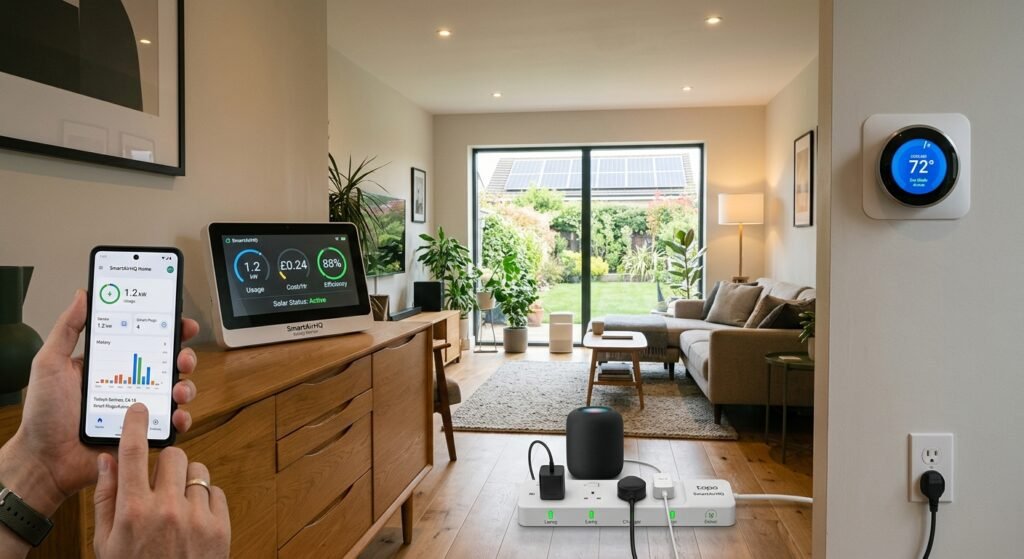
If your electricity bill keeps rising, the most effective approach is not simply to switch everything off. The better strategy is to understand where electricity is being used, reduce unnecessary consumption, and improve the efficiency of the appliances and systems that run most often. Learning how to reduce electricity can help lower monthly energy costs without making your home uncomfortable.
This guide covers practical ways to reduce electricity consumption, from lighting and standby electronics to air conditioning, fans, appliances, water heating, and home maintenance. You will also learn how to identify the biggest sources of household electricity use so you can focus your efforts where they matter most.
Explore More Home and Energy Guides
For more practical home, appliance, and energy-related advice, explore SmartAirHQ.
Affiliate Disclosure: This article contains affiliate links. If you purchase through qualifying links, SmartAirHQ may earn a commission at no additional cost to you. As an Amazon Associate, we earn from qualifying purchases.
Prices, availability, specifications, and seller information can change. Always verify current product details before purchasing.
Start by Finding Out Where Your Electricity Goes
Before buying energy-saving products or changing your daily routine, identify the appliances and systems responsible for the largest portion of your electricity use. Heating and cooling, water heating, refrigeration, lighting, cooking, and electronics can all contribute to household consumption.
Start by reviewing your electricity bills and observing which equipment operates for the longest periods. A home energy assessment can also help identify opportunities to improve efficiency. The U.S. Department of Energy explains more in its guide to why energy efficiency matters.
Check Your Electricity Bill and Usage Pattern
Your electricity bill can reveal more than the amount you owe. Look for the number of units or kilowatt-hours (kWh) consumed during each billing period and compare them with previous periods.
A sudden increase may indicate changes in appliance usage, cooling demand, occupancy, or another electrical load. If your utility provides hourly or daily consumption information, use it to identify periods when electricity use is unusually high.
Identify the Appliances That Run the Longest
An appliance does not necessarily need to have the highest wattage to become a major electricity consumer. Equipment that operates for many hours can accumulate significant energy use over time.
Air conditioners, refrigerators, freezers, water heaters, fans, computers, pumps, and other frequently used devices deserve particular attention. Focus first on equipment that combines high power consumption with long operating hours, because reducing unnecessary runtime can produce more meaningful results than constantly switching small devices on and off.
Use an Energy Monitor When You Need More Detail
An electricity usage monitor can help you understand how much power an individual appliance or circuit is consuming. This can be particularly useful when you suspect that an older appliance, entertainment setup, computer workstation, refrigerator, or other equipment is using more electricity than expected.
Measurements can turn guesses into practical decisions: reduce usage, change operating habits, improve maintenance, or consider replacing inefficient equipment when replacement makes financial sense.
For help choosing a suitable device, explore our Smart Energy Monitor Buying Guide.
Check Energy Usage Monitors on Amazon
Explore energy monitors that can help you track household electricity consumption and identify potential opportunities to reduce wasted power.
Check Energy Usage Monitors on Amazon
Check product compatibility, supported electrical systems, installation requirements, and specifications before purchasing. Some whole-home monitors require professional installation.
Reduce Electricity by Improving Lighting
Lighting is one of the easiest areas to address because improvements can often be made without changing how a room is used. The basic strategy is simple: use efficient lighting, avoid illuminating empty spaces, and take advantage of natural light whenever practical. The U.S. Department of Energy recommends efficient lighting technologies such as LEDs and notes that lighting controls, timers, and occupancy sensors can further reduce unnecessary operation. (The Department of Energy’s Energy.gov)
Replace Frequently Used Bulbs With LED Lighting
LED bulbs generally use much less electricity than traditional incandescent bulbs while providing the same basic lighting function. If replacing every bulb at once is not practical, start with lights that operate for the longest number of hours each day. Kitchens, living rooms, work areas, outdoor security lights, and other frequently illuminated locations can be sensible starting points.
Check Energy-Efficient LED Bulbs on Amazon
If you are replacing frequently used bulbs, compare energy-efficient LED options based on brightness, color temperature, bulb type, expected lifespan, and fixture compatibility.
Check Energy-Efficient LED Bulbs on Amazon
Check the bulb’s size, base type, wattage equivalent, dimmer compatibility, and other specifications before purchasing.
Turn Off Lights When Rooms Are Empty
Turning off lights in unoccupied rooms is a straightforward habit that costs nothing. You can make this easier by using timers, occupancy sensors, or smart controls where appropriate. The goal is not to obsess over every light but to eliminate unnecessary hours of operation. A light that stays on when nobody is using the room consumes electricity without providing useful illumination.
Check Motion and Occupancy Sensor Lights on Amazon
For rooms where lights are frequently left on, motion or occupancy sensors can automate lighting and help reduce unnecessary operating time.
Check Motion and Occupancy Sensor Lights on Amazon
Before purchasing, check whether the sensor is suitable for indoor use, whether it requires a compatible fixture or switch, and whether the installation method works with your existing electrical setup.
Make Better Use of Natural Light
During daylight hours, open curtains, blinds, or shades when outdoor light can adequately illuminate a room. Arrange frequently used workspaces near useful natural light when possible.
This does not mean keeping every window uncovered throughout the day. In hot weather, window coverings may also help control unwanted solar heat. A balanced approach can reduce lighting demand while also helping manage cooling needs, depending on the room, window exposure, and climate.
Reduce Standby Electricity From Electronics
Many modern electronics remain connected to the electrical supply even when they are not actively being used. Chargers, televisions, computers, printers, game consoles, networking equipment, speakers, and other devices can contribute to standby electricity consumption.
The practical solution is to identify equipment that does not need to remain powered continuously and make it easier to disconnect or switch off those devices. The U.S. Department of Energy recommends power strips and smart plugs as convenient ways to control certain electronics. (The Department of Energy’s Energy.gov)
Use Power Strips for Groups of Electronics
A power strip can make several devices easier to switch off together. For example, a television setup may include a TV, streaming device, speakers, and gaming equipment. Instead of unplugging each device individually, a suitable power strip can provide a single control point.
Choose products with appropriate electrical ratings and use them according to the manufacturer’s instructions, particularly around high-power appliances.
Consider Smart Plugs for Convenient Control
Smart plugs can be useful when an appliance or electronic device does not need to operate continuously. Scheduling can automatically turn selected equipment off during periods when it is normally unused. This is especially convenient for devices that are easy to forget.
However, do not use a smart plug with equipment unless the plug is properly rated for the appliance and the manufacturer’s instructions permit that type of use.
Check Power Strips and Smart Plugs on Amazon
If you want to make standby-power management easier, compare suitable power strips and smart plugs based on electrical ratings, compatibility, scheduling features, and the type of equipment you plan to control.
Check Power Strips and Smart Plugs on Amazon
Always check the product’s electrical rating and manufacturer’s instructions before connecting equipment.
Reduce Electricity Used by Air Conditioning and Heating
Heating and cooling deserve special attention because HVAC equipment can operate for long periods, especially during extreme weather. Instead of focusing only on the thermostat, look at the entire system: temperature settings, filters, airflow, insulation, air leakage, fans, windows, and equipment condition. The U.S. Department of Energy identifies heating and cooling as major household energy uses and recommends combining appropriate controls, maintenance, air sealing, and insulation. (The Department of Energy’s Energy.gov)
Adjust the Thermostat When You Are Away or Asleep
If your home is empty for several hours, maintaining the exact same indoor temperature may use electricity unnecessarily. Adjusting the thermostat according to your schedule can reduce heating or cooling demand. Programmable controls can automate these changes so you do not have to remember them every day.
The ideal setting depends on your climate, comfort preferences, equipment, and household needs, so focus on reasonable adjustments rather than extreme temperatures.
Keep Air Filters Clean and Airflow Unrestricted
A dirty or clogged filter can restrict airflow and make an air-conditioning or heating system work less effectively. Check the equipment manufacturer’s recommendations for inspection, cleaning, or replacement intervals because filter requirements differ between systems.
Also keep supply and return vents unobstructed. Better airflow helps the system deliver conditioned air where it is needed instead of forcing it to operate under unnecessarily restrictive conditions. (The Department of Energy’s Energy.gov)
Check Smart Thermostats and HVAC Filters on Amazon
If you are improving HVAC efficiency, compare compatible smart or programmable thermostats and replacement filters based on your equipment requirements, installation needs, filter size, and manufacturer’s specifications.
Check Smart Thermostats and HVAC Filters on Amazon
Always verify thermostat compatibility and filter dimensions before purchasing. Some thermostat installations may require a compatible wiring configuration or professional installation.
Use Ceiling Fans Strategically
Fans can improve perceived comfort by moving air across your skin, allowing you to feel cooler without requiring the air conditioner to do all the work. A fan does not actually need to cool an empty room, however, so switch it off when nobody is using the space.
Combining fans with sensible thermostat settings can be a practical way to improve comfort while reducing the need for air conditioning. (The Department of Energy’s Energy.gov)
Stop Energy Loss Through Doors, Windows, and Air Leaks
Reducing electricity is not always about using less electricity directly. Sometimes the bigger opportunity is preventing conditioned air from escaping. Gaps around doors, windows, utility penetrations, and other parts of the building envelope can increase the workload placed on cooling and heating equipment.
Air sealing and insulation are therefore important parts of an energy-efficiency strategy, particularly in homes with noticeable drafts or temperature differences between rooms. (The Department of Energy’s Energy.gov)
Use Weatherstripping Around Leaky Doors and Windows
Weatherstripping can help reduce unwanted air movement around movable parts of doors and windows. Before buying materials, inspect where drafts are actually occurring and select a product suitable for the particular surface and gap.
Sealing obvious leaks can complement thermostat changes because the HVAC system may not have to compensate as much for conditioned air escaping outdoors.
Improve Insulation Where It Makes Sense
Insulation slows heat transfer between the indoor and outdoor environments. If a home has inadequate insulation, heating and cooling equipment may need to operate longer to maintain comfortable indoor conditions.
The appropriate insulation solution depends on the building structure, climate, existing insulation, and installation requirements. Air sealing should also be considered because insulation alone does not automatically stop air leakage. (The Department of Energy’s Energy.gov)
Shop Air-Sealing and Insulation Materials on Amazon
For smaller air-sealing projects, compare suitable weatherstripping, door seals, and other compatible materials based on the size and location of the gap. Larger insulation projects may require a professional assessment to determine the appropriate material, R-value, and installation method.
Check Air-Sealing and Insulation Materials on Amazon
Check product dimensions, material compatibility, installation requirements, and the manufacturer’s instructions before purchasing.
Use Kitchen and Laundry Appliances More Efficiently
Large household appliances can consume substantial electricity, particularly when they heat, cool, dry, or operate for extended periods. The easiest improvements often come from changing how and when appliances are used rather than immediately replacing them.
When an appliance eventually needs replacement, efficiency should be one factor in the purchasing decision alongside size, features, maintenance requirements, and purchase cost. The U.S. Department of Energy recommends considering energy efficiency when upgrading household equipment. (The Department of Energy’s Energy.gov)
Reduce Unnecessary Oven and Cooking Time
Electric ovens and other heating appliances can require significant power while operating. When practical, match the cooking method to the job instead of automatically using the largest appliance available.
For smaller meals, an appropriately sized appliance may be more convenient and can avoid heating a larger cooking space than necessary. Avoid repeatedly opening an oven while cooking because doing so can interfere with temperature control and may extend the cooking process.
Use Washers and Dryers With Efficient Habits
Laundry electricity use can be influenced by wash temperature, cycle selection, load size, and drying practices. Follow the appliance manufacturer’s instructions and avoid running a machine for very small loads when a normal full load can be handled safely.
Dryers deserve particular attention because they use heat and can run for extended periods. Clean lint filters as recommended and make sure airflow is not unnecessarily restricted.
Maintain Refrigerators and Freezers Properly
Refrigerators and freezers operate continuously, so proper maintenance matters. Keep doors closed as much as practical, check that seals are in good condition, and avoid blocking airflow around the equipment.
Do not place a refrigerator next to a major heat source if you can reasonably avoid it. If an older appliance is nearing replacement, compare its expected operating costs with the purchase price of a more efficient model.
Reduce Electricity Used for Water Heating
Water heating can be an overlooked source of electricity consumption because the equipment may operate automatically throughout the day. The amount of electricity used depends on the type of water heater, water temperature, household demand, incoming water temperature, and the condition of the system.
Reducing unnecessary hot-water use and improving the efficiency of the water-heating system can therefore complement other electricity-saving measures in your home. (The Department of Energy’s Energy.gov)
Avoid Heating More Hot Water Than You Need
Shorter hot-water use and sensible temperature settings can reduce the amount of energy required to heat water. If your water heater has adjustable controls, consult the manufacturer’s instructions and consider an appropriate setting for your household.
Water-heating systems differ, so avoid making changes without understanding the equipment. If you are unsure about an electrical water heater or its controls, professional assistance is preferable.
Consider Water Heater Insulation Where Appropriate
Insulation can help reduce heat loss from certain water-heating systems. A suitable insulation solution depends on the heater type and manufacturer requirements.
Do not cover controls, valves, vents, or other components that must remain accessible or properly ventilated. When considering any modification to an appliance, follow its instructions rather than assuming that every insulation product is appropriate.
Check Water Heater Insulation on Amazon
If your water heater is suitable for an insulation blanket or similar product, compare options based on the heater type, dimensions, insulation rating, and manufacturer’s recommendations.
Check Water Heater Insulation on Amazon
Always verify compatibility and installation requirements before purchasing or installing insulation around a water heater.
Choose Energy-Efficient Appliances When Replacement Is Necessary
Replacing an appliance solely to save electricity is not always the best financial decision if the existing equipment still works efficiently enough for your needs. However, when a refrigerator, air conditioner, washing machine, or other major appliance reaches the end of its useful life, energy efficiency should become part of the buying decision.
Look at estimated energy consumption, expected operating cost, capacity, features, and purchase price rather than choosing based on efficiency alone.
Compare Energy Use Before Buying
Two appliances can perform the same basic job while consuming different amounts of electricity. Before purchasing, compare the available energy information and consider how frequently the appliance will operate.
A slightly higher purchase price may or may not be worthwhile depending on expected usage and the difference in operating costs. The right choice is the one that provides the required performance without unnecessary energy consumption.
Match Appliance Size to Your Actual Needs
Oversized equipment can consume more energy than necessary, while undersized equipment may struggle to meet demand. This is particularly important for cooling equipment, refrigerators, water heaters, and other appliances whose energy use depends on capacity and operating conditions.
Choose an appropriately sized appliance instead of assuming that the largest available model is automatically better or more economical.
Compare the Expected Operating Cost
When two appliances have similar features, compare their estimated annual electricity consumption and calculate the potential operating-cost difference using your local electricity rate.
For example:
Annual electricity cost = Annual energy consumption (kWh) × Electricity price per kWh
This can help you determine whether paying more upfront for a more efficient appliance could make financial sense over the expected lifespan of the product.
Use Smart Controls to Reduce Unnecessary Electricity Use
Smart technology can make energy-saving habits easier because it can automate schedules and reduce the need to remember every switch manually. Smart plugs, timers, programmable thermostats, occupancy sensors, and smart lighting controls can all help manage when equipment operates. Technology is most useful when it solves a specific problem, such as equipment remaining on unnecessarily or a heating and cooling system operating at the same setting while nobody is home. (The Department of Energy’s Energy.gov)
Automate Devices That Do Not Need Continuous Power
Start with equipment that follows a predictable schedule. A smart plug or timer can potentially disconnect selected electronics during sleeping hours or other periods when they are not needed.
Avoid automating essential appliances or systems unless you understand their operating requirements. The purpose of smart control is not to make every device connected to an app; it is to eliminate unnecessary operating time with as little effort as possible.
Use Smart Lighting Only Where It Adds Value
Smart bulbs and switches can help with scheduling, remote control, and automation, but they are not automatically the best solution for every room. A simple switch may be sufficient for a light that is rarely forgotten.
Smart lighting becomes more useful where lights are frequently left on, where schedules are predictable, or where occupancy-based automation can reduce unnecessary operation.
Check Smart Plugs, Timers, and Smart Lighting Controls on Amazon
If you want to automate selected devices and reduce unnecessary operating time, compare smart plugs, timers, and smart lighting controls based on compatibility, electrical ratings, scheduling features, and installation requirements.
Check Smart Energy Controls on Amazon
Always verify the product’s electrical rating and manufacturer’s instructions before connecting or automating any appliance or electrical device.
Maintain Electrical and Home Equipment Instead of Letting Efficiency Decline
Maintenance is an important part of reducing wasted electricity because equipment that is dirty, obstructed, poorly adjusted, or damaged may not perform as intended. Regularly inspect filters, vents, seals, fans, and other user-serviceable components according to the manufacturer’s instructions.
For repairs involving wiring, electrical panels, damaged cords, or internal electrical components, use a qualified professional rather than attempting unsafe work yourself. You can find practical home maintenance resources in the Tools & Repair section.
Clean and Inspect Equipment Regularly
Simple maintenance can prevent avoidable performance problems. Check air filters, refrigerator seals, dryer lint filters, ventilation openings, and other components that the manufacturer identifies as user-maintainable.
Keep outdoor HVAC equipment free from avoidable obstructions where applicable. The exact maintenance schedule depends on the appliance, so use the manufacturer’s instructions as the primary reference rather than applying one universal schedule.
Do Not Ignore Unusual Electrical Behavior
Buzzing, overheating, burning smells, damaged cords, repeated breaker trips, sparking, or other unusual electrical behavior should not be treated as an energy-saving opportunity that you can fix casually. These signs can indicate an electrical or equipment problem.
Disconnect equipment only when it is safe to do so and seek qualified assistance for problems involving household wiring or electrical components.
Follow a Simple Daily Routine to Reduce Electricity Use
The best electricity-saving routine is one that is simple enough to maintain. Instead of trying to change dozens of habits overnight, focus on the largest recurring sources of unnecessary consumption.
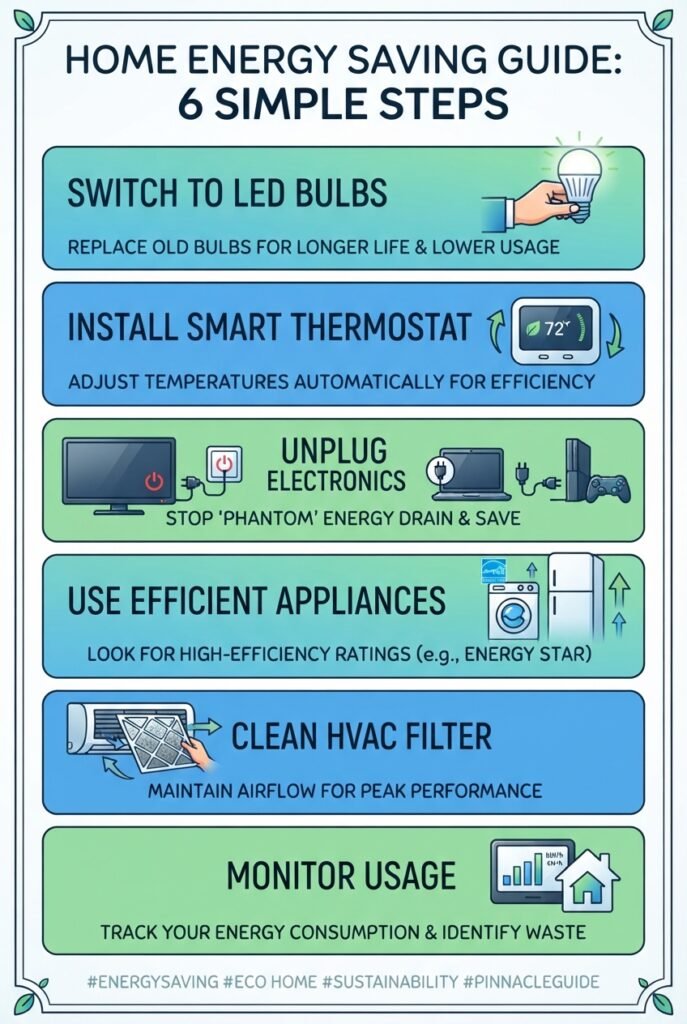
Turn off unused lighting, manage standby electronics, adjust heating and cooling schedules, maintain filters, use appliances efficiently, and monitor your electricity usage. Once those habits become routine, you can move toward larger improvements such as insulation or efficient appliance replacement.
A practical daily routine can look like this:
- Morning: Turn on only the lights and electronics you actually need.
- During the day: Use natural light and avoid cooling or heating empty rooms unnecessarily.
- Before leaving home: Check unnecessary lights, electronics, and appliances.
- While cooking: Use an appropriately sized appliance and avoid unnecessary heating.
- During laundry: Run suitable loads and use efficient cycles.
- Evening: Switch off unused electronics and lighting.
- Before bed: Check thermostats, fans, lights, and devices that do not need to remain active overnight.
The Most Effective Electricity-Saving Strategy Is to Target Waste First
Not every electricity-saving action has the same impact. Switching off one small device occasionally may save less than reducing the runtime of a major cooling system, improving airflow, or addressing significant air leakage.
A useful priority order is to first identify high-consumption equipment, then reduce unnecessary runtime, improve maintenance, address building-related energy losses, and finally consider efficient replacements when existing equipment needs to be replaced.
| Area | What to do | Why it helps |
|---|---|---|
| Lighting | Use LEDs and switch off unused lights | Reduces unnecessary lighting consumption |
| Cooling and heating | Adjust schedules and maintain systems | Reduces unnecessary HVAC runtime |
| Electronics | Use power strips or smart plugs | Helps control standby and idle equipment |
| Windows and doors | Seal noticeable air leaks | Reduces the workload on heating and cooling systems |
| Appliances | Use efficient operating habits | Reduces unnecessary operating time |
| Water heating | Reduce unnecessary hot-water use | Lowers the energy required to heat water |
| Maintenance | Keep equipment clean and functional | Helps equipment operate as intended |
| Replacement | Choose efficient equipment when needed | Can reduce long-term operating consumption |
For authoritative home energy guidance, the U.S. Department of Energy’s Energy Saver resources provide additional information about energy assessments, air sealing, insulation, lighting, appliances, and heating and cooling efficiency.
Common Mistakes That Can Increase Electricity Use
Saving electricity is not simply about purchasing products labeled as “energy saving.” A product only helps when it is appropriate for the job and actually reduces unnecessary consumption. Likewise, an appliance should not be replaced automatically just because a newer model exists.
Focus on the largest sources of electricity use rather than spending too much attention on tiny loads. Avoid unsafe electrical modifications, and make sure any energy-saving change is appropriate for the equipment and your home.
Common Mistakes to Avoid
- Leaving air conditioning or heating running at an unnecessary setting while the home is empty.
- Leaving lights on in rooms that are not being used.
- Ignoring dirty HVAC filters or blocked airflow.
- Assuming every plugged-in device needs to remain powered continuously.
- Buying an appliance based only on its purchase price.
- Replacing functioning equipment without considering the actual operating-cost difference.
- Using unsuitable extension cords, smart plugs, or power strips with high-power equipment.
- Attempting electrical repairs without the appropriate knowledge or professional support.
- Sealing or modifying building components without considering ventilation and safety requirements.
How to Reduce Electricity Without Spending Much Money
You do not need a large renovation budget to begin reducing electricity consumption. Many of the most accessible improvements involve changing operating habits rather than purchasing new equipment.
Turn off unused lighting, reduce unnecessary standby power, use natural daylight, adjust heating and cooling schedules, clean filters, maintain appliance seals, and avoid running equipment longer than necessary. These actions can be started immediately and can also help you determine whether larger upgrades are worth considering.
A Sensible Low-Cost Starting Point
- Replace the most frequently used inefficient bulbs with LEDs.
- Switch off unnecessary electronics.
- Group entertainment equipment on an appropriate power strip.
- Use smart plugs or timers for suitable devices.
- Clean or replace HVAC filters according to manufacturer guidance.
- Seal obvious drafts around suitable doors and windows.
- Use fans strategically when they improve comfort.
- Reduce unnecessary hot-water use.
- Review your electricity bill regularly.
- Measure suspicious appliances when you need better information.
Check Energy-Saving Electrical Controls on Amazon
If you want to make some of these low-cost changes easier, compare suitable smart plugs, timers, power strips, and other electrical controls based on their ratings, compatibility, and intended use.
Check Energy-Saving Electrical Controls on Amazon
Always verify electrical ratings and manufacturer instructions before connecting electrical equipment.
When Larger Energy-Efficiency Improvements Make Sense
Once low-cost habits and maintenance measures are under control, consider whether your home has larger sources of energy waste. Significant drafts, inadequate insulation, inefficient HVAC equipment, old appliances, or poorly controlled heating and cooling can justify a more detailed assessment.
The U.S. Department of Energy recommends an energy assessment to help identify which improvements are most appropriate rather than making upgrades based only on assumptions. (The Department of Energy’s Energy Saver resources)
Consider an Energy Assessment Before Major Upgrades
An energy assessment can help identify where your home is losing or consuming energy. Depending on the assessment, this may involve reviewing insulation, air leakage, heating and cooling systems, ducts, appliances, lighting, and other energy loads.
The advantage is prioritization: instead of spending money on improvements that have little effect, you can focus on the areas that offer the greatest practical opportunity for reducing energy waste.
Compare the Cost of an Upgrade With Its Expected Benefit
An energy-efficient upgrade should be evaluated as a practical financial decision, not simply as a technology purchase. Consider purchase and installation costs, expected electricity consumption, maintenance, equipment lifespan, and how frequently the system will operate.
A more efficient appliance may make particular sense when the existing unit already needs replacement, because you are already facing a purchase decision.
For larger heating and cooling improvements, you can also explore our HVAC Zoning System guide to understand how room-by-room temperature control can affect energy use.
Frequently Asked Questions About How to Reduce Electricity
Reducing electricity consumption usually comes down to a combination of better habits, efficient equipment, and controlling how long major electrical loads operate. The questions below address common concerns people have when trying to lower their electricity use without sacrificing comfort.
The most important principle is to prioritize the largest and most frequent sources of consumption instead of trying to eliminate every small electrical load.
What Is the Easiest Way to Reduce Electricity at Home?
Start with actions that cost little or nothing: switch off unused lights and electronics, manage air conditioning and heating schedules, use natural light, maintain HVAC filters, and avoid unnecessary appliance runtime. These habits can be established immediately before investing in larger efficiency upgrades.
Do LED Bulbs Really Help Reduce Electricity Use?
Yes. LED lighting generally uses much less electricity than traditional incandescent lighting while providing similar levels of illumination. For the greatest practical benefit, prioritize bulbs that operate for many hours each day rather than replacing every bulb solely for the sake of replacement. (The Department of Energy’s Energy Saver resources)
Does Unplugging Appliances Reduce Electricity Use?
Disconnecting suitable electronics can eliminate electricity consumed while equipment is idle or in standby. Power strips and smart plugs can make this easier for groups of devices.
However, some appliances need continuous power for normal operation, so do not disconnect equipment without considering its function and the manufacturer’s instructions. (The Department of Energy’s Energy Saver resources)
Can a Thermostat Reduce Electricity Consumption?
A programmable or appropriately used thermostat can reduce heating and cooling operation when the home is unoccupied or when less heating or cooling is needed. The U.S. Department of Energy identifies thermostat scheduling as one component of a broader energy-efficiency strategy. (The Department of Energy’s Energy Saver resources)
Should I Replace All My Appliances to Reduce Electricity?
Not necessarily. Replacing appliances can be expensive, so consider efficiency when an appliance is already old, inefficient, unreliable, or due for replacement.
Compare expected energy use and operating costs with the purchase and installation cost before making the decision. A newer appliance is not automatically the most cost-effective choice if the existing equipment is still performing efficiently enough for your needs.
What Uses the Most Electricity in a Home?
The answer varies by household, climate, equipment, and usage habits. Heating and cooling can be major electricity users, while water heating, refrigeration, lighting, cooking, laundry, and electronics can also contribute.
Measuring usage and reviewing your electricity consumption is more reliable than assuming one appliance is always responsible for the highest electricity use. (The Department of Energy’s Energy Saver resources).
Browse Amazon for Energy-Saving Home Products
If you want to make practical improvements, Amazon can be a convenient place to compare categories such as LED lighting, smart controls, power strips, HVAC filters, weatherstripping, and other home-efficiency products.
Always check current specifications, electrical ratings, compatibility, reviews, seller information, and installation requirements before purchasing.
Explore Energy-Saving Products on Amazon
Browse relevant categories for products that may support your electricity-saving efforts:
Prices, availability, specifications, and seller information can change, so verify the current product details before purchasing.
Final Thought: Focus on the Electricity You Do Not Need to Use
Learning how to reduce electricity becomes much easier when you stop looking for one magic solution and instead identify where unnecessary consumption occurs. Start with the largest recurring loads, especially heating and cooling, then work through lighting, standby electronics, appliances, water heating, air leakage, and maintenance.
The most practical strategy is simple: measure where possible, reduce unnecessary operating time, improve efficiency, maintain equipment, and replace inefficient appliances when replacement is actually justified. Small changes can become meaningful when they are repeated every day.
If you are ready to make your home more efficient, begin with one room and one electricity-saving improvement today, then build from there.
For more practical ways to manage energy use at home, explore our Smart Energy guides, including advice on monitoring electricity consumption, improving home efficiency, and using smart energy technology.