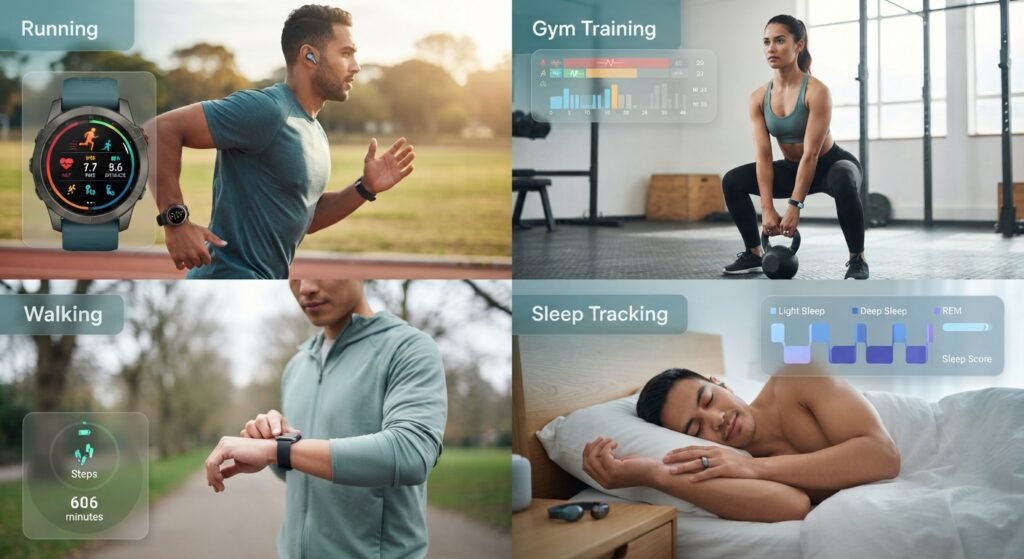
Smart wearable gadgets are electronic devices designed to be worn on the body to track activity, support fitness routines, or provide connected features. Popular types include smartwatches, fitness trackers, smart rings, recovery wearables, and dedicated heart-rate monitors.
Depending on the model, these devices can track steps, workouts, heart rate, sleep patterns, GPS activity, and other wellness metrics. Smartwatches may also offer smartphone notifications, calls, music controls, navigation, and third-party apps.
The best wearable depends on how you plan to use it. A fitness band may be enough for daily activity tracking, a smart ring may suit people who prefer a compact design, and a GPS smartwatch may be more useful for runners and outdoor athletes. Compare the features you will actually use rather than paying extra for functions you do not need.
How to Choose the Best Smart Wearable for Your Needs
Start by identifying what you want your wearable to do. You might want to increase daily activity, track workouts, understand sleep patterns, train for a race, or use smartwatch features without constantly checking your phone. Once you know your main goal, compare devices based on the features that support it.
Consider these factors before buying:
- Health tracking: Check which measurements the device records and whether they are useful for your goals.
- Fitness features: Runners, cyclists, swimmers, hikers, and gym users may need different tracking tools.
- GPS: Built-in GPS can record outdoor routes without requiring your phone to provide location data.
- Battery life: Compare expected battery life with your daily routine and charging habits.
- Comfort: Consider size, weight, material, and whether you plan to wear the device overnight.
- Phone compatibility: Confirm that the wearable supports your smartphone and its operating system.
- App quality: Check whether the companion app presents data clearly and offers the features you need.
- Subscription costs: Find out whether advanced insights, reports, or other key features require a paid membership.
- Durability: Water resistance and rugged construction may matter for swimming or outdoor activities.
- Privacy: Review the manufacturer’s privacy policy and available controls for your health and fitness data.
Choose a wearable that fits your routine, budget, and comfort preferences. A more expensive device is not necessarily a better choice if you will not use its extra features.
15 Best Smart Wearable Gadgets for Health and Fitness
The following 15 picks cover different wearable categories and needs, from everyday smartwatch features to fitness tracking, sleep insights, outdoor training, and dedicated heart-rate monitoring. Choose based on your smartphone, fitness goals, comfort, and budget rather than simply buying the device with the most features.
1. Apple Watch Series 11 — Best All-Around Wearable for iPhone Users
The Apple Watch Series 11 combines everyday smartwatch functions with health and fitness tracking. It is a strong option for iPhone users who want workout tracking, activity information, sleep insights, notifications, and access to the Apple ecosystem.
Before buying, compare its features, compatibility, and charging routine with your daily needs.
🛍️ Shop Apple Watch Series 11 on Amazon
2. Apple Watch SE 3 — Best Value Apple Watch Option
The Apple Watch SE 3 is worth considering if you want everyday smartwatch functions and fitness tracking without necessarily paying for a higher-end model. It may suit beginners and iPhone owners who mainly need activity tracking, workouts, notifications, and convenient smartphone integration.
Compare available features with more expensive Apple Watch models before deciding.
🔎 Find Apple Watch SE 3 on Amazon.
3. Garmin vívoactive 6 — Best Everyday Fitness Watch
The Garmin vívoactive 6 is designed for people who want activity tracking and fitness features as part of their daily routine. Consider it for walking, running, gym workouts, and general wellness tracking.
Compare its supported activities, battery expectations, and companion app with your preferred fitness routine.
⭐ Explore Garmin vívoactive 6 on Amazon.
4. Garmin Venu 4 — Best Fitness and Smartwatch Balance
The Garmin Venu 4 is an option for users who want a combination of smartwatch convenience and fitness-focused features. It may suit people who want everyday activity information, workout tracking, and wellness tools in one wearable.
Check the current specifications and compare its features with other Garmin watches before purchasing.
🏠 Find Garmin Venu 4 on Amazon.
5. Garmin fēnix 9 — Best for Outdoor Fitness and Multisport Training
The Garmin fēnix series is designed for outdoor enthusiasts and people who take structured training seriously. It is worth considering for hiking, trail running, cycling, endurance activities, and navigation-focused workouts.
Because this is a specialized category, verify the exact model name and listing before purchasing.
🛒 Check Garmin fēnix 9 on Amazon.
6. Fitbit Charge 6 — Best Compact Fitness Tracker
The Fitbit Charge 6 offers a compact alternative to a full smartwatch. It can suit users who want to track everyday activity, workouts, heart-rate information, and sleep without wearing a larger device.
Check phone compatibility and whether any features you want require a subscription.
✨ Explore Fitbit Charge 6 on Amazon.
7. Fitbit Air — Best Minimalist Screen-Free Wearable
A screen-free wearable can appeal to people who want to track activity and wellness while reducing wrist notifications and digital distractions. Comfort, battery life, app features, and data access are important considerations when comparing this type of device.
Verify the exact Fitbit Air product listing and its included features before purchasing.
🔗 See Fitbit Air on Amazon.
8. Oura Ring 5 — Best Smart Ring for Sleep and Wellness
A smart ring offers a discreet alternative to a smartwatch or fitness band. It may suit users interested in sleep patterns, activity, and wellness trends without wearing a traditional watch overnight.
Before buying, verify the exact Oura model and compare ring sizing, compatibility, and any recurring membership costs.
🛍️ Shop Oura Ring on Amazon.
9. WHOOP 5.0 — Best for Recovery and Training Insights
WHOOP focuses on fitness, sleep, strain, and recovery insights rather than conventional smartwatch features. It may appeal to athletes and regular exercisers who want to review patterns in their training and rest.
Check the membership requirements and total long-term cost before committing.
🔎 Find WHOOP 5.0 on Amazon.
10. Samsung Galaxy Watch 8 — Best for Samsung and Android Users
The Samsung Galaxy Watch 8 combines smartwatch functionality with health and fitness features. It is worth considering for Android users, particularly those who already use Samsung phones and services.
Compare phone compatibility, battery expectations, supported features, and app availability before purchasing.
⭐ Explore Samsung Galaxy Watch 8 on Amazon.
11. Samsung Galaxy Watch Ultra 2 — Best Rugged Samsung Wearable
A rugged smartwatch may suit users who enjoy outdoor activities and prefer a durable design with fitness-focused features. For basic walking and daily activity tracking, however, a smaller smartwatch or fitness band may be more practical.
Verify the exact model name and current listing details before purchasing.
🏠 Find Samsung Galaxy Watch Ultra 2 on Amazon.
12. Google Pixel Watch 4 — Best for Google and Fitbit Users
The Google Pixel Watch 4 is an option for Android users who want smartwatch functions alongside health and fitness tracking. It may be particularly appealing if you already use Google services or compatible Fitbit features.
Compare compatibility, battery life, available apps, and fitness tools with competing watches.
🛒 Check Google Pixel Watch 4 on Amazon.
13. Amazfit Balance 2 — Best Feature-Rich Alternative
The Amazfit Balance 2 is worth comparing if you want smartwatch features and fitness tracking beyond the most familiar wearable brands. Consider its supported activities, companion app, battery expectations, and regional feature availability.
Compare the current listing and specifications before making a purchase.
✨ Explore Amazfit Balance 2 on Amazon.
14. Samsung Galaxy Fit3 — Best Simple Fitness Band
The Samsung Galaxy Fit3 is a lightweight option for people who want everyday activity, workout, and sleep tracking without a full smartwatch experience. Its simpler design may suit beginners who want to build consistent movement and exercise habits.
Check compatibility with your smartphone and the tracking features available in your region.
🔗 See Samsung Galaxy Fit3 on Amazon.
15. Polar H10 — Best Dedicated Heart-Rate Monitor
The Polar H10 is a chest-strap heart-rate monitor rather than a smartwatch or fitness band. It can be useful for athletes who want dedicated heart-rate measurements during training and prefer to pair a separate sensor with compatible fitness equipment or apps.
Check compatibility with your existing devices and training applications before buying.
🛍️ Shop Polar H10 on Amazon.
Quick Comparison of the 15 Best Wearables
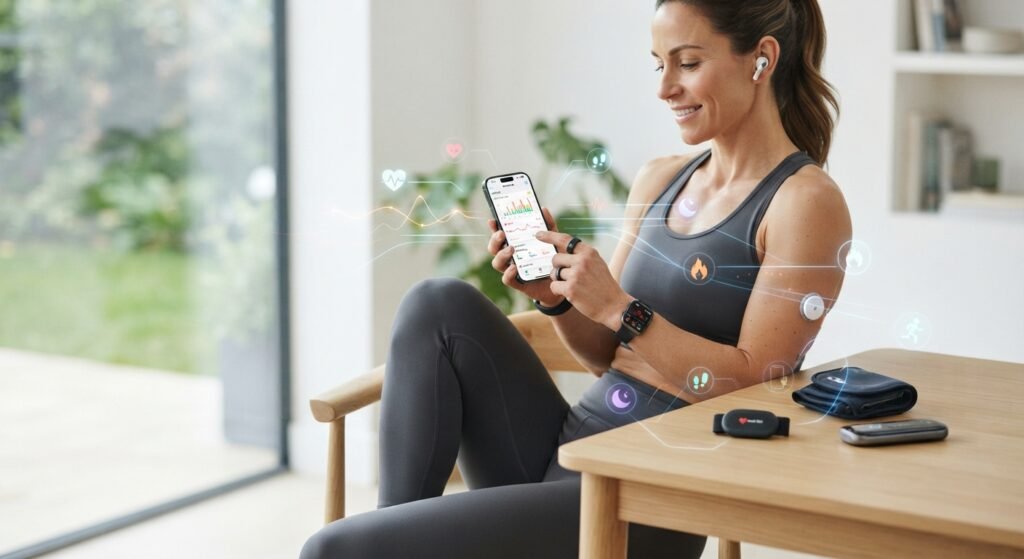
Different wearable categories serve different needs. Use this table to compare the main options before exploring individual products, checking compatibility, and reviewing current prices.
| Wearable | Best For | Type | Main Reason to Consider |
|---|---|---|---|
| Apple Watch Series 11 | iPhone users | Smartwatch | Connected health, fitness, and everyday features |
| Apple Watch SE 3 | Apple value buyers | Smartwatch | Core smartwatch functionality |
| Garmin vívoactive 6 | Everyday fitness | Fitness smartwatch | Activity and workout tracking |
| Garmin Venu 4 | Fitness and smartwatch use | Smartwatch | Everyday features with fitness tracking |
| Garmin fēnix 9 | Outdoor athletes | Rugged smartwatch | Outdoor activities and training |
| Fitbit Charge 6 | Compact tracking | Fitness tracker | Lightweight fitness-focused design |
| Fitbit Air | Minimalist tracking | Screen-free wearable | Reduced screen distraction |
| Oura Ring | Sleep and wellness | Smart ring | Discreet wearable design |
| WHOOP 5.0 | Recovery-focused training | Screen-free wearable | Sleep, strain, and recovery insights |
| Samsung Galaxy Watch 8 | Samsung and Android users | Smartwatch | Connected features within the Samsung ecosystem |
| Samsung Galaxy Watch Ultra 2 | Outdoor Android users | Rugged smartwatch | Rugged design and outdoor-oriented features |
| Google Pixel Watch 4 | Google and Fitbit users | Smartwatch | Connected Google and fitness features |
| Amazfit Balance 2 | Feature-focused shoppers | Smartwatch | Broad smartwatch and fitness functionality |
| Samsung Galaxy Fit3 | Beginners | Fitness band | Simple daily activity tracking |
| Polar H10 | Serious training | Chest-strap monitor | Dedicated heart-rate monitoring |
Buying tip: Choose the wearable that matches your main goal, smartphone, comfort preferences, and budget. Before purchasing, verify the exact model, supported features, and any subscription requirements on the manufacturer’s website or current retailer listing.
Smartwatch vs. Fitness Tracker vs. Smart Ring
The form factor you choose can affect your experience as much as the brand itself. Smartwatches generally suit people who want a display, apps, notifications, and connected features. Fitness trackers are better for users who prioritize activity and wellness tracking in a simpler, compact design.
Smart rings offer a more discreet alternative, particularly for people interested in sleep and wellness tracking who prefer not to wear a watch overnight.
Before choosing a device, consider what you want to see on your wrist—or whether you prefer a wearable without a screen.
Choose a Smartwatch If You Want an All-in-One Device
A smartwatch is a good choice if you want health and fitness tracking alongside notifications, apps, music controls, navigation, timers, and other connected features.
Apple Watch, Samsung Galaxy Watch, Google Pixel Watch, and Garmin smartwatch models are all worth comparing, depending on your smartphone and fitness goals.
The main consideration is whether you will use the extra features. If you mainly want step counting and sleep tracking, a simpler wearable may be more practical.
Choose a Fitness Band If You Prefer Simplicity
A fitness band suits users who mainly want activity tracking, workout information, sleep estimates, heart-rate data, and selected notifications.
Its smaller design may also be more comfortable for overnight wear. If you do not need extensive smartwatch features, a dedicated fitness tracker can be a practical and budget-conscious choice.
Choose a Smart Ring If Comfort and Sleep Matter Most
A smart ring can appeal to people who prefer a discreet wearable without a screen on their wrist.
Before buying, consider ring sizing, comfort, battery life, companion-app features, and any subscription requirements. Not every smart ring offers the same measurements or capabilities, so compare the specifications of the exact model.
Choose a Recovery Wearable If Training Insights Are Your Priority
Recovery-focused wearables are designed to help users explore patterns involving exercise, sleep, rest, and selected physiological measurements.
They may be useful for frequent exercisers and athletes who want additional context about their routines. However, recovery and readiness scores are estimates, not definitive measures of how prepared you are to exercise. Consider them alongside how you feel, your sleep, and your overall training habits.
Which Health and Fitness Metrics Matter Most?
Wearables can collect a large amount of information, but more data does not automatically lead to better decisions. Start with a few measurements that relate directly to your goals.
Explore connected products and useful devices for pets in Pet Tech Gadgets for Smarter Pet Care.
Common wearable metrics include:
- Daily steps and movement: Help you understand your everyday activity levels.
- Heart rate: Useful for monitoring exercise intensity and observing personal trends.
- Sleep duration: Helps you review sleep patterns and changes in your routine.
- Heart-rate variability (HRV): Used by some devices as one input for recovery-related insights.
- GPS distance and pace: Useful for outdoor running, cycling, and walking when supported.
- Workout duration: Helps you monitor exercise consistency.
- Training load or strain: Can help frequent exercisers review the demands of their workouts.
- Recovery or readiness scores: Summarize selected measurements into an estimate that may help with routine planning.
- Temperature-related measurements: Available on certain devices for specific wellness features.
- ECG features: Available on some compatible devices to record electrical signals associated with heart activity.
Features and measurement accuracy vary by model. Wearable readings are useful for observing trends, but they should not be treated as medical diagnoses. ECG and other health features may have device, regional, and eligibility restrictions.
The most useful approach is to focus on meaningful trends over time rather than reacting to every individual reading.
How to Get More Value From Your Wearable
A wearable becomes more useful when its data helps you make practical decisions. Simply collecting hundreds of measurements does not automatically improve your health or fitness.
Learn about connected devices designed to support home monitoring and security in our guide to the Best Smart Home Security Gadgets for 2026.
Start with one or two realistic goals. If you want to become more active, use your tracker to monitor movement and build a consistent routine. If sleep is your priority, look for patterns over time instead of worrying about a single night’s score.
For general fitness, regular physical activity, strength training, adequate recovery, and healthy daily habits matter more than owning a particular device.
Review your wearable’s data periodically, focus on measurements relevant to your goals, and avoid letting daily scores create unnecessary stress. The device should support your habits—not become the habit itself.
For more practical product recommendations and technology buying advice, explore the SmartAirHQ home page.
Common Smart Wearable Buying Mistakes to Avoid
Wearable purchases can disappoint when shoppers focus on specifications instead of everyday usability. A device may offer advanced sensors and impressive features but still be the wrong choice if it is uncomfortable, incompatible with your phone, difficult to use, or expensive to maintain.
Avoid these common mistakes:
- Paying for features you do not need: Choose functions that support your actual health and fitness goals.
- Ignoring smartphone compatibility: Confirm that the wearable works with your phone and operating system.
- Overlooking subscription costs: Check whether advanced insights or essential features require recurring payments.
- Choosing an uncomfortable design: Consider weight, size, fit, and overnight comfort.
- Underestimating battery life: Compare expected battery performance with your daily routine.
- Buying more durability than you need: A rugged outdoor watch may be unnecessary for basic walking and activity tracking.
- Treating wellness scores as medical diagnoses: Health and recovery estimates provide context, not definitive medical conclusions.
- Ignoring the companion app: Check its usability, supported features, and data presentation before buying.
- Choosing based only on brand popularity: Compare the actual features and compatibility of each model.
- Focusing on specifications instead of goals: More sensors and features do not automatically make a wearable more useful.
The best wearable is one that fits your routine, feels comfortable, and remains useful long after the initial excitement of buying it has passed.
Wearable Health Data, Accuracy, and Privacy
Smart wearable gadgets can provide useful information about activity, sleep, heart rate, and selected wellness measurements, but their capabilities and accuracy vary by model. Different devices use different sensors, algorithms, and measurement methods, so readings may not always match those from professional medical equipment.
Use wearable data primarily to observe personal patterns over time. A single reading or recovery score does not necessarily indicate a health problem, and consumer wearables should not replace professional medical assessment.
Privacy matters, too. Before buying, review the manufacturer’s privacy policy and check how your health and fitness data is collected, stored, processed, and shared. Where available, review account permissions, data-sharing settings, and options for downloading or deleting your information.
If a wearable reports an unexpected result, consider the device’s instructions and repeat the measurement when appropriate. If you have concerning symptoms, seek professional medical advice rather than relying solely on a wearable reading.
How Much Should You Spend on a Smart Wearable?
There is no single price that makes a wearable worth buying. Your budget should reflect how often you plan to use the device and which features matter most to you.
Discover automated kitchen appliances that can make everyday cooking more convenient in our Smart Kitchen Gadgets Buying Guide.
A basic fitness band may be enough for daily activity and sleep tracking. A premium smartwatch may be worth considering if you want apps, notifications, navigation, and broader fitness features. Runners and outdoor athletes may benefit from specialized training tools.
Before purchasing, consider the total cost of ownership, including replacement bands, accessories, optional subscriptions, and how long you expect to use the device. Compare the features you will actually use rather than paying extra for specifications you do not need.
Browse Smart Wearable Gadgets on Amazon
Once you know which wearable category suits your needs, compare current Amazon listings to review available models, prices, colors, sellers, and product configurations.
Check the exact model and generation, smartphone compatibility, included accessories, return policy, warranty information, and any recurring subscription costs before ordering. Similar product names do not always mean identical specifications.
🛒 Browse Smart Wearable Gadgets on Amazon.
Compare the available options carefully and choose a wearable that matches your goals, comfort preferences, and budget.
Frequently Asked Questions About Smart Wearable Gadgets
What is the best smart wearable for health and fitness?
There is no single best wearable for everyone. Apple Watch is a strong choice for many iPhone users, Garmin is especially relevant for fitness-focused users, Oura is designed around smart-ring wellness tracking, and WHOOP emphasizes recovery and training insights.
Is a smartwatch better than a fitness tracker?
Not necessarily. A smartwatch provides more connected features, while a fitness tracker usually focuses on activity and health information. Choose the category that matches your actual needs.
Is a smart ring good for sleep tracking?
A smart ring can be a good choice for people who want discreet overnight tracking and do not enjoy wearing a traditional smartwatch while sleeping.
Do fitness trackers accurately measure health information?
Wearables can provide useful estimates and personal trends, but accuracy varies by device, sensor, algorithm, activity, fit, and measurement type. They should not automatically be considered equivalent to clinical measurements.
Do smart wearables require subscriptions?
Some wearable platforms offer subscription-based features, while others provide substantial functionality without a recurring membership. Always check the current terms before purchasing.
What should beginners look for in a fitness tracker?
Beginners should prioritize comfort, reliable activity tracking, simple software, reasonable battery life, smartphone compatibility, and a price that fits their budget.
What is the best wearable for runners?
Runners should prioritize GPS, workout tracking, battery life, heart-rate information, training tools, and comfort. Fitness-focused Garmin watches are particularly relevant, although Apple, Samsung, Google, and other GPS-enabled watches may also suit runners who want broader smartwatch features.
Can a wearable replace a medical device?
No. Consumer wearables can provide personal health and fitness information, but they should not be considered universal replacements for professional medical evaluation or dedicated medical equipment.
Should I buy a smartwatch or a smart ring?
Choose a smartwatch if you want a display, notifications, apps, and connected features. Choose a smart ring if discreet design, comfort, and sleep or wellness tracking are more important to you.
Smart Wearable Gadgets Buying Guide — Final Thoughts
The best smart wearable gadget is not necessarily the most expensive or the one with the longest feature list. The better choice is the device that matches your fitness goals, smartphone, comfort preferences, budget, and everyday routine.
Choose a smartwatch if you want an all-in-one connected experience. Choose a fitness band if you want simple activity and wellness tracking. Consider a smart ring if discreet overnight tracking is important. If you are a serious athlete, prioritize GPS, training features, battery life, workout analytics, and sensors that actually support your training.
Most importantly, buy a wearable you will actually use. Consistent use and meaningful habits matter more than having every possible feature.
If you enjoy researching technology before making a purchase, SmartAirHQ offers additional guides designed to help readers compare products and understand useful technology.
Affiliate Disclosure
As an Amazon Associate, SmartAirHQ earns from qualifying purchases. This article contains affiliate links, and SmartAirHQ may earn a commission if you purchase through qualifying links, at no additional cost to you.
The Amazon links throughout this guide are intended to help readers find relevant products and compare current options. Prices, availability, specifications, seller information, and product listings can change, so verify the current information before purchasing.
Browse the complete Smart Gadgets category for more technology buying guides and practical recommendations.
Amazon’s Associates program provides tools for creating tagged links to Amazon products and pages. Your Associate tracking ID should be generated and managed through your Amazon Associates account.