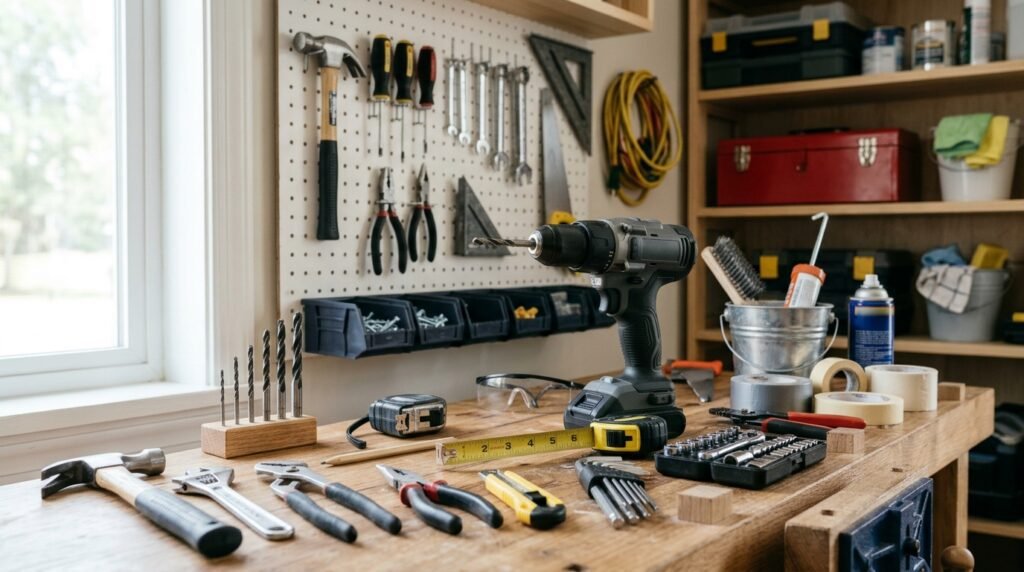
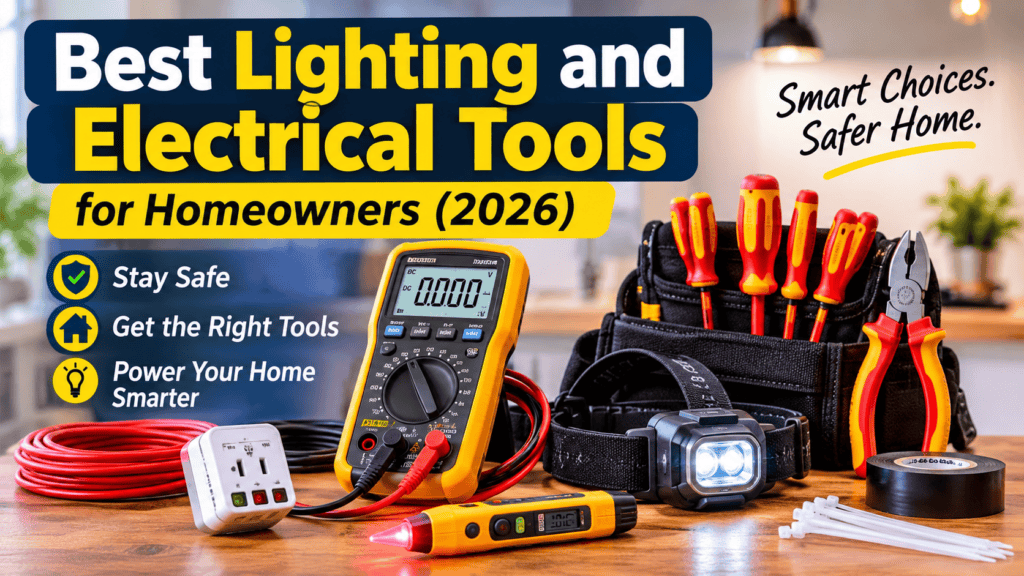
Choosing the best lighting and electrical tools can make home maintenance more organized, accurate and efficient. Whether you are inspecting a lighting fixture, organizing electrical cables or preparing a basic home maintenance kit, having the right equipment helps you handle suitable tasks with greater confidence.
Learn about lumens and light output to understand brightness levels and choose suitable lighting for different rooms and spaces.
However, electrical work requires more than ordinary household tools. Equipment must be appropriate for the task, properly rated and maintained in good condition. Some tools are useful for basic inspections and preparation, while electrical testing, wiring modifications and repairs should be handled by qualified professionals.
In this guide, we compare 10 useful lighting and electrical tools, explain which features matter when buying them, and help homeowners choose equipment according to their maintenance needs and experience.
Disclosure: This article contains affiliate links. As an Amazon Associate, SmartAirHQ earns from qualifying purchases. We may also earn commissions through other affiliate links at no additional cost to you. Our recommendations are intended to provide useful product information, not replace professional electrical advice.
Quick Comparison: 10 Essential Lighting and Electrical Tools
| Tool | Main Purpose | Best For |
|---|---|---|
| Non-contact voltage tester | Detecting the presence of AC voltage | Preliminary electrical checks |
| Digital multimeter | Measuring electrical values | Qualified electrical testing |
| Insulated screwdriver set | Handling compatible electrical fasteners | Electrical professionals |
| Wire stripper and cutter | Preparing electrical wires | Qualified wiring work |
| LED headlamp | Providing hands-free illumination | Inspection and maintenance |
| Electrical fish tape | Guiding cables through suitable pathways | Professional cable installation |
| Insulated combination pliers | Gripping and handling components | Electrical maintenance |
| Electrical outlet tester | Checking certain outlet wiring conditions | Basic outlet screening |
| Cable management kit | Organizing and securing cables | Home cable organization |
| Electrical tool organizer | Storing and protecting equipment | Home maintenance |
Non-Contact Voltage Tester
A non-contact voltage tester is one of the most useful electrical testing tools for identifying the presence of AC voltage without directly touching an exposed conductor.
It typically detects an electrical field and provides an audible or visual indication. This makes it useful as a preliminary screening device when inspecting suitable electrical equipment.
Important features to consider:
- Suitable AC voltage detection range
- Clear visual and audible alerts
- Low-battery indication
- Automatic self-test or function check
- Durable housing and comfortable grip
- Clear manufacturer instructions
A non-contact tester should not be treated as proof that a circuit is safe. Its readings can be affected by the testing conditions, and it may fail to detect certain hazards. Qualified electrical professionals should follow appropriate procedures and use suitable equipment to verify that circuits are de-energized.
Buying recommendation: Choose a model with clearly stated operating specifications, a reliable self-test procedure and instructions that explain its limitations.
🛒 Check Non-Contact Voltage Testers on Amazon
Professional Digital Multimeter
A digital multimeter measures electrical quantities such as voltage, current and resistance. It is a versatile instrument used by electricians, technicians and other trained professionals.
Different multimeters offer different measurement ranges, accuracy levels and safety ratings. Choosing one simply because it has many functions is not a good buying strategy.
Important features to consider:
- Appropriate measurement category rating (CAT)
- Voltage and current measurement ranges
- Suitable test leads and probe ratings
- Overload protection
- Clear digital display
- Manufacturer-approved replacement fuses
- Build quality and calibration support
A multimeter is not automatically safe for every electrical task. Incorrect settings, unsuitable leads or improper connections can create serious hazards. Homeowners without electrical testing experience should avoid attempting measurements on household mains circuits.
Buying recommendation: Prioritize the correct safety rating, quality test leads and manufacturer documentation over unnecessary advanced features.
🛒 Explore Digital Multimeters on Amazon
Insulated Screwdriver Set
An insulated screwdriver set is designed for specific electrical applications and typically features protective insulation around the shaft and handle.
These tools are commonly used by qualified electricians when handling compatible fasteners. However, insulated handles do not make it safe to work on energized circuits.
Important features to consider:
- Recognized insulation certification
- Clearly marked voltage rating
- Flathead and Phillips options
- Comfortable, non-slip handles
- Durable tips
- Manufacturer identification and instructions
Look for properly certified insulated tools rather than ordinary screwdrivers with plastic handles. Check the insulation for cuts, cracks and other damage before use.
Buying recommendation: Select a clearly certified set from a reputable manufacturer and choose the tip sizes that match the intended applications.
🛍️ Shop Insulated Screwdriver Sets on Amazon
Wire Strippers and Cutters
Wire strippers and cutters are designed to remove insulation and cut compatible electrical wires to the required length.
They are more suitable for controlled wire preparation than using ordinary scissors or general-purpose cutting tools.
Important features to consider:
- Clearly marked wire-size compatibility
- Adjustable stripping mechanism
- Sharp, durable cutting edges
- Comfortable handles
- Consistent stripping performance
- Appropriate tool capacity for the intended wire type
Using the wrong stripping size or excessive force can damage the conductor underneath the insulation. Damaged conductors may create unreliable connections and additional hazards.
These tools are useful additions to a professional electrical toolkit, but owning them does not qualify someone to modify household wiring.
Buying recommendation: Choose a stripper designed for the wire types and sizes it will handle. Avoid models with unclear size markings.
🔗 See Wire Strippers and Cutters on Amazon
LED Headlamp
Good visibility is important when inspecting dark storage areas, ceiling spaces and equipment enclosures.
An LED headlamp provides hands-free illumination, allowing the user to keep both hands available for suitable inspection and maintenance tasks.
Important features to consider:
- Adjustable brightness levels
- Comfortable headband
- Rechargeable or replaceable batteries
- Adjustable light direction
- Suitable runtime
- Durable construction
- Convenient charging options
A headlamp is an illumination accessory, not electrical protective equipment. It should be suitable for the environment in which it is used.
Buying recommendation: For occasional household maintenance, a lightweight rechargeable model with adjustable brightness is a practical option.
🔎 Find LED Headlamps on Amazon
Electrical Fish Tape
Electrical fish tape is a cable-guiding tool used to help route wires through suitable conduits and other pathways.
It is generally associated with electrical installation work rather than routine household repairs. Professionals use different fish tape materials depending on the installation environment and cable-routing requirements.
Important features to consider:
- Appropriate length
- Fiberglass or steel construction
- Flexibility and pushing strength
- Smooth feeding mechanism
- Durable storage case
- Compatibility with the intended conduit
The correct material depends on the job. Metal fish tape can introduce additional hazards around energized electrical equipment, while fiberglass products also require proper handling and inspection.
Never use fish tape to probe unknown spaces or work around energized conductors.
Buying recommendation: Compare length, material, flexibility and storage design before choosing a model.
⭐ Explore Electrical Fish Tape on Amazon
Insulated Combination Pliers
Combination pliers are designed for gripping, holding and manipulating compatible materials. Insulated versions are available for specific electrical applications.
Their usefulness depends on the jaw design, cutting capacity and insulation certification.
Important features to consider:
- Clearly certified electrical insulation
- Suitable jaw shape
- Comfortable grip
- Corrosion-resistant construction
- Appropriate cutting capacity
- Durable pivot mechanism
Do not confuse ordinary rubber-gripped pliers with certified insulated electrical tools. Insulation must meet the manufacturer’s specified requirements and remain undamaged.
Buying recommendation: Select certified tools from a reputable manufacturer and match their capacity to the intended work.
🏠 Find Insulated Combination Pliers on Amazon
Electrical Outlet Tester
An electrical outlet tester is a compact device that plugs into a compatible socket and identifies certain wiring conditions through indicator lights or a display.
It can help with preliminary outlet screening, but its detection capabilities vary by design.
Important features to consider:
- Compatibility with local socket standards
- Clearly explained indicator patterns
- Suitable voltage specifications
- Durable plug construction
- Manufacturer instructions
- Additional features, where appropriate
One important limitation is that basic outlet testers cannot detect every possible wiring fault. A reassuring indicator pattern does not establish that an outlet or electrical installation is completely safe.
Buying recommendation: Choose a tester designed for your country’s socket system and understand exactly which faults it can and cannot identify.
✨ Explore Electrical Outlet Testers on Amazon
Cable Management Kit
Cable management products help organize loose cords and keep workspaces more orderly.
A suitable kit may include cable ties, reusable straps, clips and cable labels. These accessories are particularly useful for managing low-voltage equipment, entertainment systems and computer accessories.
Important features to consider:
- Reusable and disposable options
- Different cable tie lengths
- Suitable clip sizes
- Durable materials
- Clear cable labels
- Compatibility with the installation surface
Avoid tightly bundling cables beyond their permitted conditions. Do not cover damaged cords, obstruct ventilation or use ordinary cable organizers as substitutes for electrical enclosures and approved wiring systems.
Buying recommendation: A mixed-size kit with reusable straps and identification labels is a practical starting point for general cable organization.
🛍️ Shop Cable Management Kits on Amazon
Electrical Tool Organizer
A dedicated electrical tool organizer helps keep equipment protected, accessible and easy to inspect.
It can be particularly useful if your collection includes testers, screwdrivers, pliers, accessories and measuring equipment.
Important features to consider:
- Separate compartments
- Protective padding
- Strong zippers or latches
- Comfortable carrying handle
- Suitable storage dimensions
- Resistance to everyday wear
Test instruments should be stored carefully to protect their displays, probes and leads. Avoid placing sharp tools where they can damage insulated equipment.
Buying recommendation: Choose an organizer with dedicated compartments rather than buying the largest available toolbox.
🔎 Find Electrical Tool Organizers on Amazon.
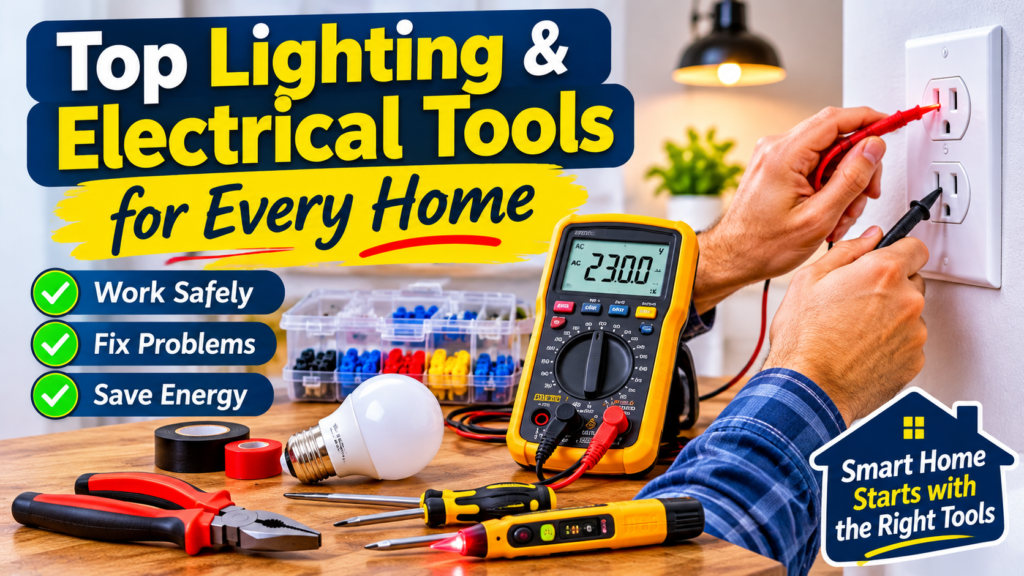
How to Choose the Best Lighting and Electrical Tools
The right toolkit depends on what you need to inspect, organize or maintain. Buying every available tool is rarely necessary.
Consider these factors before purchasing:
Safety Ratings and Certifications
For electrical testing equipment, check the manufacturer’s stated voltage and measurement category ratings. For insulated hand tools, look for recognized certification and clearly marked specifications.
Never assume that a tool is suitable for mains electrical work simply because it is marketed as an electrical tool.
Learn how GFCI outlets help protect your home against electrical shocks and improve safety in areas exposed to moisture.
Build Quality
Inspect the handle, housing, probes, leads, cutting edges and moving parts. Poor construction can affect usability and reliability.
Ease of Use
Clear markings, readable displays, comfortable grips and straightforward instructions make equipment easier to operate correctly.
Compatibility
Check whether a tool supports the wire sizes, socket standards, voltage ranges or applications you actually need.
Understand why circuit breakers keep tripping and learn about common causes, warning signs and when to contact a qualified electrician.
Maintenance and Replacement Parts
Look for manufacturers that provide instructions, replacement accessories and support. Test equipment should be maintained and checked according to the manufacturer’s recommendations.
Price Versus Long-Term Value
A low purchase price does not always represent good value. Compare the product’s safety specifications, warranty, durability and intended use before making a decision.Which Electrical Tools Should You Buy First?
Not every homeowner needs a professional electrician’s full toolkit. A sensible selection depends on your experience and the type of maintenance you plan to undertake.
| User Type | Useful Equipment | Buying Priority |
|---|---|---|
| General homeowner | Headlamp, cable organizer, tool organizer | High |
| Home maintenance enthusiast | Headlamp, organizer, suitable hand tools | Medium |
| Electrical trainee | Certified insulated tools and training equipment | Depends on training |
| Qualified electrician | Rated testers, multimeter, insulated tools and specialized accessories | Professional requirements |
A homeowner who mainly organizes cables and inspects accessible areas may need very different equipment from someone training to become an electrician.
Start with tools that match your actual needs instead of buying equipment you do not know how to use.
Electrical Tool Safety: What Homeowners Should Know
Electrical safety should come before convenience, cost savings or the speed of a repair.
The following principles are important:
- Do not work on energized electrical circuits.
- Do not assume that switching off a wall switch makes wiring safe.
- Do not rely on a non-contact voltage tester as the only proof that power is off.
- Never use damaged tools, probes, cables or test leads.
- Follow the manufacturer’s instructions and equipment ratings.
- Keep electrical equipment away from water and unsuitable environments.
- Do not attempt electrical work beyond your training and competence.
- Contact a qualified electrician for exposed wiring, damaged installations, recurring electrical faults or unfamiliar electrical components.
For electrical work in the home, applicable licensing requirements and building regulations vary by country and location. Always follow local requirements.
In Pakistan, homeowners should also use appropriately trained and authorized electricians for electrical installation and repair work.
Common Mistakes When Buying Electrical Tools
Avoid these purchasing mistakes when building your toolkit:
| Common Mistake | Why It Matters | Better Approach |
|---|---|---|
| Buying tools without checking ratings | Equipment may be unsuitable for the application | Check specifications first |
| Choosing the cheapest tester | Quality and reliability can vary | Compare manufacturer details |
| Confusing rubber grips with insulation | Ordinary grips are not certified electrical insulation | Check certification |
| Buying oversized tool kits | Many accessories may remain unused | Purchase according to actual needs |
| Ignoring compatibility | Tools may not match local wiring or sockets | Check local standards |
| Overlooking maintenance | Damaged equipment may become unreliable | Inspect before use |
| Treating a tester as a guarantee | Some faults may remain undetected | Understand its limitations |
Frequently Asked Questions
1. What are the most important electrical tools for homeowners?
A headlamp, cable management accessories and a suitable tool organizer are useful for general home maintenance. Electrical testing tools, such as voltage testers and multimeters, require an understanding of their correct use and limitations.
2. What is the difference between a voltage tester and a multimeter?
A non-contact voltage tester detects the presence of an AC electrical field without direct electrical contact. A multimeter measures specific electrical quantities, such as voltage, current and resistance, using appropriate test connections and settings.
3. Are insulated screwdrivers necessary for electrical work?
Certified insulated screwdrivers are designed for specific electrical applications. They should be selected according to their ratings and condition. They do not make working on energized circuits safe.
4. Can beginners use a digital multimeter?
Beginners can learn about multimeter functions using appropriate training materials and safe, low-voltage learning equipment. Testing household mains circuits should be left to people with the necessary electrical competence.
5. What should I look for when buying a non-contact voltage tester?
Check its AC voltage detection range, manufacturer specifications, self-test function, visual and audible indicators, battery condition and stated limitations.
6. How often should electrical tools be inspected?
Inspect tools before each use. Look for damaged insulation, cracked housings, loose parts, worn probes and damaged cables. Follow the manufacturer’s maintenance and testing recommendations.
7. Can an electrical outlet tester identify every wiring problem?
No. Basic outlet testers can identify certain wiring conditions, but some faults may remain undetected. A qualified electrician should investigate suspected electrical problems.
8. Should homeowners buy a complete electrical tool kit?
Not necessarily. A small collection of suitable maintenance and organization tools may be sufficient for many households. Specialized electrical testing and installation equipment should be purchased and used according to the user’s training and requirements.
Final Thoughts
The best lighting and electrical tools are not necessarily the most expensive or the ones with the largest number of features. They are the tools that match your requirements, meet appropriate safety specifications and provide reliable performance for their intended applications.
For general home maintenance, start with practical equipment such as an LED headlamp, cable management accessories and a durable tool organizer. More specialized tools, including voltage testers, multimeters and insulated electrical equipment, require careful selection and appropriate knowledge.
Most importantly, never let owning the right equipment create a false sense of safety. Electrical installation, testing and repair work should be handled by qualified professionals whenever it exceeds your skills or local legal permissions.
Explore more lighting and electrical maintenance tips to make your home safer and more efficient.
Useful Electrical Safety Resources:
- Electrical Safety Foundation International (ESFI): https://www.esfi.org/do-it-yourself-diy-electrical-safety/
- UK Health and Safety Executive (HSE): https://www.hse.gov.uk/ELECTRICITY/faq.htm
- Occupational Safety and Health Administration (OSHA): https://www.osha.gov/
- National Electric Power Regulatory Authority (NEPRA), Pakistan: https://nepra.org.pk/