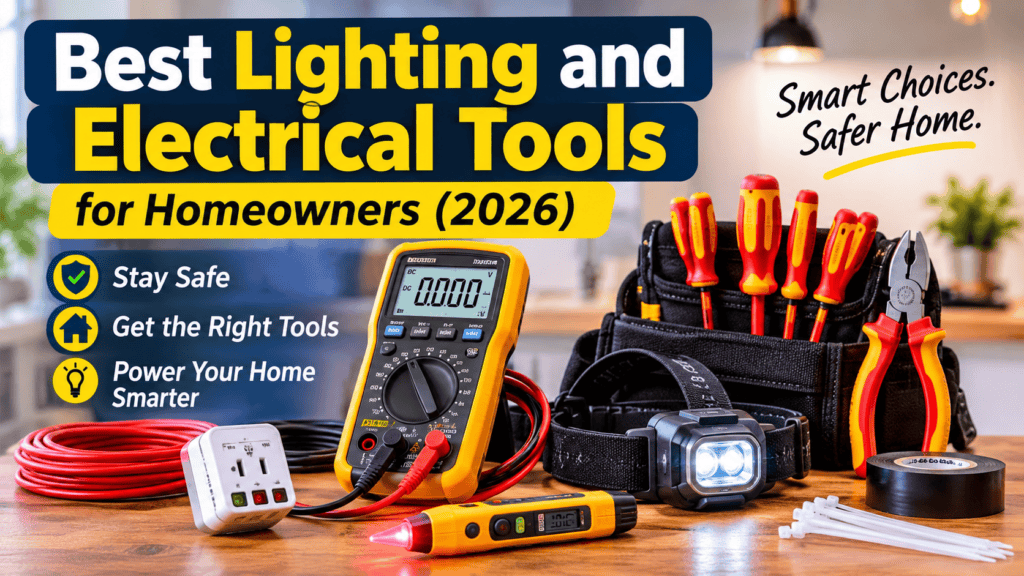
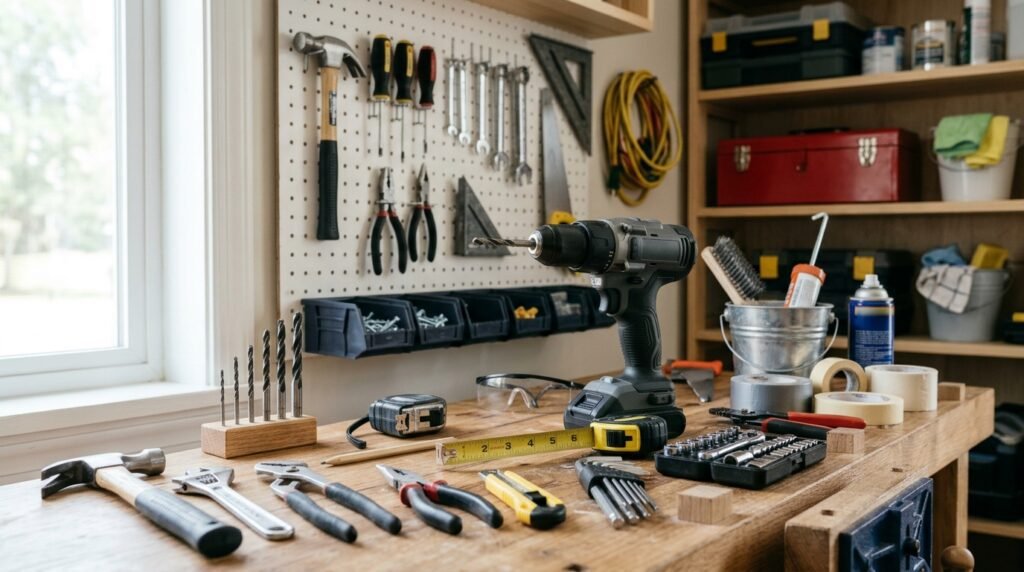
Keeping a home in good condition becomes easier when you have the right tools for everyday repairs. From tightening a loose cabinet handle to hanging shelves, assembling furniture, measuring a room, or dealing with a minor plumbing issue, a practical toolkit helps you handle suitable jobs without buying equipment you rarely use.
This guide to the best home maintenance tools covers 15 useful tool categories, explains what each one does, and helps you decide what to buy first. You will also learn how to compare tool kits, choose between individual tools and bundles, and build a toolkit that fits your home, budget, and DIY experience.
You do not need a professional workshop to get started. Begin with versatile hand tools, add a cordless drill when your projects justify it, and purchase specialized equipment only when a task requires it.
Affiliate disclosure: SmartAirHQ may earn a commission from qualifying purchases made through links in this article, at no additional cost to you. Recommendations are intended to help readers choose tools according to their needs; affiliate relationships do not guarantee that a product is the right choice for every buyer.
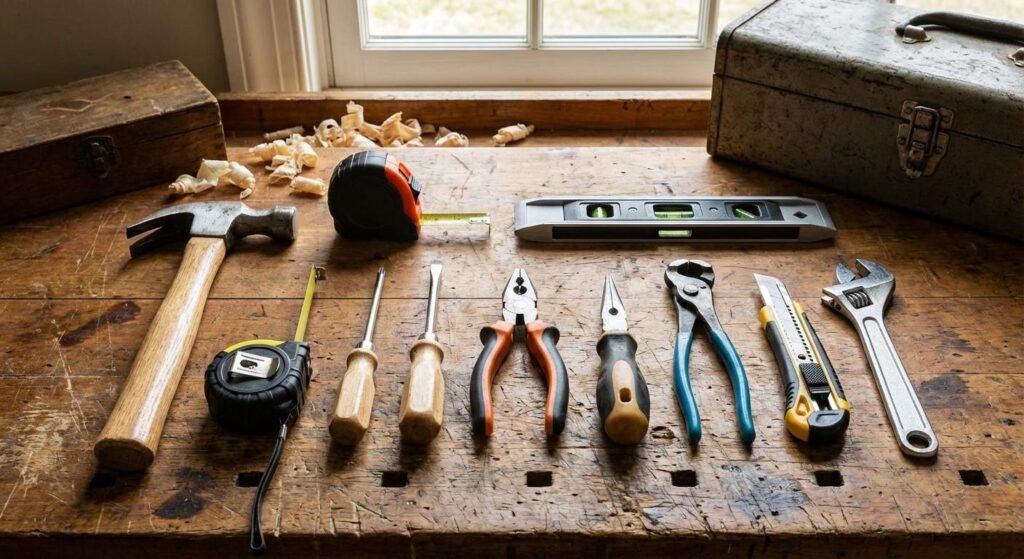
Essential Home Maintenance Tools at a Glance
Use this overview to prioritize your first purchases. The best starting point is usually a small collection of versatile tools rather than a large kit filled with accessories you may never use.
| Tool | Main purpose | Priority |
|---|---|---|
| Screwdriver set | Tightening screws and fittings | Essential |
| Claw hammer | Driving and removing suitable nails | Essential |
| Tape measure | Measuring rooms, furniture, and materials | Essential |
| Adjustable wrench | Turning compatible nuts and bolts | Essential |
| Pliers | Gripping, holding, and turning objects | Essential |
| Utility knife | Cutting packaging and suitable materials | Essential |
| Spirit level | Checking horizontal and vertical alignment | Essential |
| Hex key set | Tightening hex-socket fasteners | Essential |
| Socket and ratchet set | Working with compatible nuts and bolts | Highly useful |
| Cordless drill/driver | Drilling suitable holes and driving screws | Highly useful |
| Stud finder | Locating likely wall framing and detecting certain materials | Project-dependent |
| Flashlight or work light | Illuminating dark work areas | Essential |
| Caulking gun | Applying compatible sealants and caulk | Project-dependent |
| Putty knife | Spreading filler and scraping suitable surfaces | Project-dependent |
| Safety glasses | Protecting eyes from flying debris | Essential for many tasks |
The priority labels are a starting point, not a rule for every home. Renters, apartment residents, and homeowners with outdoor maintenance responsibilities may need different tools.
1. Screwdriver Set: The Everyday Essential
Screwdrivers are useful for tightening cabinet handles, adjusting hinges, assembling furniture, and completing many small household repairs. A practical set includes several common Phillips and slotted sizes. A multi-bit screwdriver can save storage space, while individual screwdrivers can be convenient for frequent use.
Choose handles that feel comfortable and provide a secure grip. The tip should fit the screw head properly; an incorrectly sized screwdriver can slip and damage the fastener.
What to look for:
- Common Phillips and slotted tips
- Comfortable, slip-resistant handles
- Clearly identifiable sizes
- A compact storage case or organized holder
🛍️ Shop screwdriver sets on Amazon
2. Claw Hammer: For Basic Fixing Jobs
A claw hammer is useful for driving suitable nails into appropriate materials and removing nails when needed. A general-purpose hammer is often enough for small home projects, picture-frame work, and simple woodworking.
Consider the hammer’s weight, balance, handle grip, and construction. A heavier hammer is not automatically better: choose one you can control comfortably. Avoid using a hammer for tasks that require a specialized striking tool.
Buying tip: Hold the hammer if possible before buying. A comfortable grip and manageable weight matter more than appearance alone.
3. Tape Measure: Accurate Measurements Before You Start
A tape measure helps you measure furniture, room dimensions, shelving locations, curtain lengths, and materials before making a purchase or beginning a project.
For general household use, a retractable tape with a readable scale and a secure locking mechanism is a practical choice. A longer tape may help with room measurements, but a compact model is easier to carry for smaller tasks.
Use the same units consistently throughout a project. Double-check measurements before cutting materials, drilling mounting holes, or ordering items that must fit a specific space.
🔎 Find a tape measure for home projects on Amazon
4. Adjustable Wrench: For Compatible Nuts and Bolts
An adjustable wrench has a movable jaw that accommodates a range of compatible fastener sizes. It can be useful for selected plumbing fittings, furniture hardware, and general maintenance jobs.
Choose a model with a smooth adjustment mechanism and jaws that fit the fastener securely. Adjust the jaw closely to reduce slipping, and use the correct wrench type for delicate or specialized fittings.
An adjustable wrench is versatile, but it does not replace every wrench. For repeated work on specific fastener sizes, a fixed-size wrench or socket may provide a more secure fit.
5. Pliers: Grip, Hold, and Turn
Pliers help grip, hold, bend, or turn objects when fingers cannot provide enough control. Different designs suit different tasks, so a small selection can be more useful than one oversized pair.
- Slip-joint pliers: General gripping and light adjustments.
- Long-nose pliers: Reaching into narrow spaces and holding small components.
- Tongue-and-groove pliers: Adjusting the jaw opening for suitable larger objects.
- Locking pliers: Holding compatible objects securely when used correctly.
Do not use ordinary pliers as a substitute for insulated electrical tools or as proof that a circuit is safe. Electrical repairs involving potentially live conductors should be left to a qualified professional.
⭐ Explore pliers sets on Amazon
6. Utility Knife: For Controlled Cutting
A utility knife is useful for opening packages, trimming suitable materials, and scoring certain surfaces. Select a model with a secure blade-locking mechanism and a comfortable handle.
Keep blades sharp enough to cut without excessive force, retract or cover the blade when it is not in use, and cut away from your body. Use the correct blade for the material, and do not force a utility knife through materials that require a saw or another specialized cutting tool.
Store replacement blades safely, especially if children can access the toolbox.
7. Spirit Level: Keep Fixtures Straight
A spirit level helps check whether a surface is horizontal or vertical. It is useful when installing shelves, hanging pictures, aligning cabinet hardware, and positioning certain fixtures.
A short level is convenient for small household jobs. A longer level may help with larger surfaces, depending on the project. Check that the vial is easy to read and the body is sturdy enough for your intended use.
For shelf installation, combine accurate measuring with a suitable mounting method. A level confirms alignment; it does not establish whether the wall or fasteners can safely support the load.
8. Hex Key Set: Useful for Furniture and Small Repairs
Hex keys, also called Allen keys, fit fasteners with hexagonal recesses. They are common in flat-pack furniture, bicycle components, brackets, and various household fittings.
A set that covers the sizes you actually encounter is usually more practical than buying individual keys one at a time. Depending on the equipment in your home, you may need metric sizes, imperial sizes, or both.
Insert the key fully before turning it, and use the correct size to reduce the risk of rounding the fastener. For precision work on smart-home equipment and small components, see our guide to smart home hand tools and precision kits.
Which Hand Tools Should You Buy First?
| Household task | Recommended tool | Why it helps |
|---|---|---|
| Tightening loose screws | Screwdriver set | Fits common screw heads |
| Hanging a suitable picture | Tape measure and level | Helps position it accurately |
| Assembling furniture | Screwdrivers and hex keys | Handles common furniture fasteners |
| Tightening compatible nuts | Adjustable wrench | Accommodates different sizes |
| Holding small objects | Pliers | Improves grip and control |
| Opening packaging | Utility knife | Provides controlled cutting |
| Working with multiple bolt sizes | Socket and ratchet set | Speeds up compatible fastening jobs |
Choose tools according to tasks you regularly perform. You can add specialist equipment as new maintenance needs arise.
9. Socket and Ratchet Set: For Faster Fastening
A socket and ratchet set is useful for working with compatible nuts and bolts on furniture, appliances, equipment, and selected maintenance projects. The ratchet mechanism lets you turn a fastener repeatedly without removing the tool after each small movement.
Check the drive size, socket sizes, included extensions, and whether the set covers the fasteners you expect to encounter. Avoid forcing an ill-fitting socket onto a fastener, and never use a standard socket where an impact-rated socket is required.
For more detailed buying advice, read our guide to the best socket set.
🏠 Find socket and ratchet sets on Amazon
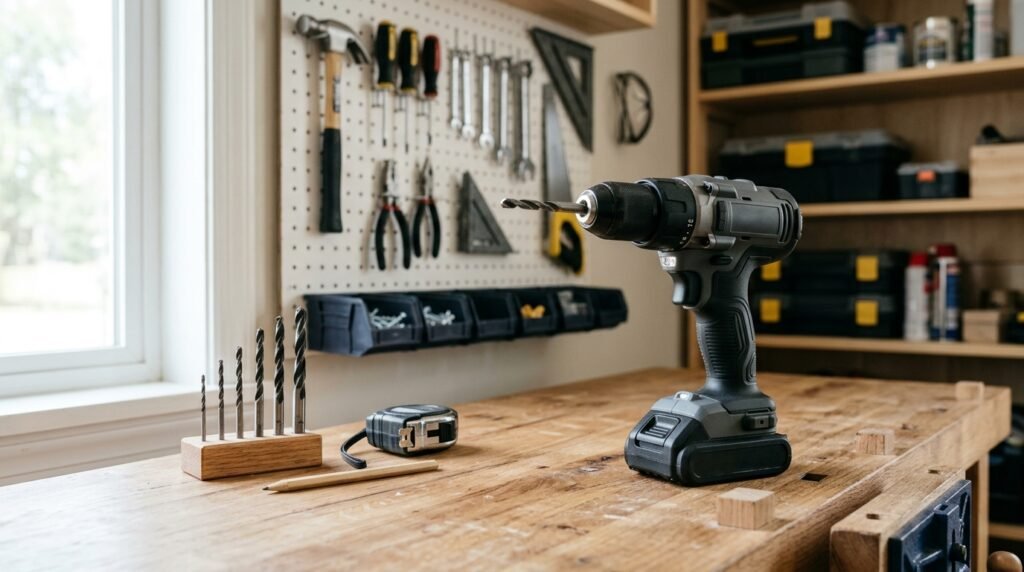
10. Cordless Drill/Driver: A Versatile Power Tool
A cordless drill/driver can handle many suitable drilling and fastening tasks, including furniture assembly, pilot holes, and selected shelving projects. Its usefulness depends on the drill’s capabilities, the material, the bit, and the task.
For general home use, compare variable-speed control, clutch settings, chuck compatibility, battery availability, weight, and what the package includes. A compact model may be convenient for smaller jobs, while more demanding projects may require a different capacity or tool type.
Use the correct bit, secure the workpiece, and check for hidden wiring or plumbing before drilling into walls. A drill is not a substitute for a suitable saw, impact driver, or specialist tool when the task calls for one.
For a more detailed comparison, see our cordless power drill buying guide.
🛒 Check cordless drill/driver options on Amazon
Cordless Drill/Driver Buying Checklist
| Feature | What to check | Why it matters |
|---|---|---|
| Speed control | Variable-speed trigger and suitable speed range | Helps control drilling and fastening |
| Clutch | Adjustable settings, where available | Helps reduce overtightening |
| Chuck | Compatible size and bit shank types | Determines which bits fit |
| Battery | Platform, capacity, and replacement availability | Affects convenience and operating time |
| Weight and size | Comfortable handling for intended tasks | Matters in tight or overhead spaces |
| Package contents | Battery, charger, case, and accessories | Helps establish the real purchase cost |
| Warranty | Terms and service availability | Helps you understand support after purchase |
Compare the complete tool rather than relying on voltage or a single specification.
11. Stud Finder: Plan Wall-Mounting Jobs Carefully
A stud finder can help locate wall framing or detect certain materials behind a finished wall. This can be useful when mounting shelves, cabinets, or other items that require secure attachment.
Different devices use different sensing methods, and results can be affected by wall construction, moisture, metal, and user technique. Follow the device instructions and verify findings before drilling.
A stud finder does not guarantee that an area is free of electrical wires or plumbing. Use appropriate precautions and do not drill where hidden services may be present.
Before buying one, consider the wall types in your home and the kinds of mounting projects you expect to complete. Our guide to the best stud finder explains features to compare.
✨ Explore stud finders on Amazon
12. Flashlight or Work Light: See What You Are Doing
A reliable flashlight or work light helps illuminate cupboards, utility spaces, under-sink areas, garages, and other poorly lit locations. Good lighting makes it easier to inspect a problem and position tools accurately.
A handheld flashlight is convenient for quick checks, while a work light may be more useful when both hands are needed. Consider battery type, charging method, brightness controls, stability, and runtime.
Never rely on a flashlight alone to make a hazardous electrical or structural task safe. Improve the work area’s lighting before starting and stop if you cannot clearly see what you are doing.
🔗 See rechargeable work lights on Amazon
13. Caulking Gun: For Suitable Sealing Projects
A caulking gun dispenses compatible caulk or sealant around suitable gaps and joints. It can be useful for selected projects around windows, trim, and bathroom or kitchen surfaces.
Choose the gun to match the type and size of cartridge you intend to use. A smooth trigger and controlled dispensing can make application easier, particularly for beginners.
Before applying sealant, confirm that it is suitable for the surface and environment. Prepare the area as directed by the manufacturer and allow the product to cure for the specified period. Sealant is not a substitute for repairing leaks, damaged framing, or underlying moisture problems.
14. Putty Knife: For Small Surface Repairs
A putty knife is useful for applying compatible fillers, spreading certain compounds, and scraping suitable surfaces during minor repair or decorating jobs. Blade width and flexibility affect how the tool performs.
A narrower blade may help with small holes and confined areas, while a wider blade can cover more surface. Choose a blade suited to the material and task, and avoid using a flexible finishing knife for heavy prying.
Clean the blade after use and store it dry to help prevent damage. For larger wall damage, water intrusion, or repairs involving hazardous materials, identify the underlying problem before attempting cosmetic fixes.
Additional Tools by Maintenance Task
| Task | Useful tool | Important consideration |
|---|---|---|
| Sealing a suitable gap | Caulking gun | Match sealant to the surface and conditions |
| Filling a small surface defect | Putty knife | Use compatible filler and prepare the surface |
| Inspecting a dark cabinet | Flashlight or work light | Ensure the work area is clearly visible |
| Mounting a shelf | Stud finder, tape measure, and level | Confirm wall type, mounting method, and load |
| Tightening a compatible bolt | Socket and ratchet set | Match socket size and tool rating |
These tools are project-dependent. Buy them when your maintenance needs justify them rather than treating every item as a first-day purchase.
15. Safety Glasses: Protect Your Eyes
Safety glasses are an important part of a home maintenance toolkit when a task creates dust, chips, splashes, or flying debris. Choose eye protection appropriate to the hazard and follow the tool or material manufacturer’s safety instructions.
Depending on the task, additional protection may be necessary, such as hearing protection, suitable gloves, a dust mask or respirator, or protective clothing. No single item protects against every hazard.
The U.S. Consumer Product Safety Commission provides DIY and home repair safety guidance. OSHA also provides information on hand and power tool hazards and precautions. Although OSHA guidance is primarily workplace-focused, its tool-safety principles can help readers understand why correct equipment and safe operating practices matter.
Safety Equipment for Home Maintenance
| Safety item | When it may be needed | Selection tip |
|---|---|---|
| Safety glasses or goggles | Cutting, drilling, scraping, or tasks with flying debris | Choose protection suitable for the hazard |
| Hearing protection | Loud power tools or prolonged noisy work | Check the tool instructions and noise exposure |
| Suitable gloves | Handling rough materials or selected manual tasks | Ensure gloves do not create an entanglement hazard |
| Dust protection | Tasks that generate hazardous or irritating airborne particles | Select the correct protection for the material |
| Stable ladder or step platform | Reaching suitable elevated work areas | Use on firm, level ground and follow instructions |
| Work light | Poorly lit maintenance areas | Position securely and keep electrical equipment dry |
Safety note: Do not wear loose gloves around rotating drill bits or other moving machinery where they could become caught. Gloves are not appropriate for every task. Never use a ladder near overhead power lines, and do not attempt electrical work unless you are qualified and the circuit can be made safe.
How to Choose the Right Home Maintenance Toolkit
The right toolkit depends on your home, skill level, storage space, and the types of repairs you expect to handle. Instead of purchasing the largest bundle available, start with common tools and expand based on actual needs.
Basic Toolkit vs. Expanded Toolkit
A basic toolkit should cover common fastening, measuring, gripping, and minor maintenance tasks. An expanded collection can include power tools and specialist items for projects you undertake more frequently.
Which Toolkit Suits Your Needs?
| Toolkit level | Typical contents | Best suited to |
|---|---|---|
| Starter kit | Screwdrivers, hammer, tape measure, pliers, adjustable wrench, utility knife | First-time buyers and occasional small repairs |
| General home toolkit | Starter tools plus level, hex keys, socket set, flashlight, safety glasses | Regular household maintenance |
| Expanded DIY toolkit | General toolkit plus cordless drill, stud finder, caulking gun, project-specific tools | Frequent DIY projects |
| Specialist toolkit | Equipment selected for a specific trade or demanding project | Experienced users with defined requirements |
A large kit is not automatically better. Some bundles contain many low-use accessories while omitting the sizes or tools you need most. Check the contents list before purchasing.
Buy a Complete Kit or Individual Tools?
A complete kit can offer convenience because commonly used items are stored together. Buying individually gives you more control over sizes, quality, and the tools you actually need.
For a first purchase, compare the kit contents against the checklist in this article. If a bundle includes tools you already own or items you will rarely use, individual purchases may provide better value. For frequent-use tools, prioritize comfortable handling, reliable construction, and a suitable warranty over the number of pieces in a box.
Home Maintenance Tool Buying Checklist
| Buying factor | Questions to ask | Recommended approach |
|---|---|---|
| Actual need | Will I use this tool for a real task? | Buy for likely projects, not hypothetical ones |
| Build and fit | Does it feel comfortable and fit the fasteners? | Prioritize grip, fit, and control |
| Kit contents | Are the necessary sizes and accessories included? | Check the full contents list |
| Power-tool compatibility | Are batteries, chargers, and accessories compatible? | Verify the exact model and platform |
| Safety | Is the tool appropriate for the material and job? | Follow manufacturer instructions |
| Storage | Can I keep tools clean, dry, and organized? | Choose a suitable case or storage location |
| Warranty and support | What coverage and service are available? | Read the terms before buying |
| Total cost | What additional items will I need? | Compare the complete cost, not just the headline price |
Common Home Maintenance Tool Buying Mistakes
Avoid these common mistakes when building your toolkit:
- Buying too much too soon: Start with frequently used essentials and add specialist tools when a project requires them.
- Choosing a large kit based only on piece count: Small accessories can inflate the count without improving usefulness.
- Ignoring fit and comfort: A poorly fitting tool can slip, damage fasteners, or make work harder.
- Using the wrong tool for the job: A general-purpose tool is not a safe substitute for specialized equipment.
- Overlooking safety equipment: Select appropriate protection before starting a task.
- Ignoring maintenance and storage: Keep tools clean, dry, and in good working condition.
- Attempting high-risk repairs without the right expertise: Electrical, gas, structural, and other hazardous jobs may require a qualified professional.
For more detailed advice on torque-controlled fasteners and when accurate tightening matters, see our best torque wrench guide. A torque wrench is a specialized tool for applications with a specified torque requirement; it is not necessary for every general home repair.
How to Maintain and Store Your Tools
Good maintenance helps keep a toolkit organized and ready to use. After each project, wipe off dust and debris, dry tools that have become damp, and return them to a suitable storage location.
Keep cutting tools protected, replace damaged or worn accessories, and inspect handles, cords, batteries, and guards before use. Store power tools according to the manufacturer’s guidance, including any battery charging and storage requirements.
Use a toolbox, organizer, or labeled storage bins to make common items easy to find. Keep sharp tools and small components out of reach of children. Do not continue using tools that are damaged or malfunctioning.
Frequently Asked Questions
What are the best home maintenance tools for beginners?
Start with a screwdriver set, claw hammer, tape measure, adjustable wrench, pliers, utility knife, level, hex keys, and safety glasses. Add a socket set and cordless drill/driver as your projects require them.
Should I buy a home tool kit or individual tools?
A kit is convenient if it includes the tools and sizes you need. Buying individually gives you more control over quality and selection. Compare the contents and total cost before deciding.
Is a cordless drill necessary for every homeowner?
Not necessarily. It is useful for frequent drilling and fastening projects, but occasional repairs may require only basic hand tools. Buy a drill when its capabilities suit the work you expect to do.
What safety equipment should I keep at home?
Safety glasses are useful for many tasks involving debris. Depending on the job, you may also need hearing protection, suitable dust protection, gloves, or other protective equipment. Choose protection based on the actual hazard.
How much should I spend on home maintenance tools?
There is no single budget that suits every household. Start with essential tools, compare quality and warranty, and purchase specialist equipment as needed. The least expensive option is not always the best value if it does not fit your tasks.
Can I do all home repairs myself with a basic toolkit?
No. A basic toolkit supports many simple maintenance tasks, but it does not replace professional skills or specialized equipment. Electrical, gas, structural, and other high-risk repairs should be assessed by a qualified professional.
Final Thoughts: Build a Toolkit That Matches Your Home
The best home maintenance tools are the ones that help you complete appropriate repairs safely, accurately, and comfortably. Start with versatile hand tools, add a cordless drill and other useful equipment as your projects grow, and avoid spending money on tools you are unlikely to use.
Before buying, compare tool fit, materials, included accessories, warranty terms, and safety requirements. Keep your equipment organized and in good condition, and seek professional help whenever a repair exceeds your experience or involves a significant hazard.
A thoughtfully chosen toolkit does not need to be enormous. It needs to suit your home, your projects, and the work you can safely carry out.