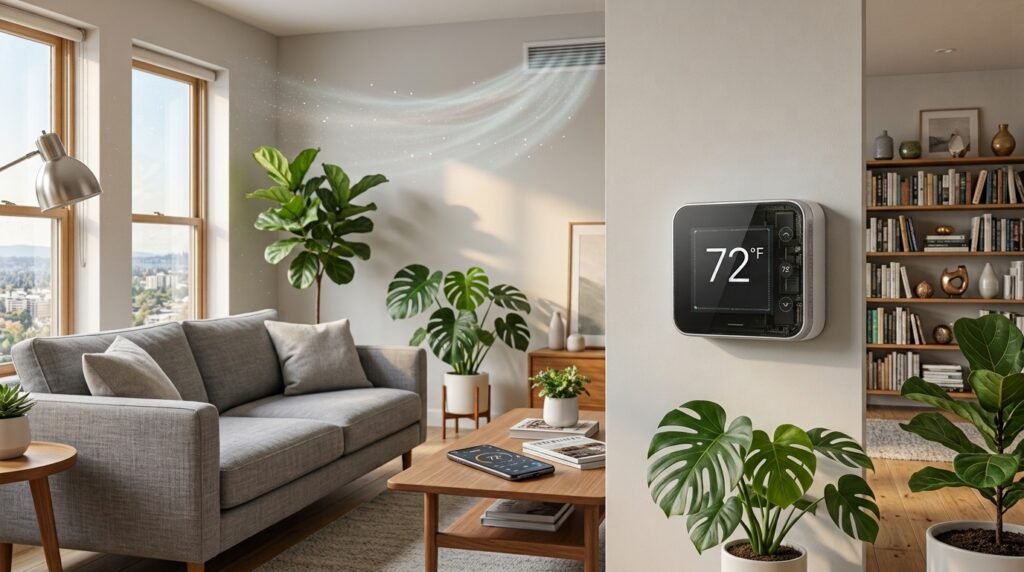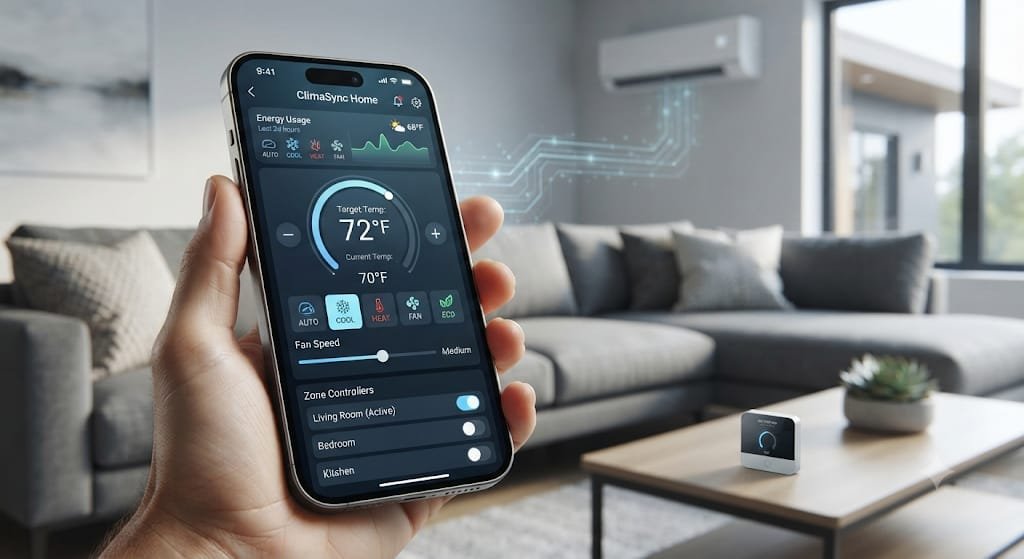
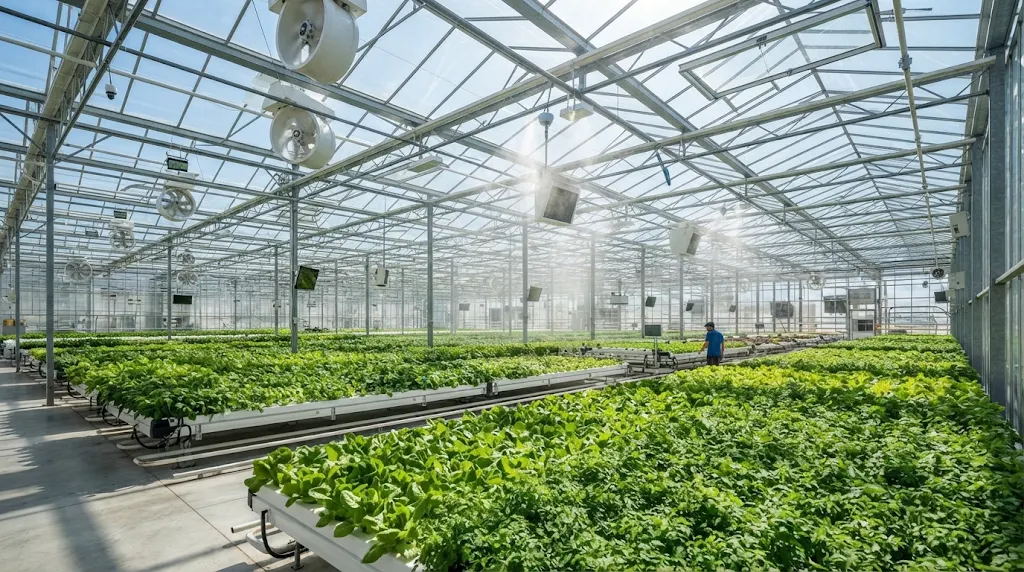
A greenhouse can receive plenty of sunlight and still produce unhealthy plants. On a sunny afternoon, temperatures can rise rapidly. During humid weather, moisture can accumulate around leaves. In colder months, heat can escape through greenhouse coverings, leaving plants exposed to damaging temperature changes.
These problems explain why greenhouse climate control is essential for successful growing. Managing a greenhouse involves much more than opening a window or installing an exhaust fan. Temperature, relative humidity, ventilation, air circulation, heating, cooling and light all influence the environment in which plants grow.
The challenge is that different plants have different environmental requirements. Tomatoes, lettuce, orchids, seedlings and tropical plants cannot all be managed with exactly the same temperature and humidity settings.
In this comprehensive guide, you will learn how greenhouse climate-control systems work, how to manage temperature and humidity, which ventilation and cooling methods are suitable for different conditions, how sensors automate environmental management, and how to reduce energy waste without compromising plant health.
What Is Greenhouse Climate Control?
Greenhouse climate control is the process of monitoring and adjusting environmental conditions inside a greenhouse to create suitable growing conditions for plants.
A greenhouse captures solar energy through its transparent or translucent covering. Sunlight warms the growing medium, plants, equipment and internal surfaces. These materials then transfer heat to the surrounding air.
This process helps maintain warmer conditions during cooler weather, but it can also cause excessive heat buildup during sunny periods.
Plants also release water vapor through transpiration. Irrigation, evaporation and wet growing surfaces contribute additional moisture to the greenhouse environment.
A greenhouse environmental-control system manages these changing conditions using equipment such as:
- Temperature and humidity sensors
- Roof and side ventilation openings
- Exhaust and circulation fans
- Heating equipment
- Evaporative cooling systems
- Shade screens and thermal curtains
- Automated vents and thermostats
- Irrigation and environmental controllers
Maintaining consistent temperatures in different growing areas can become challenging in larger greenhouses. A properly designed HVAC zoning system can help manage separate climate zones more effectively, particularly when different crops require different temperature conditions.
The University of Alaska Cooperative Extension greenhouse guide explains that airflow serves two important purposes: removing excess heat and helping manage humidity and carbon dioxide around the plant canopy.
The objective is not simply to make a greenhouse warmer or cooler. It is to maintain environmental conditions appropriate for the crop, growth stage and local climate.
Why Is Greenhouse Climate Control Important?
A greenhouse provides greater environmental control than an exposed outdoor growing area, but that advantage only works when conditions are monitored and managed properly.
Without suitable controls, growers may experience excessive heat, condensation, uneven airflow, cold drafts and unnecessary energy consumption.
1. Prevents Excessive Heat
Solar radiation can increase greenhouse temperatures quickly, particularly when ventilation is inadequate.
Prolonged heat stress can affect plant growth, flowering, fruit development and water requirements.
Ventilation, shading and suitable cooling systems help reduce excessive heat.
2. Helps Manage Humidity
Plants release moisture into the surrounding air. When humid air remains trapped, condensation can form on leaves, glazing and greenhouse structures.
Persistent leaf wetness and unsuitable humidity conditions can increase the risk of certain plant diseases.
3. Improves Air Circulation
Air circulation reduces stagnant pockets and helps distribute temperature and moisture more evenly.
This is particularly important in greenhouses with dense plant canopies, long growing rows or multiple growing sections.
4. Supports More Consistent Growing Conditions
Sudden temperature changes can stress sensitive crops.
Temperature monitoring, automated vents and appropriate heating or cooling controls help growers maintain more stable conditions.
5. Helps Reduce Operating Costs
Heating, cooling and ventilation can consume considerable energy, especially in commercial greenhouses.
Suitable insulation, well-maintained equipment and automated controls can help avoid unnecessary operation.
What Temperature Should a Greenhouse Maintain?
The correct greenhouse temperature depends on the crop, variety, growth stage, light conditions and time of day.
Cool-season leafy vegetables generally have different requirements from warm-season fruiting crops. Tropical plants may need protection from cold conditions, while certain plants benefit from cooler nighttime temperatures.
There is no universal temperature setting suitable for every greenhouse.
The University of Georgia Cooperative Extension greenhouse guide explains how greenhouse temperature, humidity, light and equipment interact to influence growing conditions.
General Greenhouse Temperature Planning
| Growing situation | Temperature-management priority | Important consideration |
|---|---|---|
| Cool-season leafy crops | Prevent excessive daytime heat | Follow crop-specific temperature guidance |
| Warm-season vegetables | Maintain suitable warmth | Avoid prolonged heat stress |
| Seedlings | Maintain stable conditions | Avoid sudden temperature changes |
| Tropical plants | Protect against cold exposure | Check species-specific requirements |
| Overwintering plants | Maintain safe minimum temperatures | Consider local winter conditions |
| Flowering crops | Manage day and night conditions | Account for flowering stage and variety |
These are planning categories, not universal temperature prescriptions. Consult reliable growing guidance for the particular crop.
Daytime vs. Nighttime Temperature
Greenhouse temperature changes throughout the day.
During daylight, solar radiation warms the greenhouse. After sunset, heat escapes through the covering and other structural surfaces.
Some crops benefit from a difference between daytime and nighttime temperatures, while others have narrower temperature requirements.
Growers should monitor both periods rather than relying on a single daytime reading.
Practical tip: Install temperature sensors near the crop canopy. Keep them away from direct sunlight, heaters, cooling pads, open vents and other locations that could produce misleading readings.
How to Control Greenhouse Temperature
Greenhouse temperature management combines heat removal, shading, ventilation, cooling and heating.
The correct combination depends on greenhouse dimensions, construction, outdoor weather and crop requirements.
1. Natural Ventilation
Natural ventilation allows warm air to escape through roof or upper vents while replacement air enters through lower openings.
Common options include:
- Roof ridge vents
- Sidewall vents
- Opening windows and doors
- Roll-up greenhouse sides
- Automatic roof vent openers
Natural ventilation is useful when outdoor air is sufficiently cooler than the greenhouse air.
However, its performance depends on wind, temperature differences, vent placement and greenhouse design. It may not provide sufficient cooling during very hot or still weather.
2. Exhaust Fans
Exhaust fans mechanically remove warm greenhouse air. Replacement air enters through suitable intake openings.
A properly designed system needs sufficient fan capacity and an appropriate intake-air path.
When choosing exhaust fans, consider:
- Greenhouse length, width and height
- Total greenhouse air volume
- Required air exchange
- Fan performance at the installed static pressure
- Intake opening size
- Crop arrangement
- Local climate
Do not choose a fan based only on its advertised maximum airflow. Installation conditions can affect actual performance.
3. Evaporative Cooling
Evaporative cooling reduces air temperature through water evaporation.
A fan-and-pad system draws outside air through a wetted cooling pad. As water evaporates, it absorbs heat from the passing air.
This method is particularly useful in hot, relatively dry conditions.
Its effectiveness decreases when outdoor relative humidity is high because the air has less capacity to absorb additional moisture.
4. Shade Screens
Shade screens reduce the amount of solar radiation entering the greenhouse.
Common options include:
- External shade cloth
- Internal shade curtains
- Retractable shading screens
- Suitable greenhouse shading coatings
Shading can help protect plants from excessive solar heat, but too much shade can reduce useful light for photosynthesis.
Select shading according to crop requirements rather than automatically choosing the darkest material.
5. Circulation Fans
Circulation fans move air within the greenhouse.
They help distribute air around plants, reduce stagnant areas and improve temperature uniformity.
Horizontal airflow fans are commonly used in larger greenhouse structures.
The UC Davis greenhouse climate-control guide describes ventilation, forced-air cooling, fan-and-pad systems, fogging and shading as different greenhouse temperature-management methods.
Comparison of Greenhouse Cooling Methods
| Cooling method | How it works | Best suited for | Main limitation |
|---|---|---|---|
| Natural ventilation | Exchanges indoor and outdoor air | Suitable weather and greenhouse designs | Depends on wind and outdoor temperature |
| Exhaust fans | Mechanically remove warm air | Enclosed or larger structures | Requires suitable intake openings |
| Fan-and-pad cooling | Uses evaporation to cool incoming air | Hot, relatively dry climates | Less effective in humid weather |
| Fogging systems | Disperse fine water droplets | Carefully controlled growing environments | Requires precise control and clean water |
| Shade screens | Reduce incoming solar radiation | Bright and sunny conditions | Can reduce crop light |
| Circulation fans | Distribute existing air | Most greenhouse sizes | Do not independently remove heat |
How to Control Greenhouse Humidity
Humidity is one of the most important environmental factors in greenhouse management.
Plants release water vapor through transpiration, while irrigation, evaporation and wet surfaces add more moisture to the surrounding air.
When humid air comes into contact with cooler surfaces, condensation may form. This can happen on greenhouse glazing, structural components and plant leaves.
Effective humidity management requires monitoring, ventilation, circulation, suitable watering practices and, when necessary, coordinated heating and dehumidification.
What Is the Ideal Greenhouse Humidity?
There is no single ideal relative humidity level for every greenhouse crop.
The suitable range depends on plant species, growth stage, temperature, airflow, disease susceptibility and growing conditions.
| Growing situation | Humidity-management priority | What to monitor |
|---|---|---|
| Seed germination | Maintain moisture appropriate for the crop | Growing-medium moisture |
| Young seedlings | Avoid excessive drying and persistent condensation | Relative humidity and leaf wetness |
| Vegetative growth | Support appropriate transpiration | Canopy humidity and airflow |
| Flowering crops | Avoid prolonged moisture around flowers | Condensation and circulation |
| Dense plant canopies | Reduce stagnant humid pockets | Air movement between plants |
| Nighttime conditions | Limit condensation and prolonged leaf wetness | Temperature and dew point |
1. Improve Ventilation
Ventilation removes humid indoor air and replaces it with outdoor air.
However, outdoor humidity matters. If incoming air is already very humid, ventilation may not reduce greenhouse moisture as effectively as expected.
Monitor both indoor and outdoor conditions before making major adjustments.
2. Use Circulation Fans
Circulation fans help move air through the crop canopy.
They reduce stagnant areas where moisture may accumulate and help foliage dry more evenly.
Air should move around the plants rather than simply passing above the crop.
3. Water Plants at Appropriate Times
Watering practices influence greenhouse humidity.
Where practical, watering earlier in the day gives foliage and growing surfaces more time to dry before nighttime temperatures fall.
Avoid unnecessary wetting of leaves, particularly for crops that are vulnerable to moisture-related disease.
4. Maintain Suitable Plant Spacing
Overcrowded plants restrict airflow and create humid pockets.
Appropriate spacing improves air movement and makes it easier to inspect plants for pests, disease and moisture problems.
5. Combine Heating and Ventilation When Necessary
During cold weather, ventilation alone may introduce cold air and lower greenhouse temperatures.
Heating alone can also be inefficient if excess moisture remains trapped inside.
A coordinated heating-and-ventilation approach can remove moist air while maintaining suitable growing conditions.
The University of Massachusetts Amherst humidity-management guidance explains why heating and ventilation work together when managing excess greenhouse humidity.
Greenhouse Ventilation: Natural vs. Mechanical Systems
Ventilation exchanges indoor air with outdoor air. It helps control temperature, remove moisture and replenish carbon dioxide.
Two main approaches are used: natural ventilation and mechanical ventilation.
Natural Ventilation
Natural ventilation relies on wind and temperature differences to move air through greenhouse openings.
Warm air rises and escapes through upper vents while replacement air enters through lower openings.
Its advantages include:
- Low electricity requirements
- Fewer powered components
- Relatively simple operation
- Useful performance in favorable outdoor conditions
Its main limitation is dependence on weather, wind direction and greenhouse design.
Mechanical Ventilation
Mechanical ventilation uses powered fans to move air through the greenhouse.
Exhaust fans, intake fans and circulation fans can be combined to provide more controlled airflow.
Its advantages include:
- More predictable air movement
- Better control in enclosed structures
- Compatibility with automatic controllers
- Greater flexibility for larger growing operations
Mechanical ventilation requires electricity, maintenance and appropriate equipment sizing.
Natural vs. Mechanical Ventilation Comparison
| Feature | Natural ventilation | Mechanical ventilation |
|---|---|---|
| Operating force | Wind and temperature differences | Electric fans |
| Energy requirement | Usually low | Higher electricity use |
| Airflow control | Depends on vents and weather | Can be adjusted using controls |
| Installation | Often simpler | Requires powered equipment |
| Weather dependence | High | Generally lower |
| Suitable applications | Many small and medium greenhouses | Larger or more controlled greenhouses |
The North Carolina State University Extension greenhouse guidance explains how roof vents, side inlets and mechanical exhaust fans support greenhouse ventilation.
Ventilation capacity must be designed for the greenhouse and climate. Avoid applying one fan-sizing rule to every structure.
Greenhouse Heating Systems: Maintaining Temperature in Winter
Heating becomes necessary when outdoor temperatures fall below the levels required by greenhouse crops.
The required heating capacity depends on:
- Greenhouse dimensions
- Covering materials
- Insulation
- Air leakage
- Outdoor design temperature
- Desired indoor temperature
- Heating equipment efficiency
Common Greenhouse Heating Options
Electric heaters
Electric heaters provide direct heat and may be suitable for small structures or localized heating.
Their operating cost depends on electricity prices and the amount of heat required.
Gas-fired heaters
Gas heaters can provide substantial heating capacity for commercial applications.
Installation must account for combustion safety, ventilation, emissions and local regulations.
Hot-water heating systems
A boiler or other heat source can circulate hot water through pipes or heating units.
These systems can distribute heat across larger growing areas.
Heat pumps
Heat pumps transfer heat rather than generating it entirely through electrical resistance.
Their suitability depends on outdoor temperatures, equipment specifications, greenhouse heat losses and installation costs.
Thermal screens
Thermal curtains and screens reduce heat loss during colder periods. They can complement heating equipment by limiting the amount of heat escaping through the greenhouse structure.
Greenhouse Heating Options Compared
| Heating option | Main advantage | Important consideration |
|---|---|---|
| Electric heater | Simple localized heating | Electricity operating cost |
| Gas-fired heater | High heating capacity | Combustion safety and ventilation |
| Hot-water system | Flexible heat distribution | Installation and maintenance |
| Heat pump | Potentially efficient heat transfer | Cold-weather performance |
| Thermal screen | Reduces heat loss | Correct installation and operation |
How to Reduce Greenhouse Heating Costs
- Repair gaps and air leaks.
- Use appropriate greenhouse covering materials.
- Install thermal screens where suitable.
- Maintain heaters and controls.
- Use thermostats to prevent unnecessary heating.
- Monitor nighttime temperatures.
- Close unused ventilation openings when heating, while maintaining necessary ventilation.
- Review energy consumption regularly.
The Penn State Extension greenhouse energy-efficiency guide explains how thermal screens, insulation and sealing ventilation openings can reduce avoidable heat loss.
Smart Greenhouse Climate Control: Sensors, Thermostats and Automation
Modern greenhouse climate-control systems can use sensors and automated controllers to respond to changing environmental conditions.
Instead of relying entirely on manual inspection, growers can monitor conditions and activate equipment when readings move outside selected limits.
Automating greenhouse equipment can improve environmental management while reducing unnecessary energy consumption. Growers can explore different smart energy-saving devices for homes to understand how intelligent monitoring and automation technologies can support more efficient energy management.
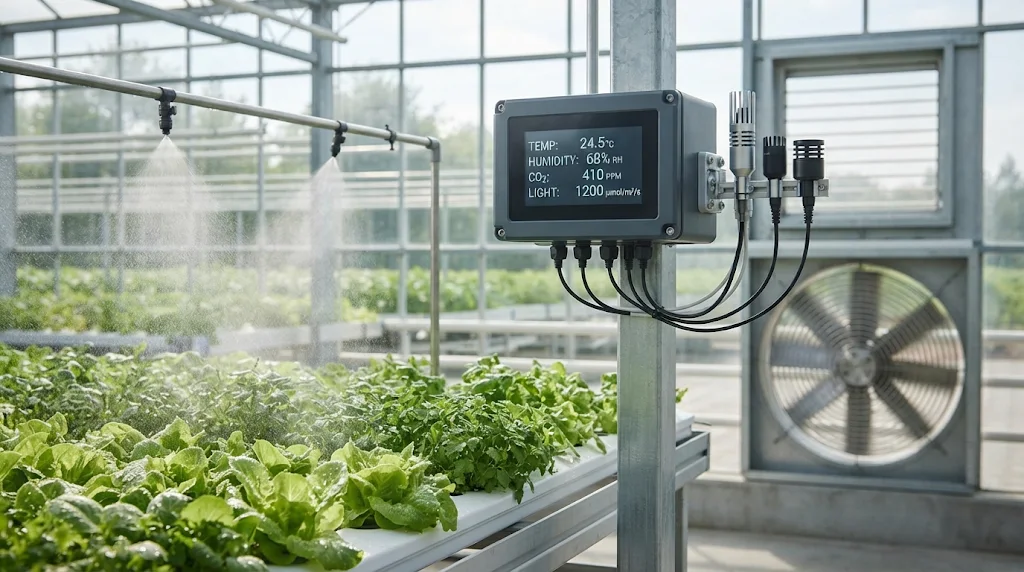
Important Greenhouse Sensors
Temperature sensors: Measure indoor and outdoor air temperature.
Humidity sensors: Measure relative humidity and help identify conditions that may increase condensation risk.
Growing-medium moisture sensors: Help growers understand water availability around plant roots.
Light sensors: Measure light intensity and support decisions about shading or supplemental lighting.
CO₂ sensors: Monitor carbon dioxide concentration where controlled CO₂ management is part of the growing operation.
Leaf-wetness sensors: Help identify periods when plant surfaces remain wet.
How Automated Greenhouse Climate Control Works
An automated system generally follows five steps:
- Sensors measure greenhouse conditions.
- The controller compares readings with configured targets.
- The system activates relevant equipment.
- New readings help determine whether conditions are improving.
- Alerts notify the operator when conditions require attention.
For example, if temperature rises above a selected limit, a controller may open motorized vents or activate exhaust fans.
If nighttime temperature falls, it may activate heating equipment.
The settings must match crop requirements. Automation does not eliminate the need for inspection, maintenance and human oversight.
Where Should Greenhouse Sensors Be Installed?
Sensor location can affect the accuracy of environmental readings.
The University of Alaska Cooperative Extension recommends placing sensors at plant-canopy height, away from direct sunlight and direct influence from heaters, fans, vents and drafts.
For larger greenhouses, several monitoring points may be needed because conditions can differ between growing sections.
Best Greenhouse Climate-Control Equipment: 10 Useful Tools for Better Growing Conditions
Maintaining a stable greenhouse environment requires the right combination of monitoring devices, ventilation equipment, cooling solutions and automated controls. The following equipment categories can help growers manage temperature, humidity, airflow and soil moisture more effectively.
Whether you operate a small backyard greenhouse or a large commercial growing facility, choose equipment based on greenhouse size, crop requirements, electrical capacity, environmental exposure and compatibility with your existing systems.
Recommended Greenhouse Climate-Control Tools
- Temperature and Humidity Monitors:
Track indoor temperature and relative humidity to identify environmental changes before they affect plant growth.
🛍️ Explore Greenhouse Temperature and Humidity Monitors on Amazon. - Digital Greenhouse Thermometers:
Provide convenient temperature readings to help growers monitor daily greenhouse conditions.
🔎 Find Digital Greenhouse Thermometers on Amazon. - Greenhouse Thermostat Controllers:
Automatically regulate compatible heating and cooling equipment according to selected temperature settings.
⭐ Explore Greenhouse Thermostat Controllers on Amazon. - Automatic Greenhouse Vent Openers:
Help release excess heat by opening greenhouse vents when temperatures rise, reducing the need for manual adjustments.
🏠 Check Automatic Greenhouse Vent Openers on Amazon. - Greenhouse Exhaust Fans:
Remove hot indoor air and support fresh-air exchange, particularly in greenhouses with limited natural ventilation.
🛒 Compare Greenhouse Exhaust Fans on Amazon. - Horizontal Airflow Circulation Fans:
Improve air movement throughout the growing space and help reduce stagnant-air pockets around plants.
✨ Explore Horizontal Airflow Circulation Fans on Amazon. - Greenhouse Shade Cloth:
Reduces incoming sunlight and helps limit excessive solar heat buildup during hot weather.
🔗 Find Greenhouse Shade Cloth on Amazon. - Evaporative Cooling Pads:
Work with compatible ventilation systems to cool incoming air through water evaporation, making them useful in suitable hot and dry climates.
🛍️ Explore Greenhouse Evaporative Cooling Pads on Amazon. - Soil Moisture Sensors:
Measure moisture levels in growing media to help growers make better irrigation decisions and avoid unnecessary watering.
🔎 Check Greenhouse Soil Moisture Sensors on Amazon. - Greenhouse Environmental Controllers:
Integrate compatible sensors and equipment to automate multiple environmental functions, including ventilation, heating, cooling and humidity management.
⭐ Discover Greenhouse Environmental Controllers on Amazon.
Buying Tip: Before purchasing, check sensor accuracy, temperature and humidity operating ranges, controller compatibility, fan capacity, power requirements and weather resistance. Select equipment that matches your crops and greenhouse conditions rather than buying unnecessary automation.
Affiliate disclosure: As an Amazon Associate, SmartAirHQ earns from qualifying purchases. This means we may earn a commission when you purchase through qualifying links, at no additional cost to you. Product availability, specifications and shipping options vary by marketplace.
Common Greenhouse Climate Problems and Their Solutions
Even a greenhouse with modern equipment can experience environmental problems when ventilation, sensors, heating or irrigation are not managed correctly.
The first step is to identify the actual cause instead of immediately purchasing additional equipment.
Greenhouse Troubleshooting Guide
| Problem | Possible cause | Practical solution |
|---|---|---|
| Greenhouse becomes too hot | Insufficient ventilation or excessive solar heat | Improve vents, shading and exhaust capacity |
| Humidity remains high | Poor air exchange, wet surfaces or overcrowding | Improve ventilation, spacing and watering practices |
| Condensation forms on leaves | High humidity and cooling plant surfaces | Improve airflow and coordinate heating with ventilation |
| Temperature varies across the greenhouse | Uneven airflow or poor equipment placement | Review circulation fans and sensor locations |
| Plants wilt during hot weather | Heat stress or insufficient water availability | Check growing-medium moisture and reduce heat load |
| Greenhouse becomes too cold at night | Heat loss or insufficient heating capacity | Repair leaks, use thermal screens and check heating |
| Fans run continuously | Incorrect control settings or inadequate capacity | Inspect sensors, fan sizing and intake openings |
| Automated vents fail to respond | Power, wiring, sensor or actuator problems | Inspect controls and provide a manual backup |
Why Does a Greenhouse Overheat Even When the Fans Are Running?
This is a common greenhouse-management problem.
Possible causes include:
- Exhaust fans are too small for the greenhouse.
- Air intake openings are restricted.
- Fan shutters are blocked or malfunctioning.
- Cooling pads are clogged or damaged.
- The greenhouse receives excessive direct sunlight.
- Outdoor air is already very hot.
- Airflow is not distributed evenly through the growing area.
Do not assume that installing another fan will automatically solve the problem. Check the complete ventilation path, including air inlets, fan performance, cooling equipment and airflow distribution.
Why Does Condensation Form Inside a Greenhouse?
Condensation occurs when moist air contacts a surface that is at or below the air’s dew-point temperature.
It can occur on glazing, structural components and plant surfaces, especially during cool nights.
Practical management measures include:
- Improving air circulation.
- Managing irrigation timing.
- Avoiding overcrowding.
- Using controlled ventilation.
- Coordinating heating and ventilation when necessary.
- Monitoring humidity and temperature near the crop canopy.
Seasonal Greenhouse Climate Management
Greenhouse conditions change throughout the year. A system that performs well during summer may require different settings during winter or transitional seasons.
| Season | Main climate challenge | Recommended management |
|---|---|---|
| Spring | Rapid changes in outdoor temperature | Monitor conditions and adjust vents gradually |
| Summer | Excess heat and strong solar radiation | Use shading, ventilation and suitable cooling |
| Autumn | Falling temperatures and changing humidity | Review heating readiness and condensation control |
| Winter | Heat loss and moisture accumulation | Use appropriate heating, thermal screens and controlled ventilation |
Summer Management
During summer, focus on reducing solar heat buildup and maintaining suitable airflow.
Open appropriate vents, operate exhaust fans when necessary and use shading where crop light requirements allow.
In hot and humid climates, remember that evaporative cooling may provide less temperature reduction than it does in dry conditions.
Winter Management
During winter, the main challenges are heat loss, cold drafts and condensation.
Check greenhouse coverings, repair leaks, maintain heating equipment and use controlled ventilation to remove excess moisture without exposing plants to damaging cold air.
Spring and Autumn Management
These transitional seasons can produce large changes between daytime and nighttime conditions.
Automated vents, thermostats and regular monitoring can help growers respond without unnecessary manual adjustments.
How to Make Greenhouse Climate Control More Energy Efficient
Heating, cooling and ventilation can consume considerable energy, particularly in commercial greenhouse operations.
Improving efficiency does not always require replacing the entire system. Several practical changes can reduce unnecessary energy use.
1. Improve Greenhouse Insulation
Use appropriate covering materials and repair damaged panels or seals.
Better insulation can reduce winter heat loss and lower heating demand.
2. Use Automated Temperature Controls
Thermostats and environmental controllers can activate equipment according to measured conditions instead of relying entirely on fixed schedules.
3. Reduce Unnecessary Heating and Cooling
Set crop-appropriate temperature limits and avoid operating equipment when conditions do not require it.
4. Maintain Fans and Heating Equipment
Dirty fan blades, damaged shutters, clogged filters and poorly maintained equipment can reduce system performance.
5. Choose the Right Cooling Method
Natural ventilation, mechanical exhaust, shading and evaporative cooling have different energy requirements and performance limitations.
Select a combination appropriate for the local climate.
6. Monitor Energy Consumption
Record electricity and fuel consumption alongside greenhouse temperature and humidity readings.
This helps identify whether equipment is using excessive energy or running when it is not needed.
For additional household and energy-efficiency guidance, SmartAirHQ also explains how to reduce electricity consumption.
How to Design a Basic Greenhouse Climate-Control System
A small greenhouse does not necessarily need a complex commercial automation system.
A basic setup can combine a temperature and humidity monitor, suitable ventilation openings and circulation equipment.
Larger greenhouses may require integrated controls for heating, cooling, ventilation, irrigation and environmental monitoring.
Before purchasing equipment, consider these steps:
- Measure the greenhouse length, width and height.
- Identify the crops and their growing requirements.
- Review the local summer and winter climate.
- Determine whether natural ventilation is sufficient.
- Calculate suitable fan and cooling requirements.
- Identify where temperature and humidity sensors should be installed.
- Decide which equipment needs automatic control.
- Plan for power interruptions and equipment failure.
- Create a maintenance and monitoring schedule.
Greenhouse Climate-Control Planning Checklist
- Greenhouse dimensions recorded
- Crop-specific temperature requirements identified
- Humidity monitoring arranged
- Ventilation openings inspected
- Exhaust fan capacity reviewed
- Air circulation checked around the crop canopy
- Heating requirements assessed
- Cooling method selected for local conditions
- Sensors positioned away from misleading heat sources
- Backup arrangements planned for equipment or power failure
Greenhouse Climate-Control Safety Considerations
Greenhouse equipment operates in an environment where water, humidity, electricity and heat may be present together.
Safe installation and maintenance are essential.
- Use electrical equipment rated for the environment in which it will operate.
- Protect electrical connections from moisture.
- Use appropriate circuit protection and grounding.
- Keep fans and moving components guarded.
- Follow manufacturer instructions for heaters and ventilation systems.
- Ensure fuel-burning equipment has appropriate combustion-air and exhaust arrangements.
- Do not use unvented combustion heaters where they could expose plants or workers to harmful combustion products.
- Disconnect power before servicing electrical equipment.
- Keep emergency ventilation and temperature-failure plans available.
For commercial installations, consult qualified electricians, HVAC professionals and greenhouse-system specialists where required by local regulations.
Frequently Asked Questions About Greenhouse Climate Control
1. What is the best temperature for greenhouse climate control?
There is no universal best temperature. It depends on the plant species, growth stage, light conditions and day or night requirements. Use crop-specific growing guidance.
2. How do I control humidity in a greenhouse?
Monitor relative humidity, improve ventilation, use circulation fans, manage irrigation timing and avoid overcrowding plants. Heating combined with controlled ventilation may also help during colder conditions.
3. Why does my greenhouse become too hot?
Solar radiation enters through the greenhouse covering and creates heat buildup. Inadequate ventilation, restricted air inlets, insufficient fan capacity and excessive sunlight can make the problem worse.
4. Are exhaust fans necessary in a greenhouse?
Not every greenhouse requires powered exhaust fans. Small structures may receive sufficient natural ventilation, while larger or more enclosed greenhouses often need mechanical ventilation.
5. What is the difference between ventilation and air circulation?
Ventilation exchanges indoor air with outdoor air. Air circulation moves existing air around inside the greenhouse. Both help manage the growing environment, but they perform different functions.
6. Is evaporative cooling effective in humid climates?
Its effectiveness is generally reduced when outdoor relative humidity is high. Evaporative cooling works best when incoming air has sufficient capacity to absorb additional water vapor.
7. Can smart sensors automatically control a greenhouse?
Yes. Compatible sensors and environmental controllers can operate vents, fans, heaters and other equipment according to configured conditions. The system still needs correct setup, maintenance and human oversight.
8. How can I reduce greenhouse heating costs?
Improve insulation, repair air leaks, use thermal screens, maintain heating equipment and automate temperature settings. Monitor energy consumption to identify unnecessary operation.
9. Does greenhouse ventilation help prevent plant diseases?
Proper ventilation can reduce excess humidity and help foliage dry, which may reduce conditions favorable to certain diseases. It cannot eliminate all plant diseases or replace crop hygiene and disease-management practices.
10. Do all greenhouse plants need the same humidity?
No. Different species and growth stages have different humidity requirements. Use crop-specific recommendations and monitor conditions around the plant canopy.
11. Where should greenhouse temperature and humidity sensors be installed?
Place sensors near the growing area at a representative canopy height. Avoid direct sunlight, heating outlets, cooling pads, open vents and other locations that could distort readings. Larger greenhouses may require multiple monitoring points.
12. What is the most affordable way to start greenhouse climate control?
Start with a reliable temperature and humidity monitor, suitable ventilation openings and basic air circulation. Add automated vents, exhaust fans, shading or heating according to the greenhouse’s actual requirements.
Final Thoughts
Effective greenhouse climate control is about balancing temperature, humidity, ventilation, heating and cooling rather than relying on a single piece of equipment.
A greenhouse that is too hot, too humid or poorly ventilated can create unnecessary challenges for plants and growers. By monitoring environmental conditions, improving airflow, selecting suitable equipment and responding to seasonal changes, growers can create a more consistent and manageable growing environment.
Whether you operate a small backyard greenhouse or a commercial growing facility, start with the needs of your crops and the conditions in your local climate. Use sensors to understand what is happening, choose equipment that addresses the actual problem and maintain the system regularly.
A well-planned greenhouse climate-control system can support healthier growing conditions, more efficient resource use and better day-to-day greenhouse management.