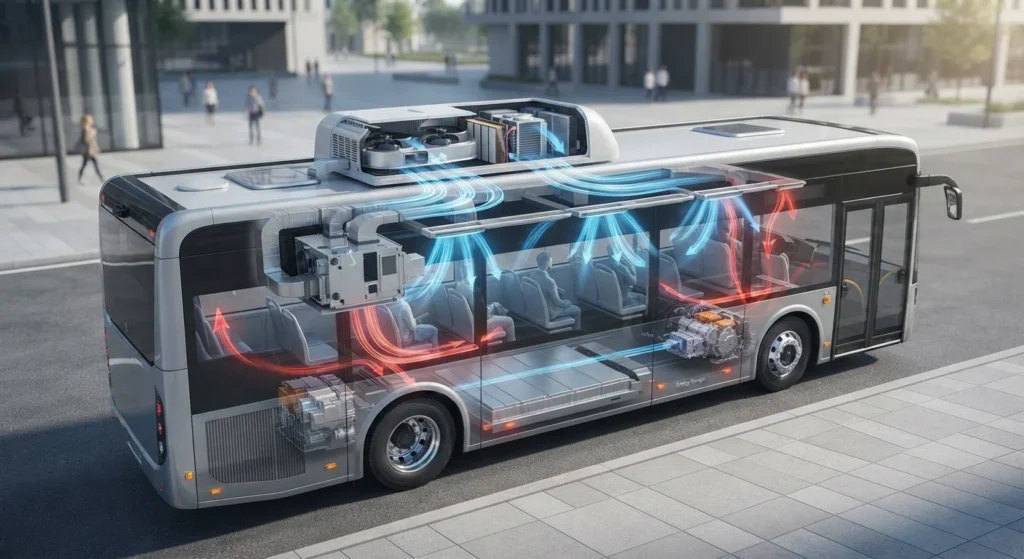
Electric buses are changing public transportation, but keeping hundreds of passengers comfortable inside a battery-powered vehicle presents a surprising engineering challenge. Unlike conventional diesel buses, electric buses cannot rely on a traditional engine’s waste heat to warm the cabin. Their heating and cooling systems must draw energy from the vehicle’s electrical system, which can affect battery consumption and driving range.
So, how do electric buses stay cool during extreme summer temperatures and warm during freezing winter conditions? How do their air conditioning systems work, and why can switching on the heater reduce the distance a bus can travel?
The answer lies in electric bus climate control, a combination of advanced heating, ventilation, air conditioning (HVAC), sensors, heat pumps, thermal management systems, and intelligent energy controls.
In this guide, we’ll explain how electric bus climate control works, explore the technologies used for heating and cooling, examine their impact on battery performance, and discover practical ways to improve passenger comfort without wasting energy.
What Is Electric Bus Climate Control?
Electric bus climate control is the process of managing the temperature, humidity, ventilation, and airflow inside an electric-powered bus to maintain comfortable conditions for passengers and drivers.
Humidity measurements can provide useful information when investigating condensation, dampness and passenger comfort inside the bus. 🏠 Compare Digital Hygrometers on Amazon
Unlike traditional buses, electric buses depend on large battery packs to power their motors and most auxiliary equipment. This means the climate-control system must operate efficiently without unnecessarily consuming energy needed for driving.
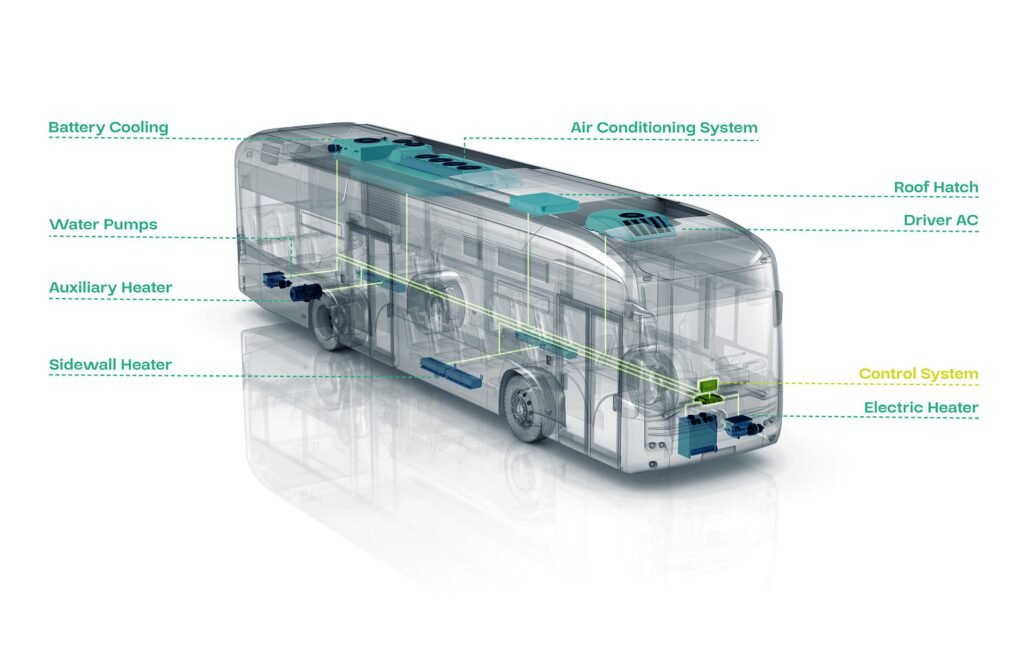
A typical electric bus climate-control system may include:
- Roof-mounted air conditioning units.
- Electric heating systems.
- Heat pumps.
- Cabin ventilation fans.
- Air filters.
- Temperature and humidity sensors.
- Electronic control units.
- Battery thermal management components.
- Air distribution ducts and vents.
The system continuously responds to changing outdoor temperatures, passenger numbers, sunlight, door openings, and operating conditions.
Why does it matter?
An uncomfortable passenger cabin can affect the travel experience, while inefficient HVAC operation can increase energy consumption and reduce the distance an electric bus can cover between charges.
How Does Electric Bus Climate Control Work?
Electric bus climate control operates by monitoring cabin conditions and adjusting heating, cooling, and ventilation equipment according to the required temperature.
Monitoring indoor air conditions can help fleet operators understand ventilation performance and identify when further inspection may be necessary. ✨ Discover Portable Air Quality Monitors on Amazon
The system generally follows three stages.
Stage 1: Environmental monitoring
Sensors measure cabin temperature and, depending on the system, humidity and other environmental conditions.
Additional information may include outdoor temperature, solar heat entering through windows, passenger occupancy, and battery operating conditions.
Stage 2: Automatic temperature adjustment
An electronic control unit processes sensor readings and compares them with the selected temperature settings.
If the cabin becomes too warm, the cooling system can activate. If temperatures fall below the desired level, the heating system can provide warmth.
Stage 3: Air distribution
Fans and ducts distribute conditioned air throughout the passenger compartment.
Air outlets are positioned to help maintain reasonably consistent temperatures across different seating areas.
Checking airflow can help identify blocked vents or uneven air distribution. A suitable airflow meter can support basic ventilation inspections. ⭐ Find Airflow Meters and Anemometers on Amazon
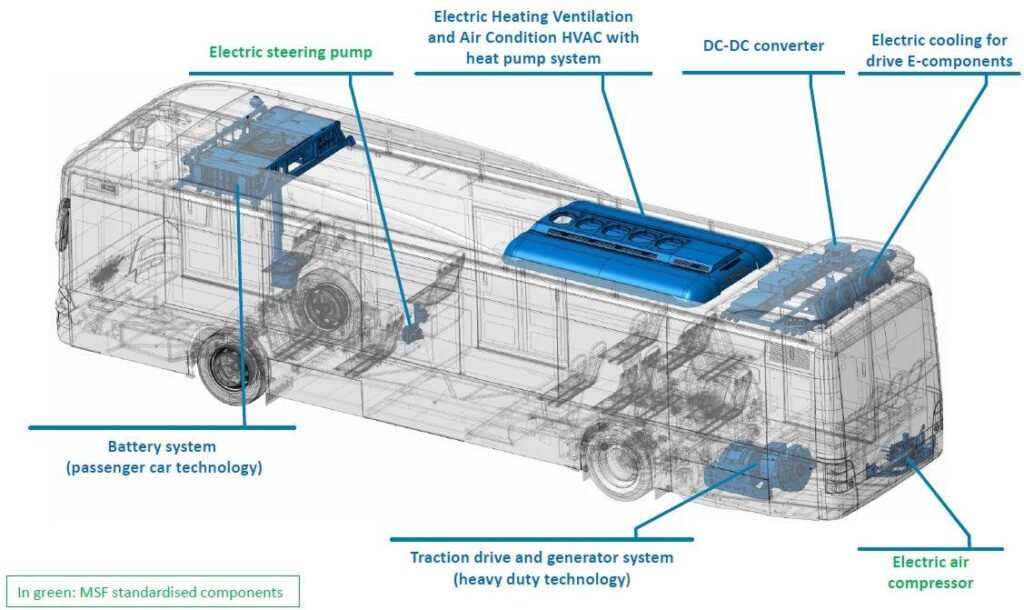
Main Components of an Electric Bus Climate-Control System
| Component | Main function | Why it matters |
|---|---|---|
| Air conditioning unit | Cools cabin air | Passenger comfort |
| Heat pump | Provides heating and cooling | Efficient energy use |
| Electric heater | Produces cabin heat | Cold-weather operation |
| Blower fans | Circulate conditioned air | Air distribution |
| Temperature sensors | Monitor cabin temperature | Automatic adjustment |
| Humidity sensors | Measure moisture levels | Environmental monitoring |
| Air filters | Capture airborne particles | Cabin air quality |
| Electronic controller | Coordinates equipment | Efficient operation |
| Thermal management system | Regulates battery and component temperatures | Battery protection |
The exact configuration depends on the bus manufacturer, vehicle size, climate, and equipment package.
How Do Electric Buses Stay Cool in Summer?
Summer cooling is one of the most important functions of an electric bus HVAC system.
Large passenger windows, direct sunlight, warm outdoor air, and heat generated by passengers can increase cabin temperatures.
To manage this heat, electric buses commonly use electrically powered air conditioning systems.
How the cooling process works
Most electric bus air conditioning systems operate using a vapor-compression refrigeration cycle.
The process involves four main components:
1. Compressor
The compressor increases the pressure and temperature of the refrigerant, allowing it to circulate through the refrigeration system.
2. Condenser
The hot refrigerant releases heat to the outside environment through the condenser.
3. Expansion device
The expansion valve reduces refrigerant pressure and temperature before it enters the evaporator.
4. Evaporator
The refrigerant absorbs heat from the cabin air as a blower pushes air across the evaporator. The cooled air then enters the passenger compartment.
This process continues until the system reaches its target conditions or adjusts its output to match the cooling demand.
Electric Bus Cooling Components and Their Functions
| Component | What happens | Cooling benefit |
|---|---|---|
| Compressor | Circulates and compresses refrigerant | Enables cooling cycle |
| Condenser | Releases heat outdoors | Removes cabin heat |
| Expansion valve | Reduces refrigerant pressure | Prepares refrigerant for evaporation |
| Evaporator | Absorbs heat from cabin air | Produces cool air |
| Blower | Moves air across the evaporator | Distributes cooled air |
| Air filter | Captures particles | Supports cleaner cabin air |
Why does cooling demand increase?
Several conditions can increase air-conditioning demand:
- High outdoor temperatures.
- Direct sunlight entering through windows.
- Large passenger numbers.
- Frequent opening of passenger doors.
- Poor insulation.
- Long periods of operation in congested traffic.
Practical tip: Fleet operators can reduce unnecessary cooling demand by maintaining door seals, cleaning air filters, inspecting refrigeration components, and using suitable pre-cooling strategies.
How Do Electric Buses Stay Warm in Winter?
Heating is often a more complicated challenge for electric buses than it is for conventional diesel buses.
A diesel engine produces considerable waste heat during operation. Conventional buses can use some of this heat to warm the passenger compartment.
An electric motor does not provide the same continuous waste-heat supply.
Therefore, electric buses require dedicated heating technologies.
Three common approaches are heat pumps, electric resistance heaters, and high-voltage heating systems.
A. Heat pump systems
A heat pump transfers heat rather than generating all of it directly through electrical resistance.
In heating mode, it extracts available heat from the outside environment and transfers it into the passenger cabin.
Its efficiency depends on outdoor temperature, system design, refrigerant technology, and operating conditions.
Heat pumps can deliver more heating energy than the electrical energy they consume under suitable conditions.
B. Electric resistance heaters
Electric resistance heaters convert electrical energy into heat.
They are relatively straightforward and can provide rapid heating, but they generally consume more electricity than an appropriately operating heat pump for the same useful heating output.
C. High-voltage heaters
High-voltage heaters are designed to operate using an electric vehicle’s high-voltage electrical architecture.
They may be integrated into the cabin heating circuit or used to heat coolant that distributes warmth through the vehicle.
Electric Bus Heating Technologies Compared
| Heating technology | How it works | Main advantage | Main limitation |
|---|---|---|---|
| Heat pump | Transfers environmental heat | Higher heating efficiency in suitable conditions | Performance declines in severe cold |
| Electric resistance heater | Converts electricity into heat | Simple and responsive | Higher electricity consumption |
| High-voltage heater | Uses vehicle high-voltage power | Integrated vehicle heating | Draws energy from battery |
| Waste-heat recovery | Reuses available component heat | Reduces wasted energy | Depends on available heat |
| Combined heating system | Uses multiple technologies | Flexible operation | More complex controls |
Some electric buses combine heat pumps with supplementary electric heaters to maintain cabin comfort in different weather conditions.
Why Does Climate Control Reduce Electric Bus Driving Range?
Here’s one of the most interesting facts about electric public transportation.
The same battery that powers the electric motor must also supply energy to air conditioning, heating, ventilation, lighting, and other auxiliary systems.
When HVAC demand increases, less energy remains available for propulsion over a given operating period.
This can reduce the distance the bus travels before needing to recharge.
A 2026 SAE study investigated the impact of HVAC operation on electric bus efficiency across different climatic conditions. Its findings reported a 20–40% driving-range reduction during peak HVAC operation under the study’s tested conditions.
Read the SAE research on electric bus HVAC energy consumption and driving range.
What does research reveal?
A 2026 SAE technical paper investigated HVAC energy consumption and electric bus range under different climatic conditions.
Its reported findings indicated a 20–40% reduction in range during peak HVAC operation under the study’s tested conditions.
A separate 2021 experimental study of a 12-metre battery-electric bus found that operating heating in the investigated winter conditions increased energy consumption by a factor of 1.9 compared with heating off.
These are specific research findings, not guaranteed results for every electric bus.
The actual effect depends on vehicle design, battery capacity, weather, passenger occupancy, route conditions, insulation, and HVAC technology.
Why does this happen?
Several factors contribute to increased energy demand:
- The air-conditioning compressor requires electrical power.
- Electric resistance heating can consume substantial energy.
- Fans and ventilation equipment operate continuously or intermittently.
- Frequent passenger door openings allow conditioned air to escape.
- Extreme outdoor temperatures increase heating or cooling requirements.
Factors Affecting Electric Bus HVAC Energy Consumption
| Factor | HVAC energy impact | Possible response |
|---|---|---|
| Extreme summer heat | Higher cooling demand | Efficient AC and pre-cooling |
| Freezing weather | Higher heating demand | Heat pumps and insulation |
| Frequent door openings | Increased heat exchange | Better door management |
| High passenger occupancy | More body heat and ventilation demand | Adaptive climate control |
| Poor insulation | Greater heating and cooling losses | Improve cabin insulation |
| Dirty filters | Can restrict airflow | Regular filter maintenance |
| Inefficient control settings | Unnecessary equipment operation | Smart HVAC controls |
The important lesson is that climate control should balance passenger comfort with battery efficiency rather than simply operating at maximum capacity.
Smart Sensors and Automatic Climate Control
Modern electric buses can use intelligent climate-control systems to adjust cabin conditions automatically.
Instead of relying entirely on manual temperature settings, electronic controllers use sensor information to manage HVAC equipment.
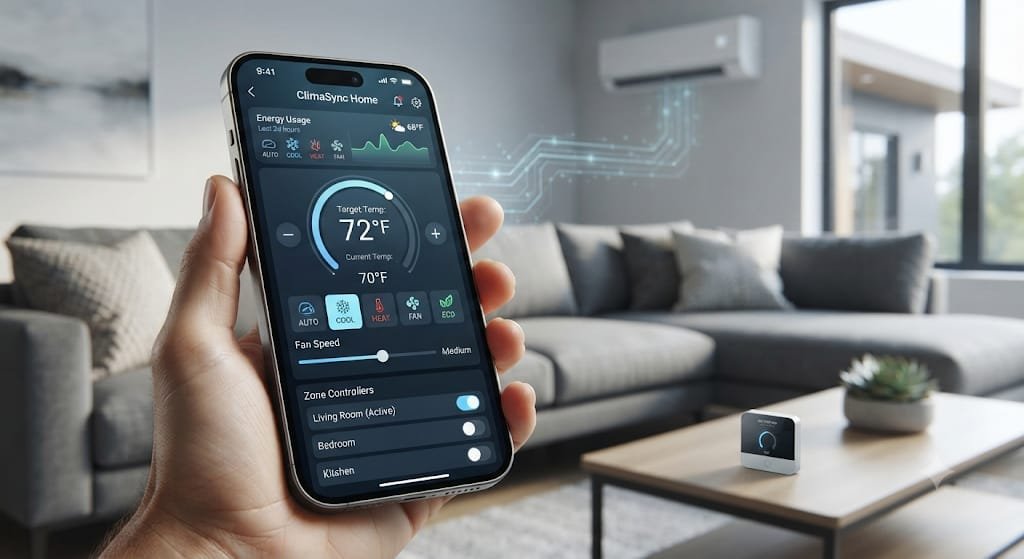
Electric buses can use zone-based temperature management to improve comfort in different passenger areas. This approach is related to the principles used in HVAC zoning systems, where temperature distribution is managed according to specific areas rather than treating every space identically.
Important smart-control technologies
Temperature sensors: Measure cabin and outdoor temperatures.
Humidity sensors: Help monitor moisture conditions inside the passenger compartment.
Occupancy information: Some advanced systems can use passenger-counting data to adjust ventilation and cooling demand.
Solar sensors: Help identify additional heat entering through windows.
Electronic control units: Process available information and coordinate heating, cooling, and airflow.
Remote monitoring: Fleet management systems may allow operators to monitor vehicle HVAC performance and identify equipment problems.
Fleet technicians can use temperature and humidity readings to monitor cabin conditions and identify areas where climate control may need adjustment. 🔎 Check Digital Temperature & Humidity Meters on Amazon.
Smart Climate-Control Features and Their Benefits
| Technology | Purpose | Operational benefit |
|---|---|---|
| Automatic temperature control | Adjusts heating and cooling | Consistent comfort |
| Cabin sensors | Monitor indoor conditions | Better control |
| Occupancy-based control | Responds to passenger demand | Potential energy savings |
| Solar-load monitoring | Detects sunlight-related heat | More responsive cooling |
| Remote diagnostics | Identifies system faults | Easier maintenance |
| Scheduled pre-conditioning | Conditions the cabin before service | Reduced initial battery demand when externally powered |
Pre-conditioning deserves special attention. When a bus is connected to suitable external charging infrastructure, its cabin can sometimes be heated or cooled before departure without drawing the full pre-conditioning energy from the traction battery.
Intelligent controllers can help maintain comfortable cabin conditions while reducing unnecessary heating and cooling. Learn more about how smart climate controllers manage temperature settings and improve climate control.
The actual benefit depends on the charging setup and vehicle controls.
Battery Thermal Management vs Passenger Climate Control
These two systems are related, but they do different jobs.
Passenger climate control maintains suitable conditions inside the cabin.
Battery thermal management regulates the temperature of the battery pack to support safe and reliable battery operation.
Lithium-ion batteries perform best within manufacturer-defined temperature ranges. Excessively hot or cold conditions can affect charging, power delivery, efficiency, and battery life.
An integrated thermal management system can coordinate battery conditioning, cabin heating and cooling, and available waste heat.
Some systems also use intelligent coolant valves and heat pumps to distribute thermal energy where it is needed.
Passenger HVAC vs Battery Thermal Management
| Feature | Passenger climate control | Battery thermal management |
|---|---|---|
| Main purpose | Passenger comfort | Battery temperature regulation |
| Main components | AC, heaters, fans, sensors | Coolant loops, pumps, heat exchangers, sensors |
| Operating target | Cabin comfort settings | Battery manufacturer limits |
| Main benefit | Comfortable travel | Battery performance and protection |
| Energy source | Vehicle electrical system | Vehicle electrical system |
| Control method | Cabin temperature demand | Battery temperature and operating demand |
A well-designed integrated system can use available waste heat and thermal energy more effectively, reducing unnecessary energy losses.
Thermal imaging devices can help trained technicians identify unusual surface-temperature patterns that may indicate insulation gaps or heat-loss areas. 🔍 Explore Thermal Imaging Cameras on Amazon
How Can Electric Bus Operators Reduce Climate-Control Energy Costs?
Climate control cannot simply be switched off to save electricity. Passengers and drivers need suitable cabin conditions, particularly during extreme weather.
Instead, operators should improve the efficiency of the entire HVAC system.
Recording temperature readings over time can help maintenance teams investigate changing cabin conditions and compare HVAC performance across operating periods. 📊 Check Digital Temperature Data Loggers on Amazon
Here are practical approaches.
1. Use efficient heat pumps
Where climate and vehicle design permit, heat pumps can reduce heating electricity requirements compared with resistance heating.
2. Pre-condition the cabin
Heat or cool the passenger compartment before departure when suitable external power is available.
3. Improve insulation
Well-insulated roofs, walls, windows, and door seals can reduce unwanted heat transfer.
4. Maintain air filters
Blocked or dirty filters can restrict airflow and reduce HVAC performance.
5. Optimize temperature settings
Avoid unnecessarily extreme temperature settings. Use reasonable manufacturer-approved comfort settings.
6. Inspect doors and seals
Frequent door openings and damaged seals can allow conditioned air to escape.
7. Use intelligent climate controls
Automatic systems can respond to actual operating conditions instead of running equipment unnecessarily.
8. Monitor HVAC energy consumption
Fleet operators should track energy use, identify inefficient vehicles, and compare performance across routes and seasons.
An infrared thermometer can help technicians check surface temperatures around accessible vents and cabin components during routine inspections. 🛒 Explore Infrared Thermometers on Amazon
Electric Bus Climate-Control Maintenance Schedule
| Maintenance task | Suggested inspection frequency |
|---|---|
| Cabin air filter inspection | According to manufacturer schedule |
| AC refrigerant and leak inspection | According to manufacturer schedule |
| Condenser and evaporator cleaning | As required by operating conditions |
| Heater performance check | Before colder seasons |
| Temperature sensor inspection | During scheduled servicing |
| Door seal inspection | During routine maintenance |
| HVAC electrical connections | During scheduled servicing |
| System diagnostic checks | According to manufacturer schedule |
Always follow the vehicle manufacturer’s maintenance instructions and use qualified electric-vehicle technicians for high-voltage components.
Electric Bus Climate Control Challenges in Different Climates
Electric buses operate in very different environments around the world. A climate-control strategy that works well in a mild European climate may not perform equally well in a hot Australian summer or a freezing Canadian winter.
United States
Electric buses operate across a wide range of climatic conditions, from hot southern states to cold northern regions.
Fleet operators must consider both strong air-conditioning demand and winter heating requirements.
United Kingdom
Cool, damp weather and seasonal temperature changes create different heating, ventilation, and humidity-management demands.
Efficient heating and cabin ventilation are particularly important.
Canada
Cold winters can increase cabin heating requirements and place additional demands on battery thermal management.
Heat pumps, insulation, and pre-conditioning can help improve efficiency.
Australia
Hot weather and strong sunlight can increase air-conditioning demand, especially in large passenger compartments.
Efficient cooling, solar protection, and cabin insulation are important considerations.
Europe
Electric bus fleets operate across diverse climates, including Mediterranean heat and colder northern winters.
Integrated thermal management and efficient heat pumps can help meet different seasonal requirements.
Climate Conditions and Electric Bus HVAC Priorities
| Region | Main climate challenge | HVAC priority |
|---|---|---|
| USA | Hot summers and cold winters | Balanced heating and cooling |
| UK | Cool, damp and changing weather | Efficient heating and ventilation |
| Canada | Severe winter temperatures | Heat pumps and battery conditioning |
| Australia | High summer temperatures | Efficient cooling and solar protection |
| Northern Europe | Long cold seasons | Heating efficiency and insulation |
| Southern Europe | Hot summers | Cooling capacity and energy efficiency |
These are broad regional considerations. Actual system requirements depend on local weather, routes, passenger numbers, and vehicle specifications.
Common Electric Bus Climate-Control Problems and Solutions
Like any complex vehicle system, electric bus HVAC equipment can develop faults.
Identifying symptoms early can prevent passenger discomfort and unnecessary energy consumption.
Common HVAC Problems, Causes and Solutions
| Problem | Possible cause | Recommended action |
|---|---|---|
| AC not cooling properly | Refrigerant leak or compressor fault | Professional HVAC inspection |
| Weak airflow | Blocked filter or blower problem | Inspect filter and blower |
| Cabin takes too long to heat | Heater or heat pump fault | Check heating system |
| Uneven cabin temperatures | Poor air distribution | Inspect vents and ducts |
| Unusual HVAC noise | Loose or damaged component | Professional inspection |
| High energy consumption | Inefficient settings or equipment fault | Review system performance |
| Temperature fluctuations | Sensor or control fault | Check sensors and controller |
| Unpleasant cabin air | Dirty filters or moisture-related issues | Inspect and replace filters as required |
Safety precautions
Electric buses contain high-voltage electrical systems. HVAC compressors, heaters, power electronics, and battery-related components may operate at hazardous voltages.
Do not attempt to repair high-voltage equipment without the required training, isolation procedures, and protective equipment.
Drivers and fleet operators should report warning lights, unusual smells, electrical faults, refrigerant leaks, or abnormal heating performance to qualified technicians.
What Is the Future of Electric Bus Climate Control?
Electric bus climate-control technology is continuing to develop.
Manufacturers are working on more efficient heating and cooling equipment, integrated thermal management, intelligent controls, and improved passenger comfort.
Several developments are particularly important.
Climate management is also important in other passenger transport environments. The principles behind climate control in cruise ships offer another example of how large passenger spaces require carefully managed heating, cooling and ventilation.
Advanced heat pumps
Improved heat pump designs can provide more efficient heating across a wider range of operating conditions.
Integrated thermal management
Instead of managing the cabin and battery as completely separate systems, integrated designs can coordinate heating, cooling, and waste-heat recovery.
Predictive climate control
Advanced controllers can potentially use route information, weather forecasts, passenger occupancy, and vehicle operating data to anticipate heating and cooling requirements.
Improved insulation
Better glazing, insulation materials, and door designs can reduce unwanted heat transfer.
Intelligent fleet monitoring
Fleet operators can use vehicle data to identify inefficient HVAC operation and improve maintenance planning.
The future of electric bus climate control is not simply about making vehicles colder or warmer. It is about maintaining passenger comfort while using battery energy more intelligently.
Frequently Asked Questions
1. How does climate control work in an electric bus?
Electric bus climate control uses air conditioning, electric heating or heat pumps, ventilation fans, sensors, and electronic controllers to manage cabin temperature and airflow.
2. Does air conditioning reduce electric bus range?
Yes. Air conditioning draws electricity from the vehicle’s energy system. The impact depends on outdoor temperature, cooling demand, bus design, battery capacity, and operating conditions.
3. How do electric buses heat passengers in winter?
Electric buses use heat pumps, electric resistance heaters, high-voltage heating systems, or combinations of these technologies to warm the passenger cabin.
Research published in the World Electric Vehicle Journal examined how heating affects battery consumption and passenger comfort in a battery-electric bus. Read the experimental study of thermal comfort and energy consumption in an electric bus.
4. Are heat pumps better than electric heaters in electric buses?
Heat pumps can provide more useful heating per unit of electrical energy under suitable conditions. Their performance depends on outdoor temperature and system design.
5. Do electric buses use the same batteries for AC and driving?
Generally, yes. The traction battery supplies electricity to the electric motor and, through the vehicle’s electrical architecture, to HVAC and other auxiliary systems.
6. What is the difference between battery thermal management and cabin climate control?
Cabin climate control manages passenger comfort, while battery thermal management keeps battery cells within their required operating temperature range.
7. Can electric buses run AC while stationary?
Yes, provided the vehicle’s electrical system and operating controls support it. However, the air conditioning still consumes energy.
8. How can electric bus operators reduce HVAC energy consumption?
They can use efficient heat pumps, cabin pre-conditioning, suitable temperature settings, improved insulation, regular maintenance, and intelligent HVAC controls.
9. Why is winter heating challenging for electric buses?
Electric buses cannot rely on a conventional diesel engine’s waste heat. They must obtain heating energy from dedicated electrical heating or heat pump systems, which can affect battery consumption.
10. What happens if an electric bus HVAC system fails?
Passengers may experience uncomfortable temperatures, while the vehicle may need inspection or operational adjustments. A qualified technician should diagnose and repair the system.
Conclusion: Smarter Climate Control for Better Electric Transportation
Electric bus climate control is a critical part of modern public transportation. It keeps passengers comfortable, supports driver working conditions, and helps maintain appropriate operating temperatures for vehicle components.
However, heating and cooling require energy that would otherwise be available for driving.
The best solutions combine efficient heat pumps, intelligent sensors, effective insulation, smart controls, and integrated battery thermal management.
As electric public transportation expands across the USA, UK, Canada, Australia, and Europe, more efficient climate-control technology will become increasingly important.
Understanding how these systems work helps passengers, transport operators, and technology enthusiasts appreciate the engineering behind cleaner and smarter mobility.
Discover more practical guides about climate control, energy efficiency, and smart technology at SmartAirHQ.
Affiliate Disclosure
SmartAirHQ participates in the Amazon Services LLC Associates Program, an affiliate advertising program designed to provide websites with a way to earn advertising fees by advertising and linking to Amazon.com. As an Amazon Associate, SmartAirHQ earns from qualifying purchases made through affiliate links. This means that when you click on an Amazon link and make a qualifying purchase, we may receive a small commission at no additional cost to you. This does not affect the price you pay, and it does not influence our editorial opinions, product recommendations, or the information we provide. We only aim to recommend products and resources that may be useful and relevant to our readers.