Indoor air can contain dust, pollen, pet dander, smoke, and other airborne particles that affect comfort and indoor air quality. Choosing the right air purifier depends on more than simply picking the most expensive model. Room size, filtration technology, airflow, noise level, filter replacement costs, smart features, and maintenance all matter.
This air purifier buying guide compares 12 popular options for different rooms, budgets, and cleaning needs. Whether you need a compact purifier for a bedroom, a quiet unit for a home office, a powerful model for a large living room, or a more advanced purifier for whole-home use, the goal is to help you understand what to look for before buying.
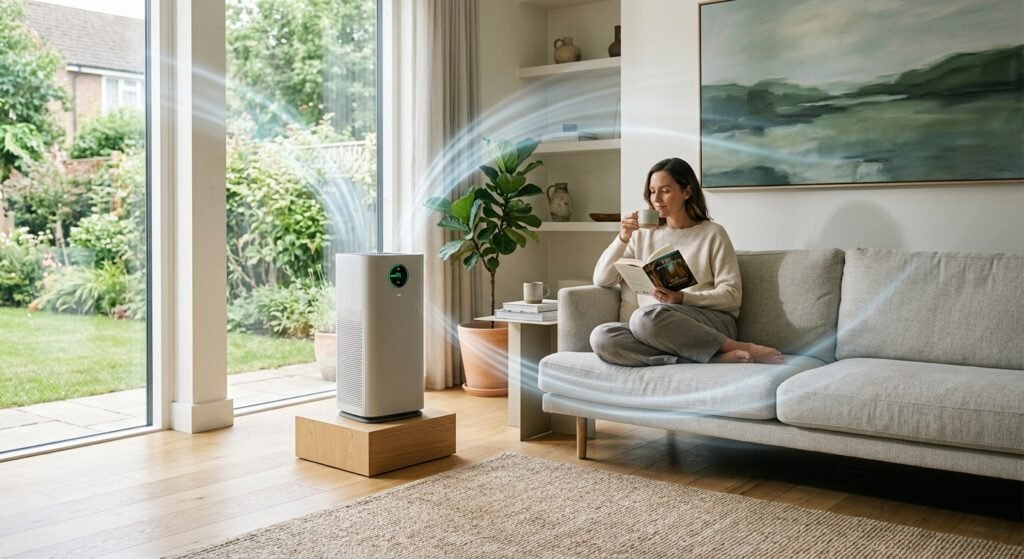
A smart air purifier can help improve indoor air quality while giving you convenient control and real-time air-quality insights.
Affiliate Disclosure: Some product links in this guide are affiliate links. If you purchase through these links, SmartAirHQ may earn a commission at no additional cost to you. Our recommendations are based on product suitability and intended use, not on the size of any potential commission.
Quick Comparison: 12 Air Purifiers
| Air Purifier | Best For | Main Strength | Ideal Use |
|---|---|---|---|
| Blueair HealthProtect 7470i | Smart whole-room purification | Advanced monitoring and filtration | Large rooms |
| IQAir HealthPro Plus | High-level particle filtration | Premium filtration system | Allergy-sensitive households |
| Austin Air HealthMate | Heavy-duty air cleaning | Durable, substantial filtration | Larger rooms |
| RabbitAir MinusA2 | Quiet home use | Slim design and customizable filtration | Bedrooms and living areas |
| Coway Airmega 400 | Large rooms | High-capacity air cleaning | Living rooms and open spaces |
| Levoit Core 300 | Small rooms | Compact and easy to use | Bedrooms and offices |
| Honeywell HPA100 | Smaller rooms | Straightforward filtration | Bedrooms and home offices |
| GermGuardian Pluggable | Small personal areas | Compact plug-in design | Small spaces |
| Winix 5500-2 | Everyday home use | Multi-stage filtration | Bedrooms and living areas |
| Pure Enrichment PureZone Mini | Personal spaces | Portable design | Desks, travel and small areas |
| Govee Smart Air Purifier | Smart-home users | App-connected functionality | Bedrooms and offices |
| Medify MA-14 | Compact spaces | Small-room air cleaning | Bedrooms and offices |
How to Choose an Air Purifier
Before buying an air purifier, identify the problem you want the machine to solve. A purifier designed for a small bedroom does not necessarily provide the same airflow or coverage as a larger unit intended for an open-concept living area.
The most important factors include:
1. Room Size
Start by measuring the room where the purifier will operate. Manufacturers normally provide recommended coverage information, but actual performance can depend on ceiling height, doors, windows, airflow, and how frequently the purifier is running.
For a small bedroom, a compact model may be sufficient. Large living rooms or open floor plans generally require a purifier designed to move more air.
2. Filtration Technology
A quality filtration system is one of the most important features to examine.
HEPA filtration is commonly used to capture fine airborne particles. Some air purifiers also include activated carbon or similar odor-control media, which can be useful when smoke, cooking odors, or other smells are a concern.
Do not choose a purifier based solely on the word “HEPA.” Look at the complete filtration system and how the manufacturer describes its intended use.
3. CADR and Airflow
Clean Air Delivery Rate, commonly called CADR, can help you compare how effectively a purifier delivers filtered air.
A higher airflow capacity can be particularly useful in larger rooms, but it should be considered together with the manufacturer’s recommended room coverage and operating conditions.
4. Noise Level
Noise matters if you plan to use the purifier while sleeping, working, studying, or watching television.
A purifier may have several fan speeds, allowing you to select quieter operation when maximum airflow is not necessary.
5. Filter Replacement Cost
Buying the purifier is only part of the ownership cost. Filters eventually need replacement, and the frequency depends on the model, environment, operating hours, and manufacturer’s recommendations.
Before purchasing, check:
- Replacement filter availability
- Replacement filter price
- Recommended replacement interval
- Whether multiple filters need to be replaced
- How easy the filter is to access
6. Smart Features
Smart air purifiers may offer features such as:
- Air-quality monitoring
- Automatic fan adjustment
- Mobile-app control
- Scheduling
- Remote operation
- Filter-life notifications
These features can be useful, but they should not replace the basic considerations of filtration, airflow, room coverage, and maintenance.
12 Best Air Purifiers for Different Home Needs
1. Blueair HealthProtect 7470i Smart Purifier
The Blueair HealthProtect 7470i is designed for shoppers who want a premium air purifier with smart functionality. Its connected features can make it appealing to users who want to monitor and manage air cleaning as part of a smart-home setup.
It is particularly worth considering when convenience, automated operation, and ongoing air-quality awareness are important factors.
Best for: Smart-home users and larger rooms.
Why consider it: A premium option for shoppers looking for connected air-purification features.
🛍️ Shop : Blueair HealthProtect 7470i on Amazon.
2. IQAir HealthPro Plus Medical-Grade System
The IQAir HealthPro Plus is positioned toward users looking for a premium filtration-focused system. It can be considered by households where fine airborne particles and filtration performance are major priorities.
Because this is a higher-end system, buyers should compare its size, ongoing filter costs, intended room coverage, and maintenance requirements before purchasing.
🔎 Find : IQAir HealthPro Plus on Amazon.
Why consider it: A high-end option for users with demanding air-cleaning requirements.
3. Austin Air HealthMate Standard Unit
The Austin Air HealthMate is a substantial air purifier designed for users who want a heavy-duty approach to indoor air filtration.
Its larger design makes it more appropriate for buyers who prioritize filtration capacity over having a small, discreet desktop-style unit.
Best for: Larger rooms and users seeking a substantial filtration system.
Why consider it: A durable, heavy-duty option for households that want a more robust purifier.
⭐ Explore : Austin Air HealthMate on Amazon.
4. RabbitAir MinusA2 Ultra Quiet Air Purifier
The RabbitAir MinusA2 is a strong option for people who care about quiet operation and a design that can fit naturally into residential spaces.
Its slim profile makes it particularly interesting for bedrooms, living rooms, and other areas where a large floor-standing appliance may be inconvenient.
Best for: Bedrooms, living rooms, and quieter environments.
Why consider it: A design-focused purifier aimed at users who want effective air cleaning without a bulky appearance.
🏠 Find: RabbitAir MinusA2 on Amazon.
5. Coway Airmega 400 Smart Air Purifier
The Coway Airmega 400 is designed for users who need a higher-capacity purifier for larger residential spaces.
It can make sense for open living areas where a compact bedroom purifier would not provide the same level of airflow.
Best for: Large living rooms and open-concept spaces.
Why consider it: A larger-format option for households that need more substantial air circulation.
🛒 Check : Coway Airmega 400 on Amazon.
6. Levoit Core 300 True HEPA Air Purifier
The Levoit Core 300 is a compact option for bedrooms, offices, and other smaller spaces.
Its smaller footprint makes it easier to place beside furniture or in areas where a full-size purifier would take up too much room.
Best for: Bedrooms, offices, and smaller rooms.
Why consider it: Compact design and straightforward everyday use.
✨ Explore : Levoit Core 300 on Amazon.
7. Honeywell HPA100 True HEPA Allergen Remover
The Honeywell HPA100 is another compact option for users looking for straightforward air filtration in smaller areas.
It may be worth considering for bedrooms, offices, and other personal spaces where simple controls and a relatively compact design are priorities.
Best for: Smaller bedrooms and home offices.
Why consider it: A practical choice for shoppers who want a familiar, straightforward air purifier.
🔗 See : Honeywell HPA100 on Amazon.
8. GermGuardian Pluggable Air Sanitizer
The GermGuardian Pluggable Air Sanitizer takes a different approach from larger floor-standing purifiers. Its compact plug-in format makes it useful where space is limited.
Because of its compact form factor, it should be evaluated according to the manufacturer’s intended coverage rather than treated as a replacement for a high-capacity room purifier.
Best for: Small personal areas and limited-space applications.
Why consider it: Very compact design for locations where a conventional purifier is inconvenient.
🛍️ Shop : GermGuardian Pluggable Air Sanitizer on Amazon.
9. Winix 5500-2 Air Purifier
The Winix 5500-2 is designed for everyday residential air cleaning and can be considered for bedrooms, living spaces, and home offices.
Its multi-stage approach makes it relevant for shoppers who want more than a basic single-filter setup.
Best for: General home use.
Why consider it: A versatile option for everyday residential air-cleaning needs.
🔎 Find: Winix 5500-2 on Amazon.
10. Pure Enrichment PureZone Mini
The PureZone Mini is designed for portability and personal spaces. Its compact format makes it easier to move between rooms or use around a desk or other small area.
It is best considered as a personal or small-space option rather than a substitute for a larger purifier intended to clean an entire living area.
Best for: Desks, small spaces, and portability.
Why consider it: Compact size and convenient portability.
⭐ Explore : Pure Enrichment PureZone Mini on Amazon.
11. Govee Smart Air Purifier Desktop Edition
The Govee Smart Air Purifier Desktop Edition is aimed at users who prefer connected devices and compact air-cleaning equipment.
Smart functionality can be particularly convenient in a home office or bedroom where users want to monitor or control the purifier through connected features.
Best for: Smart-home users and desktop environments.
Why consider it: Combines compact air cleaning with smart-home functionality.
🏠 Find : Govee Smart Air Purifier on Amazon.
12. Medify MA-14 W Air Purifier
The Medify MA-14 W is a compact option for bedrooms, offices, and other smaller areas where space is limited.
Its smaller form factor can make it easier to position close to the area where air cleaning is needed.
Best for: Small rooms and localized air cleaning.
Why consider it: Compact format for users who need targeted air purification.
🛒 Check : Medify MA-14 W on Amazon.
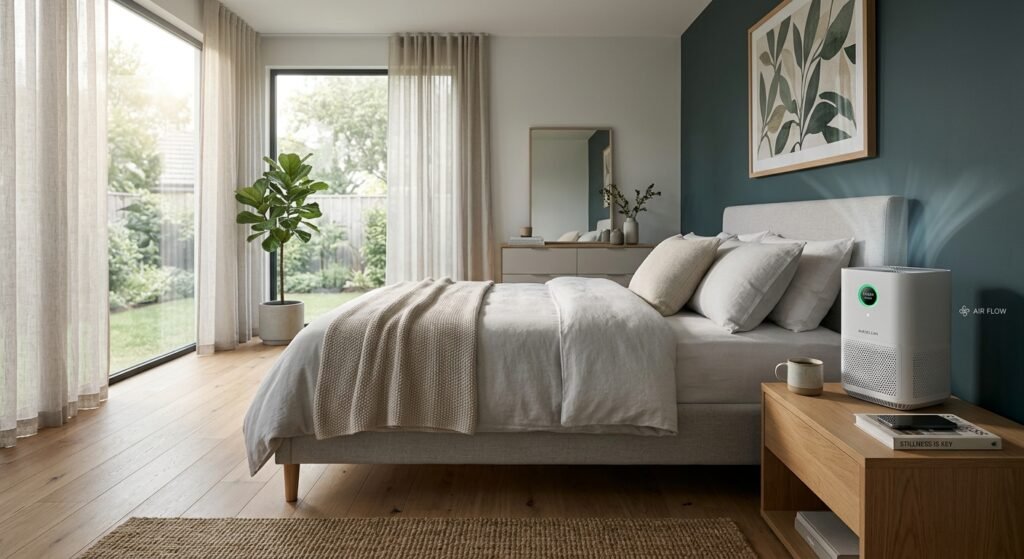
Which Air Purifier Should You Choose?
The right choice depends on your room, priorities, and expected usage rather than simply selecting the most expensive model.
| Your Main Need | What to Prioritize | Suitable Options |
|---|---|---|
| Small bedroom | Compact size, quiet operation, appropriate coverage | Levoit Core 300, Honeywell HPA100 |
| Large living room | Higher airflow and room coverage | Coway Airmega 400, Blueair HealthProtect 7470i |
| Premium filtration | Advanced filtration and premium construction | IQAir HealthPro Plus, Austin Air HealthMate |
| Quiet home environment | Low-noise operation and suitable fan settings | RabbitAir MinusA2 |
| Smart-home integration | App controls and air-quality monitoring | Blueair HealthProtect 7470i, Govee Smart Air Purifier |
| General everyday use | Balanced filtration, size, and maintenance | Winix 5500-2 |
| Very limited space | Compact or plug-in design | GermGuardian Pluggable, PureZone Mini |
| Home office | Compact design and low-noise operation | Levoit Core 300, Govee Smart Air Purifier |
| Localized air cleaning | Personal or small-room operation | PureZone Mini, Medify MA-14 W |
Air Purifier Features That Matter Most
Not every feature deserves the same weight when comparing models.
HEPA Filtration
For shoppers concerned about airborne particles, HEPA filtration is an important specification to investigate. Always check the manufacturer’s description and the exact filter configuration of the model you are considering.
Activated Carbon
If odors and smoke are major concerns, look for a purifier that incorporates activated carbon or another odor-control medium.
Airflow
A purifier needs to move enough air through its filtration system for the room in which it operates. This is why room coverage and CADR should be considered alongside filter type.
Automatic Modes
Automatic modes can adjust fan operation based on the purifier’s sensor readings. This can make everyday use more convenient.
Filter-Life Monitoring
A filter-life indicator can help you remember when maintenance is required and prevent you from relying on an excessively used filter.
Smart Controls
App connectivity, scheduling, and remote control can be useful conveniences, especially for bedrooms, offices, and smart-home environments.
Air Purifier Buying Mistakes to Avoid
Choosing Based Only on Price
The cheapest purifier is not automatically the most economical choice. Consider the initial purchase price together with filter replacement costs, energy use, and expected operating time.
Ignoring Room Size
A compact purifier may be excellent for a bedroom but unsuitable for a large open living space.
Forgetting Replacement Filters
Always investigate replacement filter availability before buying. A purifier becomes much less convenient if replacement filters are difficult to find.
Buying Too Many Features
Smart controls and additional modes can be useful, but they should not distract from the fundamentals: filtration, airflow, room coverage, noise, and maintenance.
Putting the Purifier in the Wrong Location
Avoid blocking the purifier’s air intake or outlet. Follow the manufacturer’s placement recommendations and allow sufficient clearance around the unit.
How to Maintain an Air Purifier
Regular maintenance helps keep the appliance operating as intended.
- Check the manufacturer’s filter-replacement recommendations.
- Replace filters when required rather than relying only on appearance.
- Keep air intakes and outlets free from obstructions.
- Clean exterior surfaces according to the manufacturer’s instructions.
- Keep the purifier away from locations where water or excessive moisture could damage the appliance.
- Monitor unusual noises, odors, or changes in airflow.
- Use the correct replacement filter for the specific model.
Keep Your Home Cleaner - Air purifiers can help improve indoor air quality, but keeping floors free from dust, dirt, and allergens is also important for a cleaner home environment. For an automated cleaning solution, explore our Smart Robot Vacuum Buying Guide: 15 Best Automated Floor Cleaners to compare smart robot vacuums and find the right option for your home.
Air Purifier Cost: Look Beyond the Purchase Price
The real cost of an air purifier includes more than the initial purchase.
| Ownership Cost | What to Check | Why It Matters |
|---|---|---|
| Initial Price | Purchase cost of the purifier | Determines upfront investment |
| Replacement Filters | Price and availability | Major recurring expense |
| Electricity | Power consumption and operating hours | Affects long-term running cost |
| Maintenance | Cleaning and replacement requirements | Determines ongoing effort |
| Accessories | Optional filters or components | Can increase ownership costs |
| Warranty | Warranty length and coverage | Provides additional purchase protection |
For this reason, a slightly more expensive purifier may sometimes be more practical if its replacement filters are readily available and its long-term operating requirements fit your budget.
Frequently Asked Questions
Do air purifiers really help indoor air quality?
Air purifiers can reduce certain airborne particles when appropriately sized, operated, and maintained. Their effectiveness depends on the filtration system, airflow, room conditions, and how consistently the purifier is used.
Is a HEPA air purifier better for allergies?
HEPA filtration is designed to capture fine airborne particles, making it an important feature to consider when airborne allergens are a concern. However, room coverage, airflow, maintenance, and correct operation also matter.
Should an air purifier run all day?
Many people operate air purifiers for extended periods, but the appropriate schedule depends on the appliance, room conditions, desired air quality, noise preferences, and energy considerations. Always follow the manufacturer’s operating guidance.
Where should I put an air purifier?
Place the purifier where its air intake and outlet are not blocked. A location with reasonable air circulation can help the appliance distribute filtered air throughout the room. Follow the manufacturer’s placement recommendations for the specific model.
How often should an air purifier filter be replaced?
The correct replacement interval varies by model, filter type, operating conditions, and usage. Follow the manufacturer’s recommended replacement schedule and check the filter-life indicator when available.
Are smart air purifiers worth it?
Smart features can be useful if you value remote control, scheduling, air-quality monitoring, or automatic operation. They are optional, however, and should not take priority over appropriate room coverage and effective filtration.
Do air purifiers remove odors?
Some air purifiers can help reduce certain odors, particularly models that include activated carbon or another odor-control filter. Results vary depending on the odor source, concentration, room conditions, and amount of carbon used.
What size air purifier do I need?
Choose a model according to the manufacturer’s recommended room coverage and airflow specifications. Measure your room and compare it with the purifier’s stated coverage rather than relying only on the physical size of the appliance.
Final Buying Checklist
Before purchasing an air purifier, ask yourself:
- Is the purifier suitable for my room size?
- What type of filtration does it use?
- Does it provide sufficient airflow for my space?
- Is it quiet enough for my bedroom or office?
- How much do replacement filters cost?
- Are replacement filters easy to obtain?
- Does it have the smart features I actually need?
- How much maintenance will it require?
- What will it cost to operate over time?
- Does the manufacturer provide clear product and maintenance information?
A good air purifier is not necessarily the largest or most expensive model. The better choice is the one whose filtration, airflow, room coverage, noise level, maintenance requirements, and ongoing costs match the environment where you plan to use it.
Explore SmartAirHQ
Before choosing a Air Purifier Buying Guide , check the room-size coverage, CADR, filter type, noise level, energy use, smart-home compatibility, app features, and replacement filter costs to make sure it fits your needs.
Looking for more practical guides, buying advice, and helpful tips for creating a smarter, more comfortable, and energy-efficient home? Explore SmartAirHQ for in-depth articles covering smart home technology, climate control, home appliances, smart energy, smart gadgets, lighting and electrical solutions, and tools and repair guides. Discover practical ideas and product recommendations to help you make smarter decisions for your home.
Conclusion
Choosing an air purifier becomes much easier when you focus on the factors that actually affect everyday use. Start with your room size and the pollutants you want to address, then compare filtration, airflow, noise, filter costs, maintenance, and smart features.
For smaller rooms, compact models such as the Levoit Core 300, Honeywell HPA100, PureZone Mini, or Medify MA-14 W can be worth considering. Larger spaces may call for higher-capacity options such as the Coway Airmega 400 or Blueair HealthProtect 7470i. Buyers seeking premium filtration can also investigate models such as the IQAir HealthPro Plus and Austin Air HealthMate.
The most important step is to match the purifier to your actual needs rather than buying based on features alone. Check the manufacturer’s current specifications, room-coverage guidance, replacement-filter requirements, and warranty information before making your final purchase.
Choosing the right Air Purifier Buying Guide can make it easier to maintain cleaner, fresher, and more comfortable indoor air while monitoring air quality more conveniently.