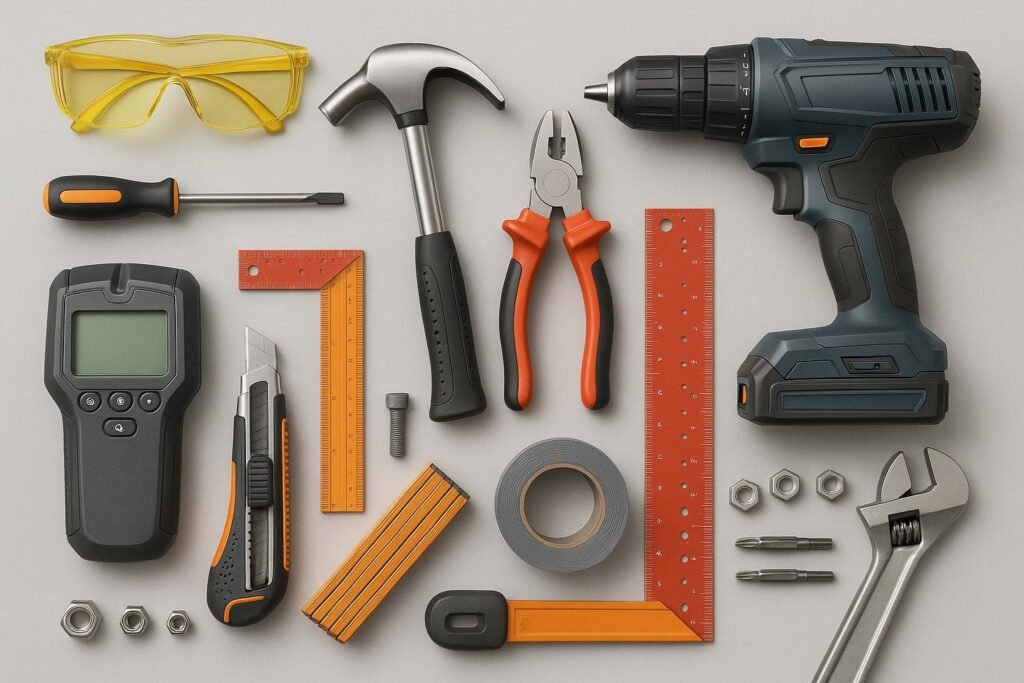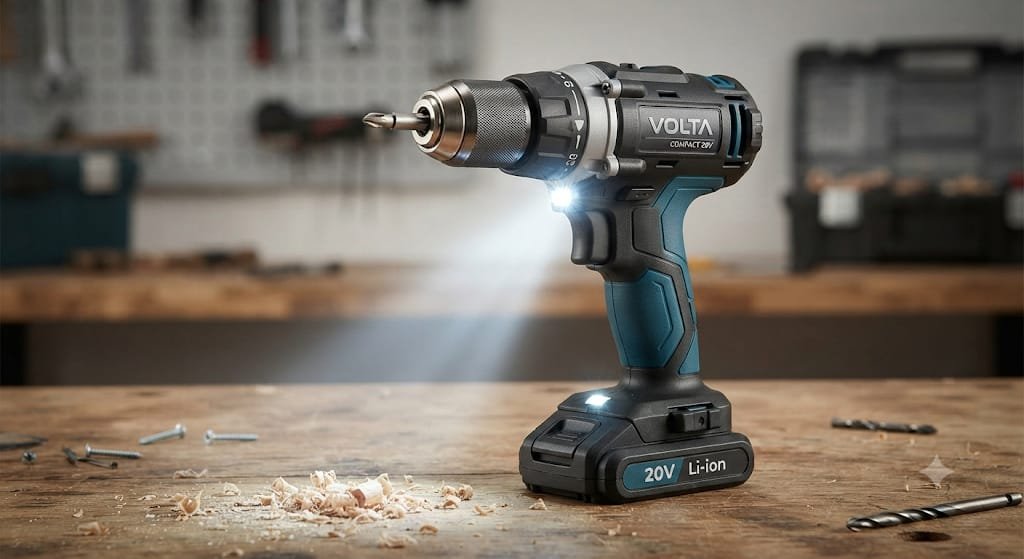
A cordless drill is one of the most useful power tools for everyday home repairs, but choosing the right one is not as simple as picking the drill with the highest voltage or most features. A good cordless power drill should match the work you actually do—whether that means assembling furniture, installing shelves, driving screws, drilling into wood, or handling more demanding repair projects.
This Cordless Power Drill Buying Guide compares 15 noteworthy drill and driver options and explains the features that matter most, including voltage, brushless motors, torque, speed settings, chuck size, battery systems, ergonomics, and included accessories. The goal is not to declare one drill universally best, but to help you identify the right combination of power, size, battery compatibility, and value for your home workshop.
Secondary and LSI keywords naturally covered in this guide: cordless drill for home use, best cordless drill, cordless drill driver, brushless cordless drill, 20V cordless drill, 18V drill driver, 12V cordless drill, compact drill driver, home improvement power tools, drill battery, lithium-ion drill, variable-speed drill, hammer drill vs drill driver, drill chuck size, drill torque, DIY power tools, cordless tool buying guide, best drill for household repairs.
Affiliate disclosure: This article contains affiliate links. If you purchase through qualifying links, SmartAirHQ may earn a commission at no additional cost to you. Prices, availability, specifications, and seller information can change, so verify the current product details before purchasing.
Important: Product specifications can vary by model, kit, market, and revision. The product information below is based on manufacturer information where available; always check the current product listing and manual before purchasing.
How to Choose the Right Cordless Drill for Home Repairs
The best cordless drill for home repairs is usually the one that gives you enough power without becoming unnecessarily large or complicated. Most homeowners need a tool that can switch easily between drilling and fastening, control speed accurately, accept common bits, and remain comfortable during repeated use. A compact 12V model can be excellent for light repairs, while an 18V or 20V platform may be more appropriate for larger projects and frequent DIY work.
Before comparing individual models, consider the type of work, battery platform, torque, speed range, chuck size, motor design, weight, and kit contents. These factors have a much greater effect on the buying decision than a single headline specification.
Start With the Jobs You Actually Do
Think about the projects you expect to perform during a normal year. Furniture assembly, cabinet hardware, curtain brackets, shelves, picture frames, small woodworking jobs, and general maintenance usually do not require an enormous drill. If you regularly drill larger holes, work with dense materials, or complete construction-oriented projects, additional power and a larger battery platform may make more sense.
A practical home-use drill should be easy to control at low speed while still having enough capacity for ordinary drilling. For many users, a compact drill driver with variable speed and an adjustable clutch is more useful than an oversized high-torque tool that rarely operates near its limits.
Choose a Battery Platform You Can Live With
Battery compatibility can matter almost as much as the drill itself. Major cordless-tool ecosystems allow one battery platform to power multiple tools, so buying into a system can reduce the need for separate batteries and chargers later. DEWALT, Makita, Milwaukee, CRAFTSMAN, Bosch, and Metabo HPT all offer cordless tool families built around their respective battery systems. (DeWalt)
If you already own compatible batteries, that should strongly influence your decision. A bare tool can make sense when you already have batteries and a charger, while a kit containing batteries and a charger may be more convenient for someone starting from scratch.
15 Cordless Drills and Drill Drivers Worth Comparing
There is no single cordless drill that is perfect for every homeowner. The 15 options below cover compact drills, brushless models, established 18V and 20V platforms, and drills intended for users who want more capability from their home workshop.
Rather than presenting these as an absolute ranking, consider them a shortlist of models and platforms worth researching. Manufacturer specifications and kit configurations can change, and the best choice depends on your budget, existing batteries, project requirements, and preference for compactness versus power.
| # | Drill / Driver | Platform | Particularly useful for |
|---|---|---|---|
| 1 | DEWALT DCD771C2 | 20V MAX | General home repairs |
| 2 | DEWALT DCD777B | 20V MAX | Compact brushless drilling |
| 3 | DEWALT DCD800 | 20V MAX XR | More advanced DIY work |
| 4 | DEWALT DCD794 ATOMIC | 20V MAX | Compact performance |
| 5 | DEWALT DCD703 XTREME | 12V MAX | Tight spaces and light work |
| 6 | Makita XFD131 | 18V LXT | Balanced drilling and driving |
| 7 | Milwaukee 3601-20 M18 | 18V | Compact general-purpose work |
| 8 | Milwaukee 2801-20 M18 | 18V | Compact brushless drilling |
| 9 | Milwaukee 3602-20 M18 | 18V | Drilling plus hammer function |
| 10 | Bosch PS31 | 12V MAX | Lightweight household tasks |
| 11 | Bosch GSR18V-400 | 18V | Compact brushless work |
| 12 | Bosch GSR18V-535C | 18V | Connected/advanced DIY use |
| 13 | CRAFTSMAN CMCD700C1 | V20 | General household projects |
| 14 | CRAFTSMAN CMCD713C1 | V20 Brushless RP | Higher-performance DIY work |
| 15 | Metabo HPT DS18DDX | 18V | Compact professional-style use |
1. DEWALT DCD771C2 20V MAX Compact Drill/Driver
The DEWALT DCD771C2 is a straightforward option for users who want a conventional 20V cordless drill kit. DEWALT lists a two-speed transmission, 1/2-inch single-sleeve ratcheting chuck, ergonomic handle, and up to 300 UWO. The kit includes two 20V MAX batteries, a charger, and a contractor bag. (DeWalt)
This makes it particularly relevant to homeowners who do not already own a compatible battery system. Its combination of a conventional drill-driver design and included accessories makes it a useful starting point for general maintenance.
2. DEWALT DCD777B 20V MAX Compact Brushless Drill/Driver
The DEWALT DCD777B is a compact brushless alternative within the 20V MAX system. DEWALT lists a two-speed transmission, 1/2-inch ratcheting chuck, LED work light, and brushless motor. It is sold as a tool-only configuration, meaning the battery and charger need to be purchased separately unless you already have compatible equipment. (DeWalt)
For someone already invested in DEWALT 20V MAX batteries, a tool-only model can be convenient. Its compact design is also useful when drilling or driving in areas where a larger drill becomes awkward.
3. DEWALT DCD800 20V MAX XR Brushless Drill/Driver
The DCD800 sits in DEWALT’s more advanced XR drill-driver range. DEWALT currently lists it among its 20V MAX drill-driver products alongside other compact and brushless models. (DeWalt)
It is worth considering when you want a more modern brushless platform rather than the traditional DCD771-style configuration. For homeowners who frequently build, repair, or remodel, a higher-end drill can make sense when its additional capability will actually be used.
4. DEWALT DCD794 ATOMIC 20V MAX Brushless Drill/Driver
The DCD794 ATOMIC is another compact brushless option in DEWALT’s 20V MAX range. DEWALT identifies the model as a featured ATOMIC 20V MAX brushless cordless 1/2-inch drill/driver kit. (DeWalt)
Its place in a compact-oriented product family makes it worth comparing for homeowners who value maneuverability. If your projects regularly involve cabinets, shelving, furniture, or confined workspaces, compact dimensions can be more useful than simply buying the most powerful drill available.
5. DEWALT DCD703 XTREME 12V MAX 5-In-1 Drill/Driver
The DCD703 is a different proposition because it uses the 12V MAX platform and a multi-head configuration. DEWALT lists it as an XTREME 12V MAX brushless cordless 5-in-1 drill/driver. (DeWalt)
This type of design can appeal to DIY users who frequently work in tight areas and want greater versatility from one compact tool. It is particularly worth comparing with conventional 18V or 20V drills when the size and flexibility of the tool matter more than maximum drilling capacity.
6. Makita XFD131 18V LXT Brushless Driver-Drill
The Makita XFD131 is an 18V LXT brushless 1/2-inch driver-drill kit. Makita lists a brushless motor, 440 in-lbs. of maximum torque, a two-speed mechanical transmission, and a compact 6-5/8-inch design. The kit includes a 3.0Ah battery, charger, and tool bag. (Makita Tools)
For homeowners who want a balance between compact handling and substantial capability, the XFD131 is a strong model to investigate. It is also particularly attractive to people already using other Makita 18V LXT tools.
7. Milwaukee M18 3601-20 Compact Brushless Drill/Driver
Milwaukee’s 3601-20 M18 Compact Brushless Drill/Driver is designed around a compact 1/2-inch drill-driver format. Milwaukee lists 550 in-lbs. of torque, two speed ranges up to 1,700 RPM, a 5.7-inch length, a brushless motor, and an all-metal gear case and chuck. (Milwaukee Tool)
Its compact dimensions make it relevant for overhead work, cabinets, and other areas where control is important. The M18 platform can also be attractive if you expect to add more Milwaukee cordless tools later.
8. Milwaukee M18 2801-20 Compact Brushless Drill/Driver
The Milwaukee 2801-20 is another M18 compact brushless drill/driver. Milwaukee lists a 1/2-inch metal chuck, all-metal gear case, 500 in-lbs. of torque, and two speed ranges up to 1,800 RPM. (Milwaukee Tool)
The 2801-20 is worth comparing with the newer 3601-20 if you are shopping within the M18 ecosystem. For a homeowner, the more important question is often not which model has the larger specification, but which model and kit provide the best combination of size, battery availability, accessories, and price.
9. Milwaukee M18 3602-20 Compact Brushless Hammer Drill/Driver
The 3602-20 adds a hammer-drill function to the compact M18 brushless platform. Milwaukee lists 550 in-lbs. of torque, two speed ranges up to 1,700 RPM, a 5.8-inch length, and a 1/2-inch metal chuck. (Milwaukee Tool)
A hammer-drill mode can be useful when your projects extend beyond ordinary wood and metal drilling. If most of your work involves furniture or household fastening, a standard drill-driver may be sufficient. If masonry drilling is part of your normal DIY work, this type of configuration deserves closer consideration.
10. Bosch PS31 12V MAX Drill/Driver
The Bosch PS31 is a compact 12V MAX drill/driver designed around a smaller cordless platform. Bosch documentation lists a 3/8-inch chuck, two speed ranges of 0–350 and 0–1,300 RPM, and maximum capacities including 3/8-inch mild metal and 3/4-inch wood. (Bosch Tools OCS Media)
Its smaller platform makes it particularly interesting for light household repairs, assembly work, and projects where maneuverability matters. A 12V drill should not automatically be viewed as inadequate; the appropriate voltage depends on the material and task.
11. Bosch GSR18V-400 18V Compact Brushless Drill/Driver
Bosch’s GSR18V-400 is listed as an 18V compact brushless 1/2-inch drill/driver in Bosch’s product documentation. (Bosch Tools)
This model is worth investigating if you want to enter or expand within Bosch’s 18V cordless system. A brushless compact drill can provide a useful middle ground for homeowners who want something more capable than a small 12V tool without moving immediately to a larger high-torque drill.
12. Bosch GSR18V-535C 18V Brushless Compact Tough Drill Driver
Bosch lists the GSR18V-535C as an 18V brushless compact drill driver in its product documentation. (Bosch Tools)
This is a model to consider when advanced features and a more professional-oriented platform matter to you. As with other cordless ecosystems, the overall value depends heavily on whether you already own compatible batteries and chargers and whether your home projects justify the additional capability.
13. CRAFTSMAN CMCD700C1 V20 Cordless Drill/Driver
The CRAFTSMAN CMCD700C1 is a V20 1/2-inch cordless drill-driver kit. CRAFTSMAN lists a high-performance motor, 280 UWO, a two-speed gearbox from 0–350 to 0–1,500 RPM, a 1/2-inch keyless chuck, and an LED light. The kit includes a battery and charger. (Craftsman)
This is a practical option for users who want a conventional home-repair drill and are interested in the CRAFTSMAN V20 ecosystem. Its included battery and charger also make it more approachable for someone starting without an existing cordless-tool platform.
14. CRAFTSMAN CMCD713C1 V20 Brushless RP Drill/Driver
The CRAFTSMAN CMCD713C1 is a V20 Brushless RP 1/2-inch drill/driver kit. CRAFTSMAN identifies the motor as brushless and lists a kit configuration with batteries, charger, and storage bag. (Craftsman)
This model is worth comparing with the CMCD700 when you want the benefits of a brushless platform. If you frequently use a drill for extended projects, the brushless design and broader V20 ecosystem may make this a more appealing long-term choice.
15. Metabo HPT DS18DDX 18V Sub-Compact Driver Drill
The Metabo HPT DS18DDX is an 18V sub-compact brushless driver drill. Metabo HPT lists 485 in-lbs. of torque, up to 1,700 RPM, a 1/2-inch keyless chuck, 20+1 clutch settings, LED lighting, and a 6.2-inch tool length. (Metabo HPT)
Its compact design makes it an interesting choice for users who want a relatively small drill without moving to a lower-voltage platform. The model is especially worth comparing when tight-space handling is a major part of your buying decision.
Key Cordless Drill Features That Actually Matter
A cordless drill’s specification sheet can contain dozens of numbers, but only a handful deserve serious attention for home repairs. Voltage, motor type, torque, speed, chuck size, clutch settings, battery capacity, weight, and ergonomics all influence how the tool behaves in real use. Understanding these terms prevents you from paying for features that do not improve your projects.
The most important buying principle is simple: match the specification to the application. More power is not automatically better if it makes the drill heavier or harder to control.
Voltage: 12V vs. 18V vs. 20V
Voltage is one of the first specifications shoppers notice, but it should not be used as a simple quality ranking. Compact 12V drills can be excellent for light-duty fastening and drilling, while 18V and 20V systems provide broader options for heavier applications. DEWALT, Makita, Milwaukee, Bosch, and CRAFTSMAN all illustrate how different voltage platforms serve different tool ecosystems. (DeWalt)
For basic household repairs, a 12V drill may be enough. If you expect to drill larger holes, work with tougher materials, or add more cordless tools, an 18V or 20V platform can offer greater flexibility.
Brushless vs. Brushed Motors
Brushless motors are common in higher-end cordless drills and are designed differently from traditional brushed motors. Manufacturers commonly position brushless technology around efficiency, runtime, durability, or performance. DEWALT, Makita, Milwaukee, Metabo HPT, and CRAFTSMAN all offer brushless drill options. (DeWalt)
A brushed drill can still be perfectly suitable for occasional household work. If you use the drill frequently, value efficiency, or plan to build a larger cordless-tool collection, paying more for a brushless model may make more sense.
Torque and Clutch Settings
Torque describes the turning force available from the drill, while the clutch helps control how much driving force reaches a fastener before the tool disengages. For furniture assembly and small screws, excessive torque can actually make the tool harder to control.
A good cordless drill should give you enough torque for your intended materials while allowing controlled fastening. For home repairs, an adjustable clutch is particularly useful because it reduces the tendency to overdrive screws into wood, cabinet material, or other surfaces.
Speed Range and Variable-Speed Control
Two-speed transmissions give you more control over different types of work. Lower speeds are useful when you need controlled drilling or fastening, while higher speeds can be appropriate for faster drilling in suitable materials. Several models in this guide provide two-speed ranges, including DEWALT, Makita, Milwaukee, Bosch, and CRAFTSMAN models. (DeWalt)
A variable-speed trigger is equally useful because it lets you begin slowly rather than immediately applying full speed. That can make bit starts cleaner and fastening easier to control.
Chuck Size and Chuck Type
The chuck is the mechanism that holds the drill bit or driver bit. Common cordless drill configurations include 3/8-inch and 1/2-inch chucks. A larger chuck can accommodate a broader range of bits, while a smaller chuck can be entirely adequate for light-duty work.
Keyless chucks are convenient because they allow fast bit changes without a separate chuck key. If you regularly switch between drilling and driving, a secure keyless chuck can significantly improve workflow.
Which Cordless Drill Is Best for Different Home Projects?
Instead of asking which drill is universally best, match the tool to the work. A homeowner assembling flat-pack furniture has very different requirements from someone drilling into masonry, building shelves, or doing frequent woodworking. This project-first approach can prevent overspending while also preventing the frustration of buying a drill that is too limited for your needs.
The following categories provide a simple way to narrow your choices before comparing individual models and Amazon listings.
| Home project | Useful drill characteristics |
|---|---|
| Furniture assembly | Compact, light, adjustable clutch |
| Hanging shelves | Variable speed, good control, appropriate torque |
| Cabinet installation | Compact body, LED light, clutch |
| General repairs | 12V–20V drill/driver |
| DIY woodworking | Two speeds, suitable chuck, higher capacity |
| Frequent renovations | Brushless 18V/20V platform |
| Masonry drilling | Hammer-drill function and appropriate masonry bits |
| Tight spaces | Compact or sub-compact design |
| Occasional repairs | Affordable kit with battery and charger |
Best Cordless Drill Style for Furniture Assembly
Furniture assembly usually rewards control more than raw power. A compact 12V drill or a smaller 18V/20V drill can make it easier to work around panels, brackets, hinges, and pre-drilled holes. Adjustable clutch settings are especially useful because they help prevent fasteners from being driven unnecessarily hard.
A tool such as the Bosch PS31 illustrates why smaller drills remain useful for household jobs. Its 12V MAX platform, compact format, two-speed operation, and modest capacities make it more aligned with light-duty work than a large high-torque construction drill. (Bosch Tools OCS Media)
Best Drill Style for Shelves and Cabinets
Shelves and cabinets typically require a combination of drilling, fastening, and careful positioning. A compact drill with an LED light, variable speed, and adjustable clutch is usually a sensible configuration. You want enough torque to drive screws securely without making the tool difficult to control.
For these projects, compact 18V or 20V brushless models can be attractive because they provide more capacity while remaining manageable. The DEWALT DCD777B, Milwaukee 3601-20, Makita XFD131, and Metabo HPT DS18DDX are examples worth comparing. (DeWalt)
Best Drill Style for More Demanding DIY Projects
If you regularly drill larger holes, build furniture, complete woodworking projects, or perform frequent repairs, moving to an 18V or 20V brushless drill can be worthwhile. The larger platform gives you access to a broad range of cordless tools and generally offers more capability than the smallest household drills.
The important point is not to buy based on maximum torque alone. Consider the drill’s weight, battery size, speed range, chuck, ergonomics, and the availability of other tools within the same battery ecosystem.
12 Amazon Options to Compare Before Buying
Shopping for a cordless drill on Amazon can be useful because product availability, kit configurations, and customer feedback can be compared in one place. However, Amazon listings can change, so treat these as search links rather than permanent claims about price, availability, or the exact kit contents.
The following links are designed for the SmartAirHQ affiliate setup. Always confirm the model number, battery configuration, seller, warranty information, and current specifications before ordering.
- DEWALT DCD771C2 20V MAX Compact Drill/Driver — a practical starting point for a complete home-repair kit.
🛒 Check Price on Amazon - DEWALT DCD777B 20V MAX Brushless Drill/Driver — useful for shoppers already using DEWALT 20V MAX batteries.
🛒 Check Price on Amazon - Makita XFD131 18V LXT Brushless Drill/Driver — a strong option to compare within the Makita LXT system.
🛒 Check Price on Amazon - Milwaukee M18 3601-20 Compact Brushless Drill/Driver — designed for compact handling within the M18 ecosystem.
🛒 Check Price on Amazon - Milwaukee M18 3602-20 Hammer Drill/Driver — worth comparing if masonry drilling is part of your plans.
🛒 Check Price on Amazon - Bosch PS31 12V MAX Drill/Driver — a compact choice for lighter household projects.
🛒 Check Price on Amazon - Metabo HPT DS18DDX 18V Sub-Compact Drill — a compact brushless option for users wanting an 18V platform.
🛒 Check Price on Amazon - CRAFTSMAN CMCD700C1 V20 Drill/Driver Kit — a conventional drill kit with battery and charger.
🛒 Check Price on Amazon - CRAFTSMAN CMCD713C1 V20 Brushless Drill/Driver — an option for shoppers considering a brushless V20 tool.
🛒 Check Price on Amazon - DEWALT DCD800 20V MAX XR Drill/Driver — compare this when you want a more advanced DEWALT drill.
🛒 Check Price on Amazon - DEWALT DCD794 ATOMIC Drill/Driver — a compact 20V MAX brushless model to investigate.
🛒 Check Price on Amazon - Milwaukee M18 2801-20 Compact Brushless Drill/Driver — another M18 compact drill worth comparing with newer models.
🛒 Check Price on Amazon
Note: These links are intended for product discovery and affiliate shopping. Prices, availability, specifications, seller information, and kit contents can change. Verify the current Amazon listing before purchasing.
Browse Amazon for the Right Cordless Drill
If you are ready to compare current listings, Amazon can make it easy to check different drill kits, battery configurations, customer feedback, and accessories in one place. Start with the exact model number when possible rather than searching only for “best cordless drill,” because broad searches can mix drill drivers, impact drivers, hammer drills, and unrelated accessories.
Use the shortlist above as a starting point, then compare the tool-only versus kit configuration, battery capacity, included charger, warranty information, seller, and current price. The lowest-priced drill is not necessarily the best value if you later need to purchase a battery and charger separately.
For the SmartAirHQ audience, the most useful approach is to compare the exact drill model you want rather than relying solely on a general Amazon ranking. Product listings can change, so check the current details immediately before buying.
How to Decide Between a Drill Driver and a Hammer Drill
A standard drill driver is designed primarily for drilling and fastening. A hammer drill adds a hammering action that can assist with drilling into masonry when used with appropriate bits. For ordinary wood, metal, furniture, shelves, and household fastening, the standard drill-driver configuration is often the more straightforward choice.
A hammer drill becomes more relevant when masonry drilling is a regular part of your projects. Milwaukee’s 3602-20, for example, adds a hammer-drill function to its compact M18 brushless drill-driver platform. (Milwaukee Tool)
When a Standard Drill Driver Is Enough
For most routine household repairs, a standard drill driver covers a surprisingly broad range of tasks. You can use it for installing hardware, driving screws, drilling pilot holes, assembling furniture, building simple wood projects, and performing general maintenance.
If you rarely work with masonry, there may be little reason to choose a hammer drill simply because it has an additional mode. A standard drill can be lighter, simpler, and more closely matched to the tasks you actually perform.
When a Hammer Drill Makes More Sense
A hammer drill is worth considering if drilling into brick, block, concrete, or similar masonry is a recurring requirement. The additional hammer action is designed for this type of work, although the exact capability depends on the tool, bit, material, and application.
Do not assume that a hammer drill replaces every other type of masonry tool. For demanding concrete drilling, the appropriate rotary hammer or other specialized equipment may be more suitable than a compact cordless hammer drill.
Battery Capacity, Runtime, and Charging
Battery capacity affects how long a cordless drill can operate between charges, but a larger battery can also add weight and bulk. For occasional household jobs, a smaller battery may provide a better balance because the drill remains easier to handle. For longer projects, having a second battery can be more useful than simply buying the largest battery available.
Battery compatibility should also be considered before buying. A kit that includes two batteries, such as the DEWALT DCD771C2 configuration, can be convenient because one battery can be charging while another is being used. (DeWalt)
Should You Buy a Kit or Tool Only?
A kit is generally the easier choice when you are starting from zero because it can include the drill, battery, charger, and storage bag. The DEWALT DCD771C2 and CRAFTSMAN CMCD700C1 are examples of kits that include battery and charging equipment. (DeWalt)
A tool-only purchase makes more sense when you already own compatible batteries and chargers. Before choosing the cheaper-looking bare tool, calculate the cost of adding the battery and charger you actually need.
Is a Second Battery Worth Buying?
For anyone who uses a cordless drill frequently, a second compatible battery can improve workflow significantly. You can continue working while the depleted pack charges, rather than stopping the project completely.
However, occasional users may not need an additional battery immediately. If your typical project lasts only a few minutes at a time, one battery may be perfectly adequate. Consider your actual work pattern rather than buying accessories simply because they are offered in a larger kit.
Cordless Drill Ergonomics and Ease of Use
A drill can have impressive specifications and still be uncomfortable to use. Weight, balance, grip shape, trigger control, body length, chuck access, LED placement, and battery position all influence how the tool feels during actual repairs. This becomes particularly important when drilling overhead, working inside cabinets, or holding the drill at an awkward angle.
Compact models are often easier to maneuver in confined areas. Milwaukee, Makita, DEWALT, and Metabo HPT all emphasize compact designs in several of the models discussed in this guide. (Milwaukee Tool)
Why Compact Size Matters
A shorter drill can make a noticeable difference when the available workspace is limited. Cabinets, shelving, furniture, wall brackets, and narrow corners can make a large drill difficult to position correctly.
Compact does not necessarily mean weak. Several modern brushless drills combine compact bodies with substantial torque and useful speed ranges. The key is to choose a compact tool that still has enough capacity for your typical materials and fasteners.
Why an LED Work Light Is Useful
An integrated LED is a small feature that can be surprisingly helpful. It illuminates the immediate work area when you are drilling inside cabinets, under furniture, in closets, or in other areas with limited light.
DEWALT, Milwaukee, Bosch, and CRAFTSMAN models in this guide include work-light features in various configurations. (DeWalt)
Common Cordless Drill Buying Mistakes to Avoid
The biggest mistake is choosing a drill based entirely on a single specification. A high torque number, larger voltage rating, or brushless motor does not automatically make a particular drill the right choice for your home. A drill must be evaluated as a complete tool, including its size, battery ecosystem, controls, chuck, accessories, and intended applications.
Another common mistake is forgetting to compare the complete purchase cost. A cheap bare tool may become more expensive once you add a battery and charger, while a kit can sometimes provide everything needed to begin working immediately.
Avoid these mistakes:
- Buying more power than you need: Extra capacity can mean additional weight and cost.
- Ignoring battery compatibility: Your existing cordless-tool ecosystem can make one brand significantly more convenient.
- Choosing a bare tool without checking battery prices: The battery and charger may add substantial cost.
- Ignoring ergonomics: A drill that feels uncomfortable may spend more time in the toolbox than in your hand.
- Confusing drill drivers and impact drivers: They are designed for different jobs.
- Assuming every 18V or 20V drill performs identically: Motor design, gearing, torque, size, and controls differ considerably.
- Skipping the manual: Manufacturer instructions explain operating limits, compatible accessories, charging requirements, and safety procedures.
A Simple Step-by-Step Cordless Drill Buying Process
If you are still unsure which model to choose, use a simple decision process rather than trying to compare every specification simultaneously. Start with the project, select the appropriate voltage range, choose your preferred battery ecosystem, then narrow the choices based on size and features.
This method reduces the shopping process to a few meaningful decisions and makes it much easier to identify a drill that fits your actual needs.
Step 1 — Identify Your Main Projects
Write down the three or four tasks you expect to perform most often. If they are primarily furniture assembly, cabinet installation, and light repairs, you probably do not need a large high-torque construction drill.
If your list includes woodworking, larger holes, frequent renovation, or masonry, consider moving toward an 18V or 20V platform and possibly a hammer-drill configuration.
Step 2 — Choose Your Battery Ecosystem
If you already own cordless tools, staying within that battery ecosystem is often the simplest decision. A compatible battery can be shared across tools, reducing the number of chargers and battery types you need to manage.
If you are buying your first cordless power tool, compare the broader tool ecosystem rather than judging the drill in isolation. The drill may be the first purchase, but it does not have to be the last.
Step 3 — Decide Between Compact and Full-Size
Choose compact when maneuverability is important and your work is mostly light to medium duty. Choose a larger drill when you expect to work with tougher materials, larger bits, or longer projects.
Do not confuse physical size with overall quality. A well-designed compact brushless drill can be an excellent choice for home repairs, particularly when working in confined spaces.
Step 4 — Compare Kit Contents
Once you have narrowed the models, compare what is actually included. Check whether the listing contains the drill, battery, charger, bag or case, and any useful accessories.
Two listings for the same drill model can represent different kits. Always read the exact product title and included-items section before purchasing.
Related SmartAirHQ Home Maintenance Resources
A cordless drill is only one part of a useful home-repair toolkit. Once you have the drill, you may also need complementary tools for locating studs, measuring, fastening, electrical projects, and routine maintenance. SmartAirHQ’s broader repair content can help you build a practical collection instead of purchasing tools at random.
For a wider overview of equipment that can complement a cordless drill, explore Best Home Maintenance Tools Must-Have Kits for Modern Home (2026). It is particularly useful when you are building a home maintenance kit around the drill and other basic tools.
For more helpful tips and expert insights on electrical and lighting projects, explore our Lighting & Electrical category at SmartAirHQ. You’ll find useful guides, ideas, and information to help you make informed decisions for your home appliances and electrical needs.
If you want to explore the site’s broader collection of practical home guides, visit SmartAirHQ Complete guide line and complete explore for my website.
External Resources for Checking Manufacturer Information
When a cordless drill is an important purchase, manufacturer documentation is one of the best places to verify specifications, operating instructions, compatible accessories, and safety information. Retail listings are useful for shopping, but product pages and manuals can provide more detailed information about the tool itself.
For example, DEWALT’s official drill-driver collection provides current model information across its 20V MAX range, while individual manufacturer pages provide details for specific models. (DeWalt)
Before purchasing an unfamiliar model, it is sensible to check the manufacturer’s official documentation and then compare the exact configuration offered by the retailer.
DEWALT Official Drill Driver Information
Pinterest-Friendly Content Idea for This Cordless Drill Guide
Pinterest can be a useful discovery channel for practical home-improvement content because readers often save buying guides, checklists, project ideas, and visual comparisons for later. For this article, create a vertical pin that focuses on the main promise: helping homeowners choose the right cordless drill without getting overwhelmed by specifications.
📌 Save on Pinterest
Cordless Drill FAQ for Homeowners
Choosing a cordless drill often leads to practical questions about voltage, motors, batteries, drill types, and the right amount of power. The answers depend on the work you intend to perform, but understanding these fundamentals can prevent an expensive mismatch between the tool and the project.
What is the best cordless drill for home use?
For most homeowners, the best cordless drill is a comfortable drill driver with variable speed, an adjustable clutch, a suitable chuck, and a battery system that fits the intended workload. A compact 12V model can suit light repairs, while 18V or 20V platforms offer more versatility.
Is 12V enough for home repairs?
Yes, a 12V drill can be sufficient for many household tasks such as furniture assembly, light fastening, cabinet work, and smaller drilling jobs. The Bosch PS31 is an example of a 12V MAX drill/driver designed around this compact category. (Bosch Tools OCS Media)
Should I buy an 18V or 20V cordless drill?
Both can be excellent choices. Focus on the complete tool and battery ecosystem rather than treating the voltage number as a direct measure of quality. Existing batteries, project requirements, drill size, torque, and kit price should influence the decision.
Is a brushless cordless drill worth the extra cost?
A brushless model can be worthwhile for frequent users who value efficiency, performance, and long-term use. Occasional DIY users may find a conventional brushed drill perfectly adequate, particularly when price is a major consideration.
What size chuck should a home drill have?
A 1/2-inch chuck provides broad versatility and is common on many 18V and 20V drill drivers. A 3/8-inch chuck can be entirely appropriate for compact 12V drills and lighter applications. Choose according to the bits and materials you expect to use.
Do I need a hammer drill for household repairs?
Not necessarily. A standard drill driver is enough for many common household tasks. Choose a hammer-drill model when drilling masonry is a regular requirement. For example, Milwaukee’s 3602-20 combines a compact drill-driver design with a hammer function. (Milwaukee Tool)
Is a cordless drill the same as an impact driver?
No. A drill driver is designed for both drilling and controlled fastening, while an impact driver is optimized for driving fasteners with an impact mechanism. They can complement each other, but they are not interchangeable for every application.
Should I buy a cordless drill kit or bare tool?
Buy a kit if you do not already own compatible batteries and a charger. Choose a bare tool if you already have the correct battery platform. Always compare the complete cost rather than judging a tool-only listing by its lower purchase price.
Final Thought: Choose the Cordless Drill That Fits Your Home, Not the Biggest Specification
The best cordless drill for home repairs is not necessarily the most powerful, most expensive, or highest-voltage model. It is the tool that fits your projects, your hands, your battery ecosystem, and the materials you actually work with.
For occasional household repairs, a compact 12V or entry-level 20V drill can provide everything you need. For frequent DIY projects, an 18V or 20V brushless drill can offer a stronger long-term platform. If masonry drilling is part of your routine, a hammer-drill configuration may be worth considering.
The 15 models in this guide—from the DEWALT DCD771C2 and Makita XFD131 to the Milwaukee M18 range, Bosch PS31, CRAFTSMAN V20 options, and Metabo HPT DS18DDX—give you a useful starting point for comparison. Manufacturer specifications show that drills can differ substantially in size, speed, torque, motor design, and battery platform, so the smartest purchase is the one that matches your actual work rather than the one with the most impressive specification sheet. (DeWalt)
Before clicking Buy, confirm the exact model, battery and charger configuration, seller, current price, warranty information, and manufacturer specifications. Then choose the drill you are most likely to reach for whenever the next home repair arrives.
🛒 Check Current Cordless Drill Options on Amazon
Affiliate disclosure: This article contains affiliate links. If you purchase through qualifying links, SmartAirHQ may earn a commission at no additional cost to you.
The links throughout this guide are designed to help you browse relevant power-tool products. Prices, availability, specifications, and seller information can change, so verify the current product details before purchasing.