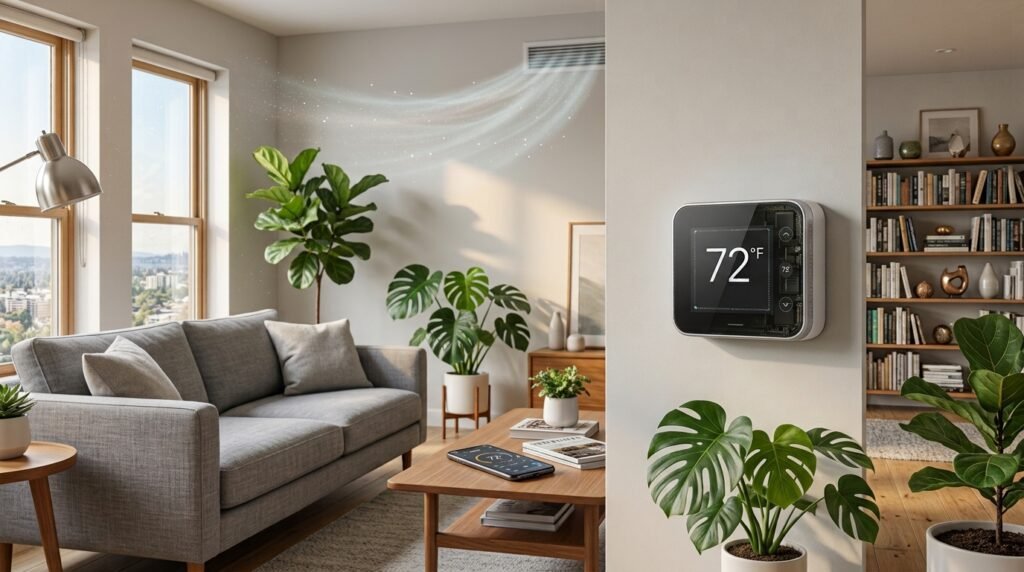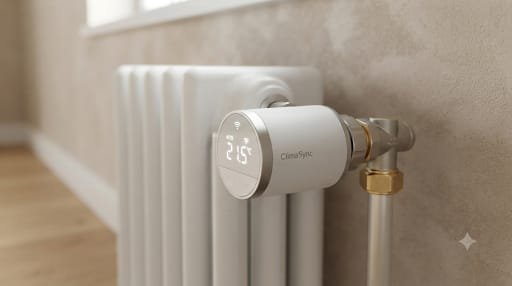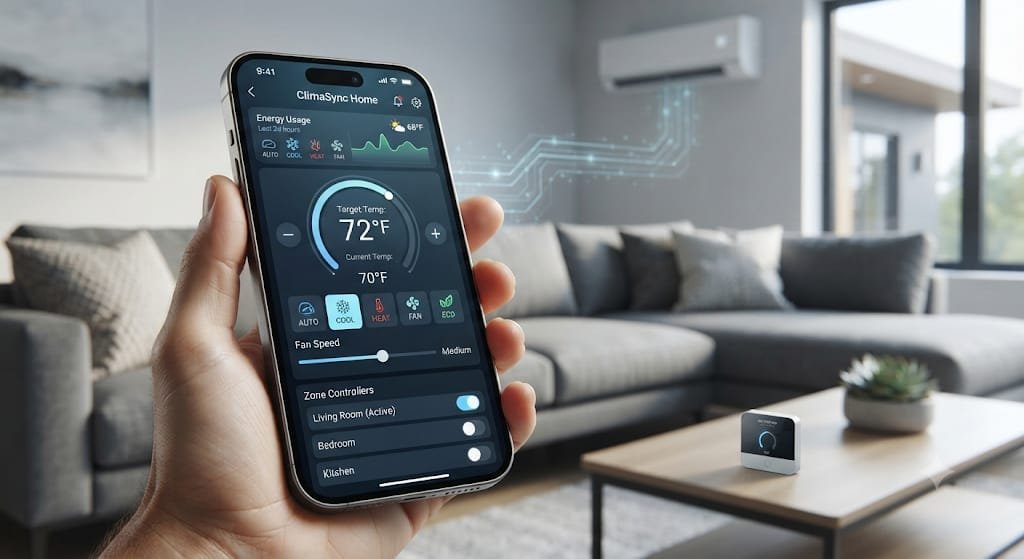
Smart AC controllers make it easier to control compatible air conditioners from a smartphone, automate cooling schedules, and manage indoor comfort without relying on a traditional remote. They can be especially useful for split and ductless AC systems that do not work with standard smart thermostats.
The right controller can let you adjust temperature settings remotely, create schedules, monitor conditions, and connect your AC with compatible smart-home systems. However, compatibility varies by air conditioner, remote-control technology, and controller, so choosing the right device is important.
In this guide, we’ll explain how smart AC controllers work, what features to look for, how to check compatibility, and which types of controllers are worth considering for smarter climate control.
How Smart AC Controllers Work
Smart AC controllers connect compatible air conditioners to a smartphone or smart-home system, allowing you to control cooling without relying only on the standard remote. Most controllers communicate with the AC through infrared (IR), while some systems use other communication methods depending on the air conditioner and controller.
Once connected, a smart AC controller can provide features such as:
- Remote control: Adjust temperature, fan speed, mode, and other supported settings from your phone.
- Scheduling: Set your AC to turn on or off at specific times based on your daily routine.
- Temperature monitoring: Some controllers include built-in sensors or work with separate temperature sensors to help monitor room conditions.
- Smart-home integration: Compatible models may work with platforms such as Amazon Alexa, Google Home, or Apple Home, depending on the device.
- Automation: Certain controllers support triggers based on time, temperature, occupancy, or other conditions.
- Usage management: Scheduling and automation can help prevent unnecessary cooling when the room does not need it.
Smart AC Controller Compatibility
Compatibility should be checked before buying a smart AC controller. Many controllers are designed for split, ductless, portable, or window air conditioners that use an infrared remote, but compatibility varies by model.
Before choosing a controller, check:
- Your AC brand and exact model.
- Whether the original remote uses infrared or another communication method.
- Which AC functions the controller supports.
- Compatible smart-home platforms.
- Whether the controller requires a separate temperature sensor or hub.
A controller that supports your AC’s basic functions but cannot reproduce important settings may provide a limited experience. Checking compatibility first can help you avoid buying a device that does not work properly with your air conditioner.
Types of Smart AC Controllers
Smart AC controllers come in different forms depending on how they communicate with your air conditioner and the level of control they provide. Understanding the main types can help you identify which option is suitable for your AC system.
Infrared (IR) Smart AC Controllers
IR controllers communicate with compatible air conditioners in a similar way to a traditional remote. They are commonly used with split and ductless AC units that already have an infrared remote.
These controllers can add features such as smartphone control, scheduling, and selected smart-home integrations without replacing the AC itself.
Wi-Fi Smart AC Controllers
Wi-Fi-enabled controllers connect to your home network and allow remote access through a smartphone app. Depending on the model, they may also support scheduling, automation, temperature monitoring, and voice-control platforms.
A stable Wi-Fi connection may be required for remote features, so check the manufacturer’s requirements before installation.
Smart AC Controllers With Temperature Sensors
Some controllers include built-in temperature sensors, while others can work with separate sensors. These devices can provide additional information about room conditions and may support temperature-based automation.
This can be useful when the temperature near the AC does not accurately represent the conditions in another part of the room.
Smart AC Controllers With Home Automation Integration
Certain controllers can connect with smart-home platforms and automation routines. Depending on compatibility, this may allow your AC to respond to schedules, temperature conditions, or other smart-home triggers.
Not every controller supports the same platforms or AC functions, so compatibility should be checked before choosing a device.
Useful Add-Ons for Smart AC Control
Smart AC controllers can sometimes be paired with additional devices to improve temperature monitoring and automation. These accessories are not replacements for the main controller, but they can be useful depending on your AC setup.
IR Smart AC Remote Controller
An infrared-based smart controller can connect compatible air conditioners to a smartphone or smart-home platform. Before buying one, confirm that your AC uses a compatible IR remote and that the controller supports the functions you need.
Wireless Temperature Sensor
A separate temperature sensor can provide temperature readings from another part of the room. This can be useful when the built-in sensor in the AC or controller does not accurately represent the temperature where you spend most of your time.
Buying tip: Check compatibility, supported AC functions, sensor requirements, and smart-home integration before purchasing any add-on device.
Smart AC Controller Compatibility Guide
Compatibility is one of the most important factors to check before buying a smart AC controller. A controller may work with one air conditioner but not support another model from the same brand, so checking your exact AC model is recommended.
Check Your AC Remote
Many smart AC controllers are designed to communicate with air conditioners through infrared (IR) signals. If your AC uses an IR remote, it may be compatible with certain smart controllers. However, the controller must still support your specific AC and its remote commands.
Check the AC Brand and Model
Before purchasing, note the brand and exact model number of your air conditioner. Use the controller manufacturer’s compatibility list or product documentation to confirm whether your unit is supported.
Check Supported AC Functions
Compatibility is not always limited to turning the AC on and off. Depending on the controller, supported functions may include:
- Temperature adjustment
- Cooling, heating, dry, or fan modes
- Fan-speed control
- Swing control
- Scheduling
- Sleep or eco modes
Some functions may not be available even when the basic AC controls work.
Check Wi-Fi and App Requirements
If you want remote smartphone control, check whether the controller requires a 2.4 GHz Wi-Fi network, a specific mobile app, or continuous internet access. Requirements vary between products.
Check Smart-Home Compatibility
If you plan to use voice control or home automation, confirm that the controller works with your preferred smart-home platform. Support for Alexa, Google Home, Apple Home, or other platforms can vary by device.
Compatibility Checklist
Before buying a smart AC controller, verify:
- Your AC brand and exact model
- Remote-control technology
- Supported AC functions
- Wi-Fi requirements
- Smartphone app requirements
- Smart-home platform compatibility
- Any required hub, sensor, or additional equipment
Checking these details before purchasing can help you choose a controller that works properly with your existing air conditioner.
Key Features to Look For in a Smart AC Controller
Once you have confirmed compatibility, the next step is to compare the features that matter most for your home and AC system. Not every controller offers the same level of control or automation.
Smartphone Control
A mobile app can let you adjust supported AC settings from your phone. Look for an app that provides the controls you actually need and is compatible with your smartphone.
Scheduling and Automation
Scheduling allows you to set specific times for your AC to operate. Some controllers also support automation based on temperature, time, or other conditions.
Temperature Monitoring
A built-in or compatible external temperature sensor can provide more accurate information about room conditions. This can be particularly useful when the AC’s internal sensor does not reflect the temperature in the area you occupy.
Smart-Home Integration
If you already use a smart-home platform, check whether the controller supports it. Depending on the device, integration may provide voice commands and automated routines.
Energy Monitoring
Some smart controllers or connected devices provide information about AC usage or energy consumption. These features can help you understand how your cooling habits affect electricity use, although the level of monitoring varies between products.
Remote Access
Cloud-connected controllers may allow you to control your AC while away from home. This can be useful for changing settings before you arrive or checking whether the AC was left running.
Easy Installation
Consider how the controller is installed and whether it requires additional equipment. Most users will benefit from a setup that does not require major changes to the existing AC system.
App and Connectivity Reliability
A controller is only useful if its app and connection work reliably. Check the manufacturer’s requirements for Wi-Fi, Bluetooth, hubs, and mobile devices before making a purchase.
Which Features Matter Most?
For most homeowners, AC compatibility, reliable smartphone control, scheduling, and the right smart-home integration should be considered first. Additional features such as temperature sensing and energy monitoring can then be evaluated based on your specific needs.
If you need more advanced room-by-room temperature control, see our HVAC Zoning System guide to understand how zoning works and when it may be useful.
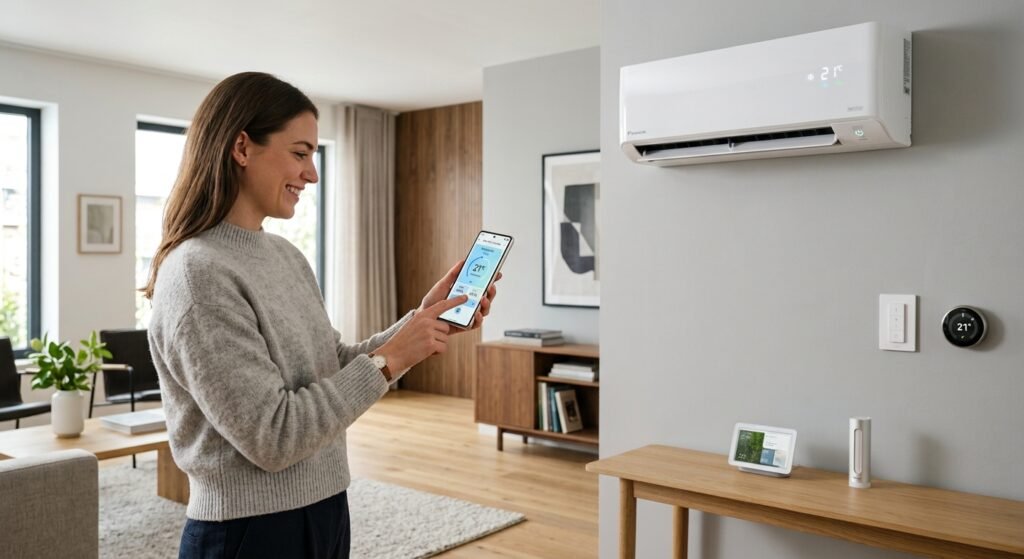
Smart AC Controllers vs. Smart Thermostats
Smart AC controllers and smart thermostats can both improve climate control, but they are designed for different types of air-conditioning and HVAC systems. Choosing between them depends primarily on how your existing system is controlled.
Smart AC Controllers
Smart AC controllers are commonly designed for compatible split, ductless, portable, or other air conditioners that use remote-control technologies such as infrared (IR).
Depending on the model, they can provide:
- Smartphone-based AC control
- Temperature and mode adjustments
- Scheduling
- Remote access
- Smart-home integration
- Temperature monitoring
- Automation features
They can be particularly useful when you want to add smart features without replacing the existing AC system.
Smart Thermostats
Smart thermostats are generally designed for HVAC systems that use compatible thermostat wiring and control interfaces. They can manage heating and cooling equipment and may provide features such as schedules, temperature sensing, and smart-home integration.
However, a conventional smart thermostat is not automatically compatible with every split or ductless AC system.
Smart AC Controllers vs. Smart Thermostats: Comparison
| Feature | Smart AC Controller | Smart Thermostat |
|---|---|---|
| Typical use | Compatible AC units | Compatible central HVAC systems |
| Split/ductless AC | Often suitable | Compatibility varies |
| Traditional thermostat wiring | Usually not required | Often required |
| Smartphone control | Common | Common |
| Scheduling | Common | Common |
| Smart-home integration | Available on some models | Available on some models |
| Installation | Often simpler | May require wiring or professional installation |
Which One Do You Need?
The right option depends on your existing HVAC setup. A smart AC controller may be more appropriate if you have a compatible split or ductless AC and want to add smartphone control, scheduling, or automation without replacing the system.
A smart thermostat may be more suitable for a compatible central heating and cooling system that already uses thermostat-based controls.
Before purchasing either device, check the manufacturer’s compatibility information for your specific air conditioner or HVAC system. The control method and supported equipment matter more than the product’s smart features alone.
Energy Efficiency Accessories for AC Systems
Smart AC controllers can help manage when and how an air conditioner operates, but other accessories can also support cooling efficiency. These products are separate from the controller itself and should be considered optional additions.
Window Insulation and Sealing
Properly sealing gaps around windows and doors can reduce unwanted air leakage and help maintain indoor temperatures. This can be particularly useful for window or portable AC installations.
Smart Plug for Compatible Portable AC Units
A smart plug may provide scheduling or power-monitoring features for certain portable AC setups. However, compatibility and electrical requirements should be checked carefully before connecting an air conditioner to a smart plug. A smart plug should not be used if the AC manufacturer does not support this type of control.
Maintenance and Airflow Accessories
Smart AC controllers manage control and automation, while maintenance and airflow accessories can support overall indoor comfort. These products are optional and should not be confused with smart AC controllers.
AC Air Filters
Clean or properly maintained filters can help an air conditioner maintain adequate airflow. Follow the manufacturer’s recommendations for cleaning or replacing filters.
Humidity and Temperature Monitor
A separate monitor can help you track room temperature and relative humidity. This information can be useful when adjusting cooling settings and evaluating indoor comfort.
Airflow Booster Fan
Some booster fans are designed to improve airflow through compatible duct systems and may help address rooms that receive less conditioned air. They are more relevant to central ducted HVAC systems than typical ductless split AC installations.
How to Install and Set Up a Smart AC Controller
Most smart AC controllers are designed to work alongside your existing air conditioner rather than replacing it. The exact setup process varies by controller and AC model, but the basic steps are generally straightforward.
1. Confirm Compatibility
Before installation, verify that the controller supports your AC brand, model, and remote-control system. Also check any Wi-Fi, app, sensor, or smart-home requirements.
2. Choose the Controller Location
For an IR-based controller, place the device where it can communicate reliably with the AC’s infrared receiver. Avoid locations where furniture or other objects can block the signal.
If the controller includes a temperature sensor, consider placing it where it can provide a useful representation of the room temperature.
3. Connect the Controller
Connect the device to its required power source and follow the manufacturer’s installation instructions. Some controllers may use a USB adapter or another low-voltage power connection.
4. Connect to the Mobile App
Download the manufacturer’s app, create or sign in to your account if required, and connect the controller to your home network. Follow the app’s pairing instructions.
5. Add and Test Your AC
Select your AC brand or model when prompted and test basic functions such as power, temperature, fan speed, and operating mode. Check that the controller responds correctly before creating automation routines.
6. Set Up Schedules and Automation
Once basic control is working, you can configure schedules or other supported automation features. Start with simple routines and adjust them according to your daily cooling needs.
Installation tip: Always follow the manufacturer’s instructions. If your setup requires electrical wiring, changes to the HVAC system, or professional installation, use a qualified technician rather than modifying the system yourself.
For a better understanding of comfortable indoor humidity levels, see our Best Humidity Level for Home guide.
Best Smart AC Controllers Comparison
Once you understand compatibility and the features to look for, comparing specific smart AC controllers can make the buying decision easier. The right option depends on your air conditioner, preferred smart-home platform, and the level of automation you want.
When comparing models, consider compatibility, smartphone control, scheduling, temperature monitoring, smart-home integration, installation requirements, and overall functionality.
| Feature | Controller 1 | Controller 2 | Controller 3 |
|---|---|---|---|
| AC compatibility | Check manufacturer specifications | Check manufacturer specifications | Check manufacturer specifications |
| Smartphone control | Yes/varies by model | Yes/varies by model | Yes/varies by model |
| Scheduling | Varies | Varies | Varies |
| Temperature monitoring | Varies | Varies | Varies |
| Smart-home integration | Varies | Varies | Varies |
| Installation | Varies | Varies | Varies |
| Best suited for | Depends on AC setup | Depends on AC setup | Depends on AC setup |
Buying tip: Always verify the latest manufacturer specifications and compatibility information before purchasing because supported AC models, features, and smart-home integrations can change.
Where hands-on testing has not been performed, products should be evaluated using manufacturer specifications, documented features, and compatibility information rather than presented as personally tested.
🛒 Explore These Smart AC Controllers on Amazon
1. SwitchBot Hub 2 Smart Remote Hub
SwitchBot Hub 2 combines infrared appliance control with smart-home features and temperature and humidity monitoring.
Best for: Homeowners who want smart AC control plus indoor climate monitoring.
🛍️ Shop: SwitchBot Hub 2 on Amazon →
2.Cielo Breez Lite Smart AC Controller
Cielo Breez Lite is designed to add smart control to compatible air conditioners through a connected smartphone app. Depending on the AC and setup, it can support remote control, scheduling, temperature monitoring, and smart-home features.
Best for: Users who want a straightforward way to add smart control and scheduling to a compatible AC.
🔎 Find These: Cielo Breez Lite on Amazon →
3. SwitchBot Hub 3 Smart Home Hub
SwitchBot Hub 3 is a newer smart-home hub designed to bring compatible infrared appliances into a connected home ecosystem. Depending on the setup, it can support appliance control, automation, and smart-home integration.
Best for: Users who want a newer smart-home hub for AC control and broader home automation.
⭐ Explore: SwitchBot Hub 3 on Amazon →
4. Layla Smart Home Agent 9-in-1 Smart Sensor & AC Controller
Layla Smart Home Agent combines smart AC control with indoor environmental monitoring. It can track conditions such as CO₂, bVOC, humidity, noise, and motion, while supporting compatible smart-home platforms such as Alexa and Google Home.
Best for: Homeowners who want smart AC control together with broader indoor air-quality and environmental monitoring.
🏠 Find the Right: Layla Smart Home Agent on Amazon →
5. WOOX Smart Air Conditioner & Heat Pump Controller
WOOX Smart Air Conditioner & Heat Pump Controller uses Wi-Fi and infrared (IR) control to connect compatible air conditioners and heat pumps to smart-home systems. It is designed for supported mini-split, portable, and window AC units and can provide temperature and humidity-based automation.
Best for: Users who want Wi-Fi and IR smart control for compatible AC systems across different AC types.
🛒 Check Out: WOOX Smart AC Controller on Amazon →
6. BroadLink RM4 Mini
BroadLink RM4 Mini is an infrared smart remote that can connect compatible appliances to a smart-home setup.
Best for: Users who want a compact and flexible IR control option.
🔗 See: Compare BroadLink RM4 Mini on Amazon →
Buying Tip: Amazon availability can vary by country and marketplace. Before purchasing, verify the exact product listing, your AC’s compatibility, supported functions, and any Wi-Fi or hub requirements.
Explore More Smart Home and Climate Control Guides
Smart AC controllers are one part of a broader smart-home climate strategy. Combining automated AC control with temperature monitoring, scheduling, and other energy-management practices can help homeowners manage indoor comfort more efficiently.
For more related smart-home and appliance content, explore the Home Appliances section on SmartAirHQ.
You can also visit SmartAirHQ for additional guides covering smart-home technology, energy management, climate control, and connected devices.
When evaluating a smart AC controller, focus on practical factors such as AC compatibility, scheduling options, temperature monitoring, smart-home integration, and installation requirements. These factors can help you choose a controller that fits your specific cooling system rather than selecting a device based only on its advertised features.
Pros and Cons of Smart AC Controllers
Smart AC controllers can add useful automation to compatible air conditioners, but they are not the right solution for every system. Understanding their advantages and limitations can help you decide whether one fits your needs.
Pros
- Remote control: Manage compatible AC settings from a smartphone.
- Scheduling: Create routines that match your daily schedule.
- Automation: Some models support temperature- or time-based automation.
- Smart-home integration: Compatible controllers can connect with supported smart-home platforms.
- Convenient monitoring: Certain models provide temperature or other room-condition information.
- Potentially simpler installation: Many controllers can work with existing compatible AC systems without replacing the unit.
Cons
- Compatibility limitations: Not every controller works with every AC brand or model.
- Wi-Fi dependence: Remote features may require a reliable internet or Wi-Fi connection.
- Limited AC functions: Some controllers may not support every function available through the original remote.
- Additional setup: Certain models may require sensors, hubs, or specific network configurations.
- Not suitable for every HVAC system: A smart AC controller may not replace the functionality of a compatible smart thermostat in a central HVAC system.
Considering both the benefits and limitations can help you determine whether a smart AC controller is appropriate for your particular cooling system.
Common Smart AC Controller Buying Mistakes
Choosing a smart AC controller based only on price or the number of advertised features can lead to compatibility and usability problems. Avoiding a few common mistakes can make the buying process easier.
Ignoring AC Compatibility
One of the most common mistakes is assuming that a controller will work with any air conditioner. Always check your exact AC brand and model before purchasing.
Focusing Only on Smart Features
Voice control, automation, and scheduling can be useful, but they do not matter if the controller cannot reliably operate your AC. Compatibility should come first.
Forgetting Wi-Fi Requirements
Some controllers require specific Wi-Fi bands, a stable connection, or an internet connection for remote access. Check these requirements before buying.
Assuming Every AC Function Will Work
A controller may support basic temperature and power controls without supporting every function available through the original remote. Review the supported features carefully.
Overlooking Smart-Home Compatibility
If you plan to connect your AC to an existing smart-home system, confirm that the controller supports the platform you use.
Choosing Based Only on Price
A lower-priced controller may lack important features or have more limited compatibility. Compare the functions, requirements, and supported AC models rather than relying on price alone.
Skipping Manufacturer Documentation
Product descriptions can provide useful information, but manufacturer documentation is often the better place to confirm compatibility, installation requirements, and supported functions.
Taking a few minutes to verify these details can help you avoid buying a controller that does not meet your AC or smart-home requirements.
Who Should Buy a Smart AC Controller?
A smart AC controller can be useful for homeowners who want more convenient control over a compatible air conditioner. However, the benefits depend on the type of AC system, existing controls, and the features you need.
| User or Situation | Why a Smart AC Controller May Help |
|---|---|
| People who want phone control | Allows compatible AC settings to be managed through a smartphone app |
| People with regular cooling schedules | Scheduling can automate when the AC operates |
| Smart-home users | Compatible models can integrate with supported smart-home platforms |
| Owners of compatible split or ductless ACs | Can add smart features without necessarily replacing the existing AC |
| People who want remote access | Some models allow AC control while away from home |
| Users interested in temperature monitoring | Compatible sensors can provide additional room-temperature information |
| People who want simple automation | Supported routines can reduce the need for manual adjustments |
Who May Not Need One?
A smart AC controller may not be necessary if you are satisfied with your existing remote and do not need smartphone control, scheduling, or automation. It may also be unsuitable if your AC is not compatible with the controller you are considering.
Before purchasing, compare the controller’s compatibility and features with your actual needs. This helps ensure you are paying for functionality you will realistically use.
Frequently Asked Questions About Smart AC Controllers
Do smart AC controllers work with old air conditioners?
Many smart AC controllers can work with older air conditioners that use compatible infrared (IR) remote controls. However, compatibility varies by AC brand, model, remote, and controller, so check the manufacturer’s compatibility information before buying.
Can a smart AC controller reduce electricity consumption?
A smart controller can help manage AC usage through scheduling, remote control, and automation. These features may reduce unnecessary cooling, but actual energy savings depend on the AC system, settings, climate, insulation, and how the controller is used.
Can I control my AC from my phone?
Yes, compatible smart AC controllers can allow you to control supported AC functions through a smartphone app. Available controls vary by controller and air conditioner.
Do smart AC controllers work with split AC units?
Many controllers are designed for compatible split and ductless AC systems, particularly models that use infrared remote controls. Always verify compatibility with your specific AC model before purchasing.
Do smart AC controllers work without Wi-Fi?
Some basic controllers may provide local or alternative control methods, but features such as remote smartphone access generally require an internet or Wi-Fi connection. Check the specific controller’s requirements before purchasing.
Are smart AC controllers the same as smart thermostats?
No. Smart AC controllers are commonly designed to operate compatible air conditioners, especially ductless or split systems. Smart thermostats are generally designed to control HVAC systems that use compatible thermostat wiring and control interfaces.
Conclusion
Smart AC controllers can make compatible air conditioners easier to manage by adding smartphone control, scheduling, automation, and smart-home integration. They can be particularly useful for split and ductless AC systems that are not designed to work with traditional smart thermostats.
Before choosing a controller, check compatibility with your specific AC model, supported features, installation requirements, and smart-home platform integration. Features such as scheduling and automated control can also help you manage AC usage more effectively.
The right smart AC controller ultimately depends on your air conditioner, home setup, and the level of automation you need.